
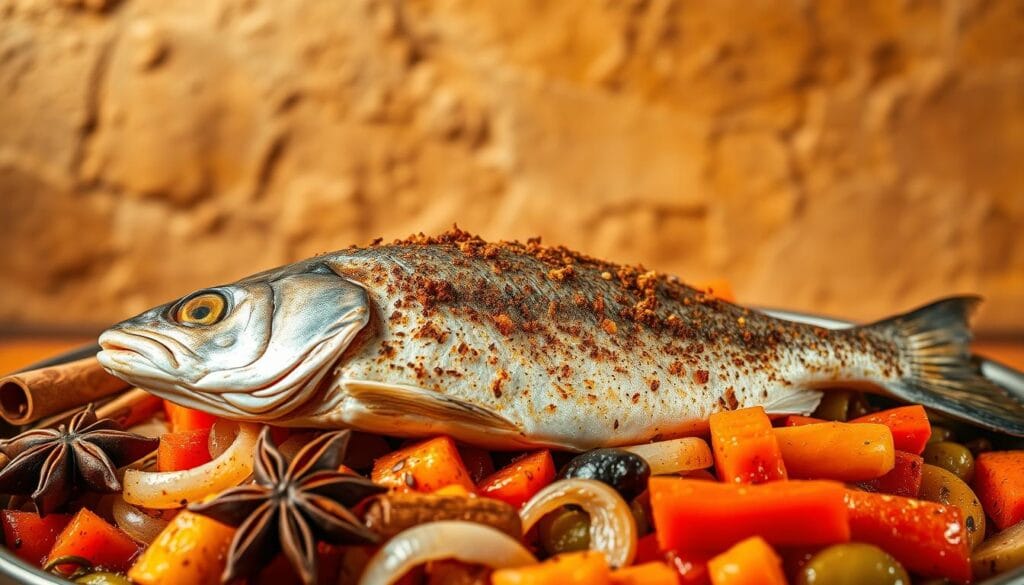
There’s something magical about a dish that feels like an embrace. It’s warm, familiar, and full of stories. That’s how I felt about chraime, a moroccan fish recipe I first tasted in Casablanca. The tangy tomatoes, cayenne, and sweet onions sizzling together made it more than a meal—it was a connection to generations of tradition.
Today, I invite you into my kitchen to recreate that moment. This authentic moroccan fish dish uses just 1 lb of firm white fish like cod. It’s cooked in 10 minutes flat. It’s the kind of recipe that turns weeknight dinners into cozy gatherings, with layers of flavor that promise to surprise even the most seasoned cook.
Imagine the simplicity of marinating fish in a spice blend. The ratio of 2 tbsp paprika to ½ tbsp cayenne is as comforting as it is bold. Or how a quick simmer with fresh tomatoes and garlic transforms everyday ingredients into something extraordinary. This dish isn’t just food; it’s a bridge to Morocco’s coasts, where fishermen still line the harbors and families share stories over platters of steaming fish.
Every bite of this moroccan fish recipe carries history. Like how Jewish households serve it Fridays for Shabbat, or its vibrant presence at Passover tables. It’s a dish that adapts gracefully: add bell peppers for color, or pair it with couscous to soak up every drop of sauce. Whether you’re cooking for one or hosting a crowd, this is food that cares for those at your table.
FAQ
What are some authentic Moroccan fish recipes I can try at home?
Try Moroccan fish tagine, fish chermoula, or a Moroccan fish stew. These dishes are full of vibrant spices and techniques. They are rewarding and delicious.
How do I choose the best fish for Moroccan recipes?
Choose fish with clear eyes, firm flesh, and a clean sea scent. Sardines are great, but cod or halibut work well for tagines. Freshness and sustainability are important, so talk to your local fishmonger.
What spices are essential for authentic Moroccan fish dishes?
Ras el Hanout is key. It includes cardamom, clove, cinnamon, paprika, and cumin. This blend adds warmth and depth to your dishes.
Can you suggest easy Moroccan fish cooking methods for beginners?
Yes! Steaming is gentle and preserves fish texture. Grilling adds smoky flavors. Start with a stovetop steamer or indoor grill pan.
What are some delicious side dishes to serve with Moroccan fish?
Couscous is a great side that soaks up fish flavors. Try vibrant salads, warm flatbreads, and chermoula sauce for a complete meal.
How can I adapt Moroccan fish recipes for dietary needs?
For gluten-free diets, use quinoa or rice instead of couscous. For fish-free meals, try eggplant or firm tofu. These options keep the Moroccan flavor.
Why is the tagine pot important in Moroccan cooking?
The tagine pot keeps fish moist and flavorful. Its design ensures even cooking. Even without a traditional tagine, you can still achieve great results.
Introduction to Moroccan Cuisine
Imagine the scent of cumin and saffron in bustling markets. Fishermen sell fresh sardines and mackerel from the Atlantic. Moroccan cuisine is all about stories in every bite.
For centuries, my kitchen has been influenced by Berber tribes, Arab traders, and Andalusian exiles. Each group added its own flavor, making dishes both familiar and new.
“Moroccan food is a dialogue between land and sea, past and present.”
Let’s dive into what makes these flavors timeless:
- Berber roots: Earthy stews and preserved lemons
- Arab influences: Sweet-and-sour pastilla pies
- European trade ties: Citrus and olive oil accents
| Culture | Key Contribution |
|---|---|
| Berber | Staple dishes like couscous |
| Arab | Sweet-savory spice blends |
| Andalusian | Tagine cooking techniques |
In coastal towns like Oualidia, fishermen follow ancient traditions. They grill sardines in chermoula and make tagines with preserved lemons. These dishes are more than food—they’re family heirlooms.
When you cook an authentic moroccan fish dish, you’re sharing centuries of stories. The sea’s gifts meet the earth’s spices, inviting you to taste Morocco’s heart, one bite at a time.
Popular Types of Fish in Morocco
Walking along Moroccan coasts, the sea’s bounty shapes every meal. Traditional moroccan seafood recipe dishes rely on fish that thrive in Atlantic and Mediterranean waters. Let’s explore what fishermen catch and how these choices influence flavor.
Local Catches Along the Coast
White fish forms the backbone of many moroccan fish recipe classics. Cod, hake, and sea bass are stars in dishes like tagines—their firm texture holds up to bold spices. Imagine cod simmered with tomatoes and chickpeas, as seen in this cozy braised cod recipe. These fish absorb flavors deeply, making them perfect for slow-cooked meals.
- Cod: Briny and mild, cod shines in hearty stews. Its flaky flesh works magic with cumin and paprika.
- Sardines: Tiny but mighty, these are grilled or stuffed with herbs. They’re a staple at family picnics near the coast.
- Sea Bass: Butterfly this fish and marinate it in citrus juices for a tender, flaky result.
Local fishermen know the sea’s rhythms well. Seasonal catches mean dishes change with the tides—from swordfish in summer to mackerel in autumn. We’ve learned to respect this cycle, ensuring every meal honors the ocean’s gifts.
Choosing fresh fish means feeling firm skin and clear eyes. At markets, vendors select fillets with care, sharing tips passed down through generations. This focus on freshness keeps traditions alive in homes and traditional moroccan seafood recipe around the world.
Essential Spices for Moroccan Fish
Imagine a fish fillet sizzling with warm spices. This is how flavorful moroccan grilled fish comes to life. Each spice has a long history, making simple ingredients into an authentic moroccan fish dish. Let’s explore this aromatic journey together.
Ras el Hanout is more than a spice mix—it’s a story. This “top of the shop” blend combines up to 30 spices like cumin, cinnamon, and cardamom. Chefs use it to enhance fish flavor without overpowering it.
The Magic of Ras el Hanout
| Spice | Role | Tip |
|---|---|---|
| Cumin | Earthy warmth | Use in marinades for grilled fish |
| Paprika | Smoky undertones | Saute with onions to start sauces |
| Saffron | Luxurious gold | Drop threads into hot oil first |
| Ras el Hanout | Complex depth | Balance with citrus to brighten |
Proper storage is key! Store jars in a cool, dark place to keep the aroma. For a homemade mix, start with 1 tbsp each of cumin, paprika, and coriander. Adjust as you taste.
- Always toast whole spices before grinding for deeper flavor
- Pair bold spices with fresh lemon juice for balance
- Store blends in small batches for freshness
These spices are more than ingredients—they’re a way to experience Morocco’s coastal kitchens. Let your pantry become a gateway to that vibrant, smoky aroma you crave.
Classic Moroccan Fish Tagine
Watching ingredients transform in a tagine pot is magical. My kitchen turns into a Moroccan marketplace when I make an easy moroccan fish tagine. The cone-shaped lid makes a slow dance of steam and flavor. This pot is more than a tool; it’s a tradition that makes simple fish into the best moroccan fish recipes.
What is a Tagine?
“The tagine, a traditional Moroccan clay pot, is often used to cook fish. The slow, simmering process ensures that the fish absorbs all the flavors from the spices and vegetables.”
A clay pot with a conical lid is the tagine’s magic. It traps heat and moisture, like a cozy hug for your ingredients. The steam bastes the fish without drying it out. My first time using one was like discovering a secret: the fish stays tender, and the sauce thickens perfectly.
If you don’t have a clay tagine, don’t worry! A Dutch oven or covered sauté pan works too. But nothing beats the earthy aroma of a real tagine. Its porous clay adds a subtle smokiness. When I cook, I start by layering onions, tomatoes, and spices, then gently nestle the fish in. The pot’s slow simmer (35-40 minutes) lets flavors meld, making every bite a story of patience and warmth.
My tip? Always let the dish rest for 5 minutes after cooking. This simple pause lets the flavors settle, ensuring every spoonful feels like a hug from Morocco. Whether you’re using a classic tagine or a modern pot, the results are worth the journey. Your kitchen will smell like a seaside Marrakech market in no time!
Preparing Your Fish
Choosing the perfect fish is the first step in making a moroccan fish recipe. It’s where the magic starts. Let me show you how to pick the best fish for a delicious meal.
Choosing the Right Fish
“A healthy moroccan fish recipe starts with a fish that’s vibrant and alive with flavor.”
Here’s what I check first:
- Eyes: Bright, clear eyes—like a starlit sky.
- Flesh: Press gently; it should spring back like a happy spring.
- Scent: A clean, briny smell, never fishy or sour.
For our recipe, I recommend 4-ounce portions of branzino or cod—they hold up perfectly in tagines. If you prefer healthy moroccan fish recipe options, try salmon for its rich omega-3s. Smaller sardines add a rustic touch for grilling.
Always ask your fishmonger about sustainable options—look for MSC-certified labels. My rule? When in doubt, ask! They’re happy to help with cleaning or filleting.
Portion sizes matter too: 3 lbs of fish serves 4, so each piece should be about the size of your palm. And don’t forget—sustainability isn’t just for chefs, it’s for everyone who loves the ocean.
Cooking Techniques in Moroccan Fish Dishes
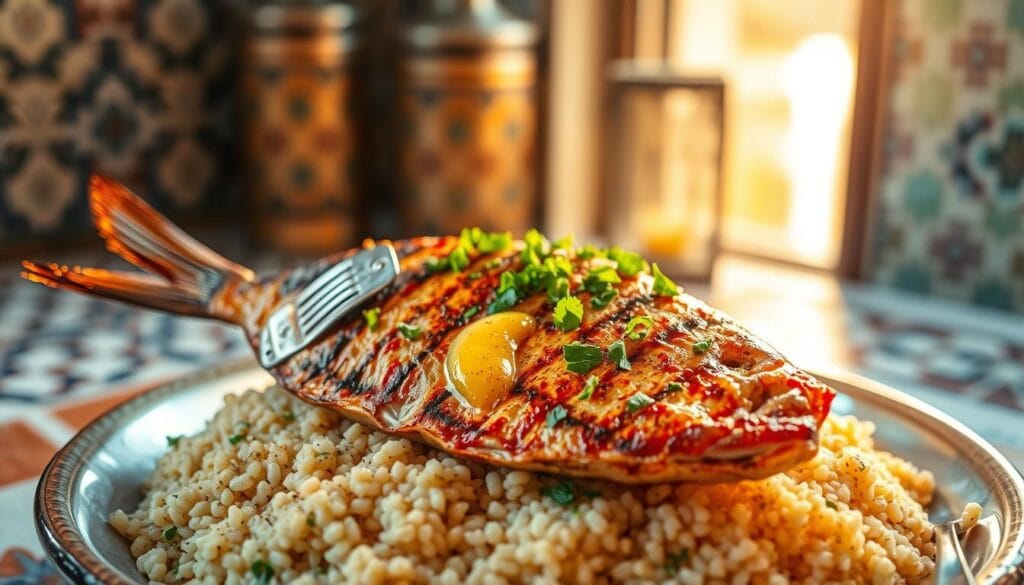
Steaming or grilling changes the heart of your fish dish. Let’s explore how each method brings out unique flavors and textures.
Steaming vs. Grilling
| Technique | Steaming | Grilling |
|---|---|---|
| Flavor Profile | Mild, spice-infused | Smoky, caramelized edges |
| Equipment | Tagine or steamer | Grill or grill pan |
| Best For | Delicate fish like cod | Thick cuts like mahi-mahi |
| Prep Time | 10 minutes | 15 minutes |
Steaming is great for the healthy moroccan fish recipe. It keeps the fish moist with gentle heat. Grilling, on the other hand, is perfect for flavorful moroccan grilled fish. It adds smoky flavors without extra oil.
- For steaming: Simmer fish in a tagine with broth and herbs for 12-15 minutes
- Grilling tip: Marinate with olive oil, cumin, and paprika before cooking
- Both methods pair well with couscous or lemon wedges
Tradition meets modern kitchens here. You don’t need a clay tagine to cook Moroccan fish. A regular pot works just as well. So, get creative with what you have—your kitchen is your lab!
Accompaniments for Moroccan Fish
Imagine the warmth of a simple moroccan fish stew paired with the right sides—every bite becomes a celebration of balance. The right sides can turn a simple dish into something memorable. Let’s explore how to build a meal that feels both comforting and complete.
Couscous isn’t traditionally served with tagine, but it’s a modern favorite with lighter fish dishes. Fluff it with a fork and drizzle with olive oil—its mildness lets the fish’s flavors shine. For a vibrant contrast, try charred green pepper salad with preserved lemon. The tangy citrus and smoky veggies cut through rich fish like moroccan fish chermoula recipe creations.
- Salads: Light options like Moroccan green salad (romaine, spinach, mint) or carrot salad add freshness. For a punch, serve the preserved lemon and pepper mix—its “party in your mouth” zing pairs perfectly with flaky fish.
- Breads: Warm msemen or khobz breads are ideal for sopping up sauces. Their subtle sweetness balances savory dishes like our simple moroccan fish stew.
- Extras: A sprinkle of chopped cilantro and a drizzle of chermoula sauce heighten every bite. For a quick touch, toss parsley or roasted tomatoes into couscous.
Small plates of salads—like the black olive and orange medley—add color and texture. Serve them family-style or as small bowls for guests to enjoy. Remember, Moroccan meals thrive on sharing, so let the table overflow with options!
Serving Your Moroccan Fish Dish
How a dish is presented tells a story before we even take a bite. When serving your best moroccan fish recipes, think of plating as showing your love for the meal. Choose a wide, shallow bowl or a traditional tagine pot to keep the fish warm and show off its colors.
- Arrange fish fillets so their golden crust faces up, letting their natural beauty shine.
- Drizzle sauce over the fish and around the edges to create a cohesive palette.
- Top with a sprinkle of parsley or cilantro for freshness—traditional moroccan seafood recipe authenticity comes alive with these touches.
We love seeing diners gather around the table, just like in Moroccan homes. Place couscous or rice in a shared bowl, encouraging everyone to help themselves. A sprinkle of flaky sea salt and a squeeze of lemon adds final flair. For a moment of drama, lift the lid of a simmering tagine at the table—its steam releases aromas that awaken appetites.
Pair with warm pita or crusty bread to soak up every drop of sauce. If you’re hosting a gathering, consider my simple trick: serve leftovers within two days reheated at 350°F for a cozy meal that brings people together. For more ideas, explore halal-friendly options that blend tradition with modern twists. Every detail matters—because how we serve food is how we share love.
Variations of the Recipe
Trying new things with your favorite dishes can make them unforgettable. Let’s see how we can change the simple moroccan fish stew to fit your taste. Even small tweaks can bring out big flavors.

In the south, cooks add a spicy touch to best moroccan fish recipes. They sprinkle harissa paste or extra cumin. Coastal kitchens prefer bright herbs like cilantro. Here’s how to make it your own:
- Add bell peppers or apricots to the sauce for natural sweetness
- Swap cod for salmon or tilapia if preferred
- Reduce red pepper flakes for milder heat
| Original Ingredient | Substitute | Result |
|---|---|---|
| Red pepper flakes | Smoked paprika | Smoky depth |
| Cod | Swordfish | Firmer texture |
| Regular lemon | Preserved lemon | Briny contrast |
“Cooking is such a beautiful expression of creativity…”
For Passover, skip the lemon to keep it pareve. Or add garbanzo beans to stretch portions during busy weeks. My family loves serving this with pistachios on Fridays—it’s a comforting tradition anyone can adapt. Experiment, adjust, and make it yours. That’s the heart of Moroccan cooking.
Cooking for Dietary Preferences
Every meal should bring joy, not worry. That’s why I’ve made this healthy moroccan fish recipe adaptable for all. We can tweak it to keep its essence while meeting dietary needs.
“Food should unite, not divide”—this philosophy guides how I approach substitutions. Even small changes can create something new yet comforting.”
For gluten-free meals, swap couscous with quinoa or rice. These grains soak up the tangy sauce well. My favorite trick? Toasted buckwheat groats add a nutty crunch without gluten.
- Gluten-free adjustments: Use gluten-free flour blends for thickening sauces
- Vegetarian option: Tofu or roasted eggplant becomes the star in an easy moroccan fish tagine base
- Allergen tips: Replace fish with chickpeas for a protein-rich alternative—simmer them in the spice blend until tender
I’ve tested these swaps many times. When substituting fish, marinate tofu in the spice mix for 30 minutes before adding to the pot. The result? A hearty dish that still feels authentically Moroccan. For those avoiding nightshades, swap bell peppers with zucchini slices—they soften beautifully in the slow-cooked sauce.
Always check spice labels for cross-contamination warnings. Small adjustments like these let everyone gather around the same table—no compromises needed.
Conclusion and Tips for Success
Bringing Moroccan flavors into your kitchen is easy with the right ingredients and patience. The moroccan fish chermoula recipe is a great way to start. It lets you explore authentic Moroccan fish dishes.
When grilling, aim for 400°F to 450°F. Use fresh lake trout for the best taste. Make sure the fish is firm and has clear eyes. Also, slit the fish ¼ inch deep to let the flavors in.
After 15 years of cooking, I learned that small changes can make a big difference. Try balancing cumin with lemon for a better taste. Serve it with grilled veggies or couscous for a full meal.
For a unique touch, pair it with a spicy Syrah or a light Sauvignon Blanc. Remember, fresh herbs and paprika are key to a great dish.
Don’t worry about mistakes—every try brings you closer to perfection. Adjust the spices to your liking and try new ingredients. Moroccan cooking is about sharing and warmth. So, invite friends over and enjoy the experience together. Your kitchen is ready for its next adventure!
We are interested in your feedback
Catchy recipe
Sounds delicious
Original idea
Yummy
Healty and nutritious
Well done
Interesting
Just good