
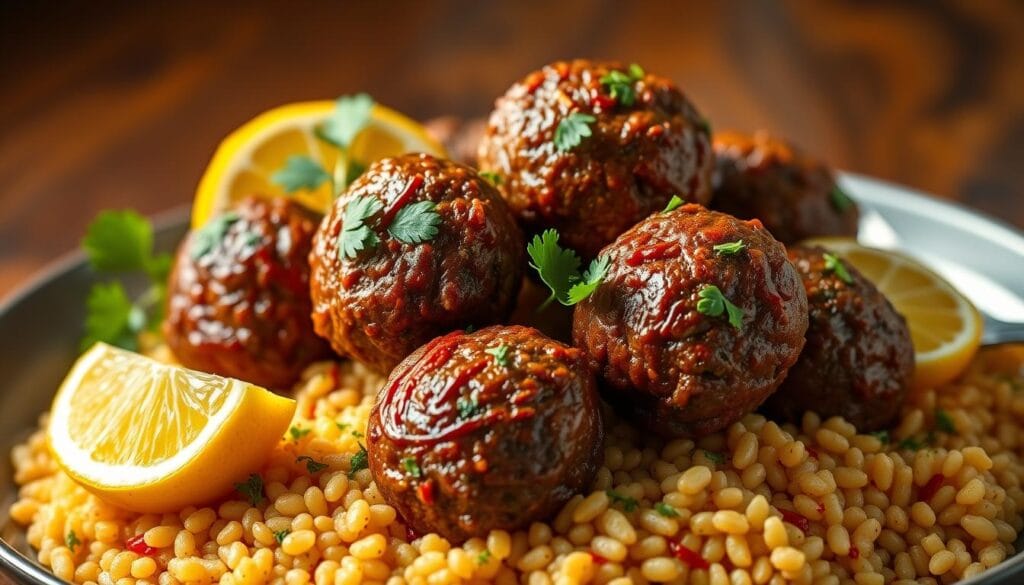
When spices in a pan start to mix—cumin, smoked paprika, and cinnamon—it makes me smile. That’s when I know the magic of authentic Moroccan meatballs is about to start. These meatballs are more than food; they’re a story of warmth passed down through generations.
When I first made them, I was amazed. Simple ingredients like ground beef or lamb, bread crumbs, and fresh herbs turned into something comforting.
If you’ve ever tried the best moroccan meatball recipe, you know how a little chili or parsley can make a meal special. Today, I’ll show you how to make these meatballs with love. Every bite will capture their vibrant soul.
Whether you serve them with rice or pita, this guide will help you get the spices and texture right. Let’s make your kitchen feel like a bustling Moroccan market.
FAQ
What is the best type of meat to use for authentic Moroccan meatballs?
Traditionally, lamb is the go-to for Moroccan meatballs. But, ground beef or turkey works great too. Choose meat with 15-20% fat for juicy, tender meatballs.
Can I make Moroccan meatballs vegetarian or vegan?
Absolutely! For a vegetarian version, use lentils and mushrooms. Vegan options can use the same base with ground flaxseed. Both keep the traditional Moroccan flavors alive.
What spices are essential for a classic Moroccan meatball dish?
Essential spices include ground cumin, paprika, cinnamon, and turmeric. These spices add flavor and warmth, making Moroccan cuisine special.
How do I ensure my meatballs don’t become dry while cooking?
To avoid dry meatballs, don’t overcook them. They’ll cook more in the sauce after removal. Aim for an internal temperature of 165°F for moist meatballs.
Can Moroccan meatballs be prepared in advance?
Yes! Prepare the meatballs ahead and store them in the fridge for up to 3 days or freeze for 2-3 months. Cool them completely before storing.
What types of sauces pair well with Moroccan meatballs?
A rich tomato sauce is classic, but try a yogurt sauce with preserved lemon for a twist. Both enhance the meatballs’ flavor and add authenticity.
What sides work well with Moroccan meatballs?
Serve meatballs with Moroccan bread (khobz), couscous, or a light salad with lemon and olive oil. These sides balance the meatballs’ rich flavors.
How can I adjust the spiciness of Moroccan meatballs?
For less heat, use less chili or omit it. For more spice, add more chili or warming spices to your liking.
Introduction to Moroccan Cuisine
Learning to make authentic moroccan meatballs opened my eyes to history and tradition. Moroccan food is a mix of Berber, Arabic, and Mediterranean flavors. It’s like walking through markets where spices like cumin and cinnamon fill the air.
The Rich History of Moroccan Flavors
Moroccan flavors have grown over centuries, influenced by trade and culture. Berber and Andalusian cooking styles blend, creating deep tastes. Spices like ras-el-hanout carry this history into today’s kitchens.
Key Ingredients in Moroccan Cooking
Every pantry tells a story. Let’s look at the key ingredients:
- Spices: Cumin, paprika, turmeric, and cinnamon add warmth.
- Herbs: Fresh cilantro and parsley brighten dishes like authentic moroccan meatballs.
- Preserved lemons: They add a tangy balance to rich flavors.
- Argan oil: Known as “liquid gold,” it’s used in salads and on bread.
For those looking for halal meals, Gustative Recipes has guides. These ingredients create harmony in every dish, whether it’s meatballs or tagines.
| Ingredient | Role |
|---|---|
| Ras-el-hanout | Signature spice blend |
| Preserved lemons | Brings acidity and depth |
| Cilantro | Freshness in sauces and garnishes |
These elements turn simple ingredients into nourishing meals. Let’s use them to share Morocco’s story, one spoonful at a time.
What Are Moroccan Meatballs?
When I first learned to make Moroccan meatballs, I was amazed by their tradition. These kefta are more than food; they’re a celebration of warmth and heritage. Imagine a plate full of tender meatballs in a rich sauce, with spices telling stories of Marrakech’s markets.
“Spices are the soul of Moroccan cooking—they heal and nourish,” says a traditional proverb cherished in Berber kitchens.
Definition and Variations
Moroccan meatballs are made from ground meats like beef, lamb, or game. Modern favorites often use 85% lean beef. Some add harissa for heat, while others include pine nuts for crunch. The classic recipe uses:
- Beef or lamb as the main protein
- Warm spices like cumin and cinnamon
- Chopped parsley or cilantro for freshness
The Role of Spices
These spices are more than flavor; they tell stories. Here’s how each spice adds to the dish’s magic:
| Spice | Role |
|---|---|
| Cumin | Earthy depth, like autumn soil |
| Paprika | Sweet smokiness that wraps around the meat |
| Cinnamon | Warmth that lingers like a sunset |
| Allspice | Woodsy notes that bind the blend together |
Together, they create a harmony that’s both comforting and adventurous. When I first learned this recipe, I was amazed by how spices could transform plain meat into something magical. These spices don’t just season; they nurture, a tradition passed down for generations.
Essential Ingredients for Moroccan Meatballs
When I start making my traditional Moroccan meatball recipe, I look for balance. Each ingredient adds to the mix of earthy, sweet, and smoky flavors. The base is quality meats like lamb, beef, or turkey, each adding its own warmth.
| Ingredient | Amount | Note |
|---|---|---|
| Ground beef or lamb | 300g each | Choose 15-20% fat for tenderness |
| Onion | 1 medium | Grated to dissolve into the mix |
| Cumin | 1 tsp | Earthy base for spices |
| Cilantro | ¼ cup | Freshness contrasts warm spices |
Ground Meat Choices
Lamb’s richness pairs well with Morocco’s bold spices. Beef is a familiar choice. Turkey is good for lighter meatballs. Always check the fat content—15-20% keeps them juicy.
Herbs and Spices You’ll Need
- Cumin (1 tsp) for depth
- Paprika (1 tsp) for warmth
- Cinnamon (⅛ tsp) for sweetness
- Fresh parsley and cilantro (¼ cup each) for brightness
Optional Add-Ins for Extra Flavor
These are special touches: toasted pine nuts for crunch, dried currants for tang, or a squeeze of preserved lemon for brightness. They make every bite special.
Step-by-Step Moroccan Meatball Recipe
Let’s bring the warmth of Moroccan kitchens to your own with this comforting moroccan meatball recipe. Every step is designed to feel like a shared moment in my kitchen—simple, nurturing, and full of flavor.
“Mixing ingredients by hand creates a connection to the dish—it’s where the magic begins.”
Preparing the Meatball Mixture
- Combine 1 lb (500g) ground beef (12% fat) and ½ lb ground turkey in a large bowl. I like to blend them gently with my fingers, ensuring they stay light.
- Add 1 finely grated onion, 3 minced garlic cloves, and 1 tsp fresh ginger. A food processor can chop the onion extra fine if you prefer—this makes them blend seamlessly.
- Mix in ½ cup matzah meal, 1 large egg, 1 tbsp paprika, 1 tsp cumin, ½ tsp cinnamon, and a pinch of red pepper flakes. Season with ½ tsp salt and ¼ tsp black pepper. Hands work best here—gently work the ingredients until just combined. Overmixing makes them tough, so treat them like a precious dough.
Shaping and Cooking Techniques
Now comes the fun part—shaping! Wet your hands first; it keeps the mixture from sticking.
- Roll into 1-inch balls (about 20 meatballs total). They should feel tender, not packed tight.
- Heat 2 tbsp oil in a wide skillet. Brown them in batches over medium heat, 4–5 minutes per side until golden.
- Simmer them in a tomato-based sauce (see section 6 for sauce details) for 15–20 minutes. This slow simmer lets the flavors marry beautifully.
| Ingredients | Quantity |
|---|---|
| Ground beef | 1 lb (500g) |
| Ground turkey | ½ lb |
| Onion | 1 medium, finely chopped |
| Garlic | 3 cloves, minced |
| Egg | 1 large |
| Matzah meal | ½ cup |
| Cumin | 1 tsp |
| Cinnamon | ¼ tsp |
| Salt | ½ tsp |
| Nutrition Facts (per serving) | Amount |
|---|---|
| Calories | 178 |
| Protein | 11g |
| Fat | 12g |
| Servings | 10 |
Cooking time: 35 minutes total. Let the flavors simmer while you relax—this recipe thrives with patience.
Cooking Methods for Moroccan Meatballs
There’s no wrong way to enjoy your easy moroccan meatball recipe—just your favorite way. Let me guide you through three approaches to bring these flavorful bites to life. Whether you’re baking, frying, or using a tagine, the goal is to balance crisp edges with tender centers.
Baking vs. Frying
For a hands-off approach, preheat your oven to 375°F (190°C). Line a baking sheet with parchment and arrange the meatballs in a single layer. Bake for 15–20 minutes until golden. This method keeps things simple and oil-free—perfect for a family dinner.
If you crave a crispy crust, pan-fry them first in 1 tablespoon olive oil until browned, then finish baking. Frying fully in a skillet? Heat 2 tablespoons oil, cook in batches 5 minutes per side. Serve with a sprinkle of fresh herbs.
Using Tagines for Authentic Flavor
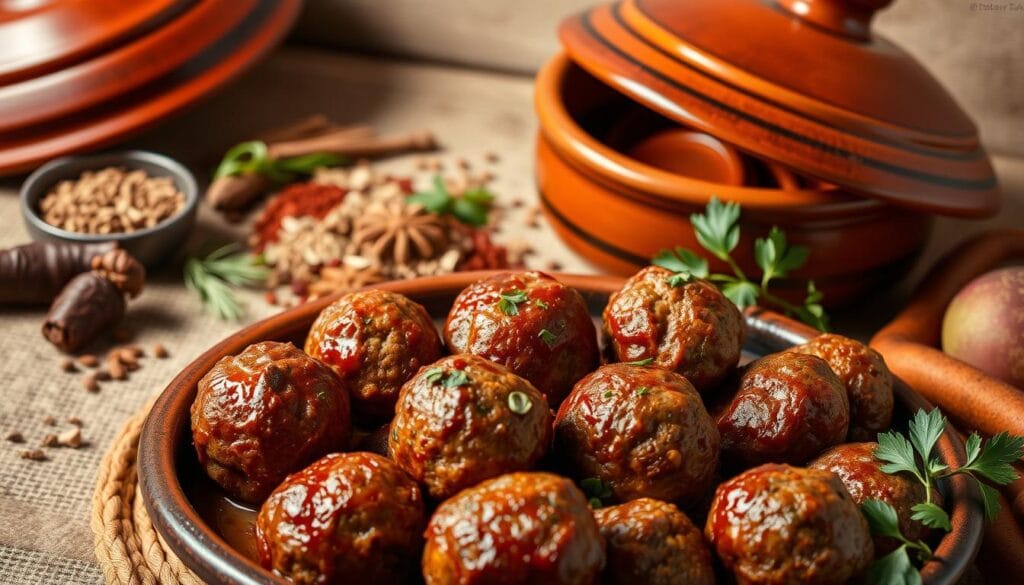
A tagine’s sloping sides and clay construction gently simmer the meatballs in their sauce, locking in moisture. If you don’t have one, a Dutch oven works just as well. Simmer the mixture uncovered for 30 minutes, stirring occasionally.
The key? Don’t overcrowd the pot—give the meatballs space to soak up the spices.
“The tagine’s gentle heat is like a hug for the ingredients,” says Chef Amina El Idrissi, a Moroccan culinary expert. “It lets the flavors marry without rushing them.”
Whichever method you choose, remember this easy moroccan meatball recipe adapts to your kitchen. Experiment, adjust, and savor the process. The magic happens when you trust the steps and let the spices do the talking.
Pairing Suggestions for Moroccan Meatballs
When you share the best Moroccan meatball recipe, think about how to present it. It’s like wrapping a cozy blanket around each bite. Start with warm khobz bread to dip in the tangy tomato sauce. If khobz isn’t available, a rustic crusty baguette or pita works great too.
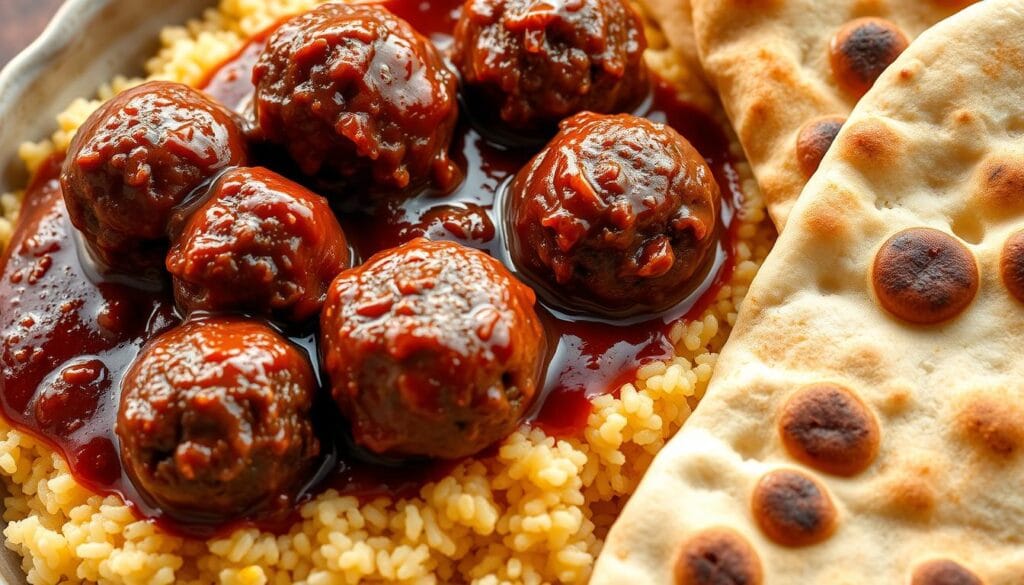
To balance the meatballs’ bold spices, add cooling elements. A crisp green salad with lemon and olive oil is perfect. Or try roasted vegetables like carrots or zucchini with olive oil and cumin. Here’s what to serve:
- Couscous or quinoa to soak up sauce
- Marinated olives or pickled lemons for tangy contrast
- Yogurt mixed with a dash of harissa for a spicy dip
- Roasted eggplant or haricots verts (French green beans)
For a complete feast, arrange everything family-style on a platter. The best moroccan meatball recipe is best when shared. Add a sprinkle of flaked almonds or golden raisins for texture. And don’t forget mint tea—Moroccans love it with meals for its refreshing taste.
Pairing well with the meatballs’ richness, a side of preserved lemons chopped into a grain bowl adds brightness. Even a simple tomato and cucumber salad with orange juice works wonders. The goal is warmth—both in flavor and the shared moments around the table.
Storage and Reheating Tips
Proper storage is crucial for keeping authentic moroccan meatballs fresh. These flavorful bites are like delicate treasures. Here’s how to keep them rich and delicious:
“Sometimes the best meals are those that taste even better the next day.”
Storing Your Meal Prep Made Easy
Let your meatballs cool completely before storing them in an airtight container. For up to 4 days, refrigerate them. For longer storage, freeze in labeled containers for up to 3 months. Freezing in single servings makes for quick dinners.
- Refrigerate: 4 days in a sealed container
- Freeze: 3 months in freezer-safe bags
- Always cool completely before storage
Gentle Reheating Techniques
Reheat with care to keep moisture and flavor:
- Stovetop: Simmer meatballs with a bit of broth or sauce over low heat for 10-15 minutes
- Slow oven: Bake at 300°F (150°C) for 15-20 minutes
- Microwave: Use 30-second intervals on 50% power, adding a splash of water if needed
| Nutrition Facts |
|---|
| Serving Size: 1 portion (about 4 meatballs) |
| Calories: 433 kcal |
| Protein: 21g (42% DV) |
| Fat: 35g (54% DV) |
| Carbs: 9g (3% DV) |
| Sodium: 1,068mg (46% DV) |
| Iron: 3mg (17% DV) |
Looking for more meal prep ideas? Check out easy chorizo recipes for your weekly meals. Always reheat leftovers to 165°F (74°C) for safety. A sprinkle of fresh herbs like cilantro or parsley adds a vibrant touch.
Variations in Moroccan Meatball Recipes
Exploring the traditional moroccan meatball recipe is a journey of discovery. It’s a dish that evolves with us, adapting to our needs and tastes. Let’s see how to keep its essence while making it uniquely yours.
Vegetarian and Vegan Alternatives
For those who follow plant-based diets, there are great options. Use finely chopped mushrooms or cooked lentils as a base. Add walnuts for texture and flaxseed for binding.
Season with cumin, cinnamon, and paprika, just like the original traditional moroccan meatball recipe. A squeeze of lemon juice adds a nice touch.
Fusion Recipes Inspired by Moroccan Meatballs
Mixing cultures is exciting. Add chicken or turkey to the spice mix. Grill them with a tangy lemon yogurt sauce, or fill roasted peppers with the spiced meat.
Even try kefta-stuffed eggplant or a spiced mac & cheese with a tagine-inspired sauce. These ideas show how tradition and innovation can come together beautifully.
Every variation is a chance to be creative while staying true to Morocco’s rich spice heritage. The secret? Always keep cumin, turmeric, and ginger at the heart of your dish. Whether baking or frying, the spirit of the recipe remains warm and inviting.
Common Mistakes to Avoid
Even the simplest easy moroccan meatball recipe can go wrong if we overlook small details. Let me share three tips to keep your dish perfect every time. First—never skip the chill: let shaped meatballs rest 10-15 minutes before cooking. This step firms them up so they won’t crumble.
Overcooking Tips
Always cook meatballs until they hit 160°F internally—no higher! Overcooking dries them out. For extra protection, simmer in sauce only 20-30 minutes max. Pro tip: Use a meat thermometer like I do—no guesswork involved.
Spices and Flavor Balance
Think of spices as a symphony. Too much cumin or cinnamon can overpower the dish. Start with ½ tsp each of cumin, paprika, and turmeric. Taste the mixture before shaping and adjust seasonings gently. A pro tip from 177milkstreet says to mix herbs last—this prevents bitterness from overmixing.
Lastly, handle the meat like you would a delicate soufflé. Overworking the mixture creates tough results. Use a light folding motion instead of kneading. And always remember: patience makes perfect pockets of flavor!
Conclusion: Enjoying Moroccan Meatballs at Home
Turning simple ingredients into a dish that tells a story is magical. The best moroccan meatball recipe is more than cooking. It’s about bringing warmth into your home. Whether for a cozy weeknight or a festive gathering, these meatballs bring the soul of Moroccan cuisine.
Cooking this recipe takes just 45 minutes, making it great for any day. With 350 calories and 25g of protein per serving, they nourish and delight. The mix of cumin, cinnamon, and fresh herbs adds layers of flavor. Even those who are skeptical love the tender texture and the balance of tangy tomato sauce and savory spices.
Sharing this dish with friends or family makes meals special. Serve with couscous or warm flatbread, and it becomes a conversation starter. This recipe is flexible, allowing you to try vegetarian options or adjust spices. Every time I make these meatballs, I’m reminded that food connects us.
Whether you’re new to Moroccan flavors or a seasoned cook, this dish is a gateway to a vibrant tradition. The best moroccan meatball recipe is about the warmth shared over a meal. So, next time you crave something familiar yet exotic, let these meatballs remind you that every meal can be a celebration of connection.
We are interested in your feedback
Catchy recipe
Sounds delicious
Original idea
Yummy
Healty and nutritious
Well done
Interesting
Just good