
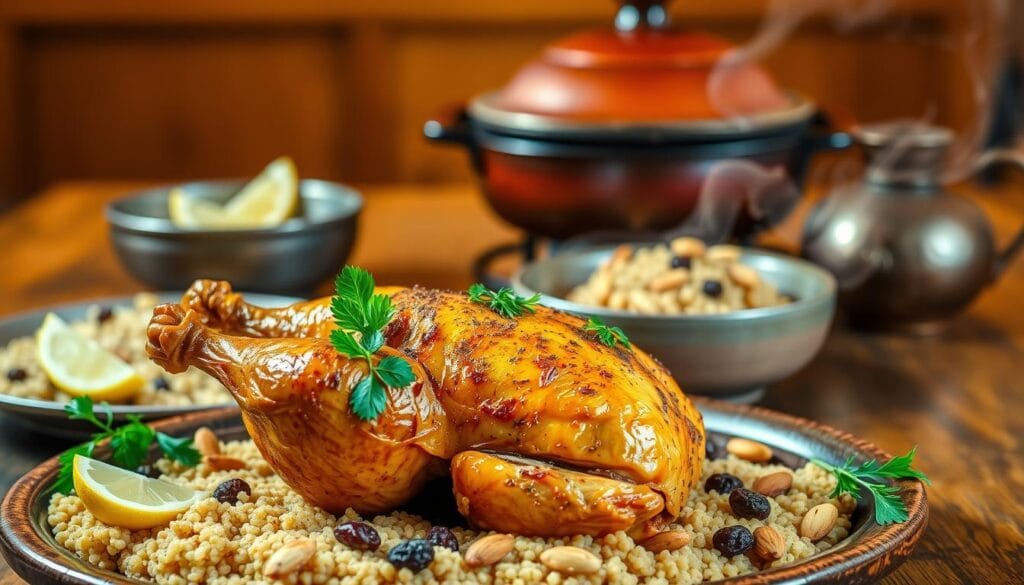
Spices like cumin and paprika are loved worldwide. They make simple moments special. This moroccan chicken recipe is no exception. It starts with browning chicken thighs and simmering with preserved lemons.
It’s all about the spices, like cinnamon and turmeric. They bring North Africa’s flavors right to your kitchen.
This dish is about more than just food. It’s about slowing down and enjoying the moment. It’s ready in under an hour, making weeknights feel like a special occasion. Every bite promises bold flavors without the fuss.
FAQ
What makes this an authentic Moroccan chicken recipe?
This recipe uses traditional spices like cumin, paprika, and cinnamon. It also includes preserved lemons and dried fruits. These ingredients reflect Morocco’s rich culinary heritage.
Can I make this dish spicy?
Yes! To make it spicy, add more cayenne pepper or harissa paste. Harissa is a North African chili paste.
What is the best type of chicken to use for this recipe?
Use bone-in, skin-on chicken thighs for juiciness and flavor. You can also mix dark and white meat for a healthier option.
How should I prepare my chicken before cooking?
Pat the chicken dry and season it with salt and pepper. For deeper flavor, marinate it with spices for a few hours or overnight.
Can I cook this Moroccan chicken in a slow cooker?
Yes, you can use a slow cooker. Brown the chicken and aromatics first. Then, transfer everything to the slow cooker with spices and liquid.
What vegetables work best in Moroccan chicken?
Choose carrots, bell peppers, and zucchini. Dried fruits like apricots or raisins add sweetness and complement the spices.
What should I serve with Moroccan chicken?
Serve it over fluffy couscous or with warm flatbread. A simple salad and green olives make great side dishes.
How can I store leftovers of this Moroccan dish?
Cool the chicken completely before storing it in an airtight container. It keeps in the fridge for up to 4 days or can be frozen for longer.
How can I reheat Moroccan chicken without drying it out?
Reheat it gently in the microwave at 50% power or in a covered dish at 300°F. Adding water or broth helps keep it moist.
What health benefits does Moroccan chicken provide?
It’s high in protein and includes spices like turmeric and cumin. These spices offer anti-inflammatory properties and other health benefits.
What is Moroccan Chicken?
When I first made traditional Moroccan chicken, I found a dish that tells a story with every bite. It’s not just about the ingredients; it’s a celebration of Morocco’s rich cultural heritage. The flavors mix Mediterranean and Berber traditions, showing centuries of shared history.
The moroccan chicken recipe you’ll try today combines these influences. It creates a comforting, aromatic meal that’s both exotic and cozy.
A Brief History of Moroccan Cuisine
Moroccan cooking started where trade routes crossed. Spices like cumin and cinnamon were key, coming from far away. This dish is like a warm hug from the past, with each spice adding to its cultural story.
The result is a mix of sweet, savory, and tangy flavors. It feels both exciting and like coming home.
Key Ingredients That Define Moroccan Chicken
- Spice blends: Cumin, coriander, and cinnamon give the traditional moroccan chicken its unique aroma.
- Preserved lemons or fresh lemon zest add a bright contrast to the rich flavors.
- Green olives and dried apricots bring earthiness and sweetness, like a taste of Morocco’s sunny markets.
Each ingredient works together like a dance. The spices envelop the chicken, while the fruit and citrus add a light touch. This is comfort food with a rich history.
Essential Spices for Moroccan Chicken
Every bite of Moroccan chicken is filled with the warmth of special spices. These spices are more than just seasonings; they tell stories. When I make this dish, I know each spice adds to the aroma and taste everyone loves.
“A spice blend is like a hug in a dish—comforting and unforgettable.”
Cumin and coriander are like old friends. Cumin adds an earthy warmth, while coriander brings a bright citrus note. I mix 1 teaspoon of each powder. Together, they balance boldness with freshness.
Saffron is a treasure with its golden threads. Just a pinch—like ¼ teaspoon—adds a delicate floral touch. I dissolve it in warm oil first to let its flavor bloom. It’s worth the splurge for that authentic touch.
Paprika and turmeric are the quiet heroes. Paprika adds smoky sweetness, while turmeric brings an earthy golden hue. I use 2 tablespoons of sweet paprika and 1 teaspoon of turmeric. They deepen the dish’s complexity without overpowering.
| Spice | Role | Tip |
|---|---|---|
| Cumin | Earthy foundation | Toast whole seeds briefly before grinding for deeper flavor |
| Saffron | Floral depth | Soak in warm liquid before adding to dish |
| Paprika | Sweet smokiness | Choose smoked paprika for extra depth |
| Turmeric | Golden color and warmth | Pair with black pepper to enhance absorption |
These spices are like family members. When blended thoughtfully, they turn chicken into a dish that feels like a warm embrace from Morocco’s kitchens.
Choosing the Right Chicken
The best moroccan chicken recipe starts with the chicken. Bone-in, skin-on thighs are perfect for slow-cooked dishes. They stay juicy and tender. Whole chickens are great for a rich broth, but thighs or legs offer more flexibility.
Whole Chicken vs. Chicken Parts
Thighs and drumsticks keep moisture better than breasts. A whole chicken cooks in 40–55 minutes at 425°F. Parts like thighs or legs need 20–30 minutes at 400°F. Always check the chicken is at least 165°F inside.
Organic vs. Conventional Chicken
Organic chicken tastes richer and is healthier. Even non-organic chicken can be good if it’s fresh. For a lighter dish, try skinless thighs. They’re less fatty but still flavorful.
| Nutrient | Chicken Thighs | Chicken Breast |
|---|---|---|
| Calories | 233 kcal | 106 kcal |
| Protein | 16g | 23g |
| Healthy Fat | 10g | 3g |
Pair your chicken with ginger-turmeric rice. Check out our quick rice side dishes for inspiration. Whether you’re after flavor or health, choosing the right chicken is key.
Preparing Your Ingredients
Every great moroccan chicken recipe begins with careful prep. When I make this easy moroccan chicken dish, I lay out all ingredients first. It makes the kitchen calm and ready.
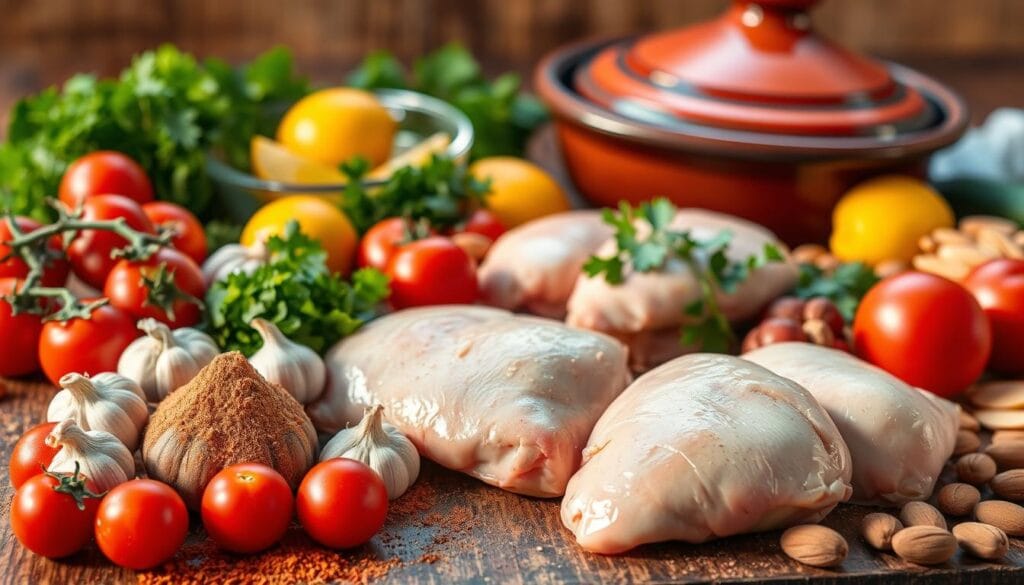
“Patience in preparation turns chaos into harmony.” – Moroccan culinary tradition
I start by rinsing 6-8 bone-in chicken thighs and drying them well. This is crucial! Then, I mix spices: 1 tbsp cinnamon, 1 tsp turmeric, 1.5 tsp salt, 2 tsp cumin, and more. I add ½ tsp each of black pepper, ginger, and a pinch of baking powder. I drizzle with 2 tbsp olive oil and rub the spice mix into the meat.
Let it rest for at least 30 minutes. If you can, let it sit all day
Vegetables are the chicken’s friends in this dish. I cut 2 carrots and 1 sweet potato into 1-inch chunks. This helps them roast evenly. I also mince 1 onion and 2 garlic cloves finely.
Grate fresh ginger for warmth. Remember to cut ½ cup olives and ½ cup dried apricots into small pieces. This mix of flavors makes the easy moroccan chicken dish so cozy.
Take your time chopping. The slower you work, the more love you put into the meal. Your kitchen will soon smell like Marrakech’s bazaar!
Cooking Methods for Moroccan Chicken
Deciding how to cook your traditional moroccan chicken can seem tough. But, it’s easier than you think! Let’s explore three easy ways to make this dish, whether you’re using a tagine, oven, or stovetop.
“The right pot makes all the difference, but creativity opens doors.” — Chef Amina El Khayati, Moroccan culinary historian
Traditional Tagine Cooking
For an authentic moroccan chicken tagine recipe, a clay tagine pot is best. Brown the chicken first, then add spices and simmer for 40–45 minutes. The cone-shaped lid keeps moisture in, making the meat tender. If you don’t have a tagine, a Dutch oven is a great substitute!
Oven Roasting Magic
Start by searing the chicken in a skillet. Then, put it in a 375°F oven. Cook for 25–30 minutes until it’s golden and tender. This method keeps the skin crispy and infuses the meat with spices.
Stovetop Simmer
For a stovetop version, use a heavy pot. Simmer everything uncovered on medium-low for 40 minutes. It’s perfect for busy weeknights because it’s easy to manage once it starts boiling!
Whichever method you pick, marinate the chicken for at least 30 minutes. A tip: Add 2 tbsp olive oil to the marinade for extra flavor. Your kitchen will soon smell like Marrakech!
Adding Vegetables and Fruits
Vegetables and fruits are key in making authentic Moroccan chicken. They soften the spices and add sweetness. This mix creates a rich, layered taste that makes the dish unforgettable.
Begin by adding classic vegetables like carrots, zucchini, and bell peppers. They soak up the spices and add texture. Chickpeas add protein and a creamy contrast. Tip: Cut veggies into chunks for even cooking.
- Carrots: Their natural sweetness balances cumin and turmeric.
- Zucchini: Softens gently, creating a velvety backdrop for spices.
- Bell peppers: Brighten the dish with color and a crisp bite.
Dried fruits like apricots and raisins are also crucial. They add a sweet-tart flavor. Soak apricots first, then simmer until they plump up. Raisins and golden sultanas add bursts of sweetness.
- Dried apricots (⅓ cup): Add near the end of cooking to keep them tender.
- Raisins (¼ cup): Stir in during the last 15 minutes for a sweet-savory balance.
This mix of veggies and fruits makes Moroccan chicken both comforting and complex. It’s a celebration of tradition in every bite.
Serving Suggestions
Sharing a best moroccan chicken recipe is more than a meal—it’s an experience. When I serve my moroccan chicken recipe, I focus on flavors that balance the dish’s rich spices. Here’s how to create harmony at your table:
Traditional Accompaniments
Start with a base of fluffy couscous, letting it soak up every drop of sauce. Warm flatbread like msemen or khobz works perfectly for scooping—just like in Moroccan households. A light salad of cucumber, tomato, and lemon vinaigrette adds crisp contrast. Don’t forget green olives—they add a briny tang that ties everything together.
Best Side Dishes for Moroccan Chicken
| Side | Description | Pairing Tip |
|---|---|---|
| Couscous | Steamed or boiled grains | Use broth instead of water for extra depth |
| Cauliflower rice | Low-carb alternative | Stir in a squeeze of lemon before serving |
| Raw spinach | Wilted greens from sauce | Top with extra cilantro for freshness |
“In Morocco, meals are shared—so arrange everything family-style and let the warmth of the dish bring everyone closer.”
For a lighter touch, try roasted carrots or zucchini. My favorite? A simple yogurt sauce with mint and garlic. Pair with the chicken’s citrusy lemon garnish for brightness. Leftovers? They taste even better the next day—reheat with a drizzle of olive oil. Every bite feels like a hug from North Africa.
Storing and Reheating Leftovers
One of the joys of this moroccan chicken recipe is how its flavors deepen when stored properly. I always make extra portions since this easy moroccan chicken dish tastes even richer the next day. For safekeeping, follow these simple steps:

- Store leftovers in an airtight container—glass works best to avoid spice stains. Keep refrigerated for up to 3 days (or frozen up to 3 months).
- When freezing, leave headspace in containers to allow for expansion. Thaw overnight in the fridge before reheating.
Reheating without drying out? Here’s my go-to:
- Microwave at 50% power for 1-2 minutes, checking frequently. Cover with a damp cloth to retain moisture.
- For stovetop, add a splash of broth and simmer gently until warmed through.
- My favorite method: bake at 300°F covered for 20 minutes—this keeps the chicken tender every time.
Pro tip: Letting the dish rest overnight lets the spices meld, making leftovers taste like a new meal. If using frozen portions, thaw fully before reheating. Need a refresher? Check this step-by-step guide for meal prep ideas. Every bite should stay juicy—no dry chicken allowed!
Variations of Moroccan Chicken Recipe
Learn to make your spicy moroccan chicken or moroccan chicken recipe your own. Every time you cook, it’s a chance to add your personal touch!
- Add a pinch of cayenne to the spice mix—start with ½ tsp and taste as you go.
- Swap 1 tsp of paprika for smoked paprika to deepen flavor before adding heat.
- Try harissa paste—1–2 tbsp stirred into the sauce for authentic North African fire.
For vegetarian versions, swap chicken with:
- 2 cups chickpeas and cubed butternut squash
- Eggplant slices and roasted cauliflower
Simmer everything in the same spice mix for 20 minutes—no need to change cooking steps!
| Option | Spicy Moroccan Chicken | Vegetarian |
|---|---|---|
| Heat Level | Medium-High | Mild |
| Protein Source | Chicken thighs | Chickpeas + veggies |
| Cooking Time | Same as original | Reduced by 10 mins |
Storage stays the same—store leftovers in an airtight container. Freeze portions for up to 3 months. Adjust spices gradually and trust your taste buds—they’ll guide you perfectly.
Nutritional Benefits of Moroccan Chicken
Enjoying the best moroccan chicken recipe is more than just a tasty meal. It’s a way to feed your body with good stuff. This healthy moroccan chicken packs 26g of protein, helping your muscles stay strong and your energy up. Plus, it’s full of vitamins like vitamin C from lemon zest and minerals like iron from cumin.
- Protein power: Chicken thighs give you 26g protein per serving—great for after working out.
- Smart fats: Olive oil adds heart-healthy fats, and almonds add crunch without too much.
- Spice wisdom: Turmeric and cinnamon are not just for flavor; they also help your body.
Every part of this dish is chosen for a reason. Carrots and green olives add fiber and antioxidants. Lemon juice helps your body absorb iron better. And the 2 tablespoons of maple syrup add sweetness without too much sugar.
This dish has 410 calories per serving, fitting into most diets. You can adjust the salt or use boneless thighs if you like.
“Good food heals,” my grandmother often said. This recipe honors that truth—spices aren’t just for flavor; they’re part of a holistic wellness tradition.
For mindful eating, serve it with ½ cup quinoa or brown rice. This adds more fiber and B vitamins. The healthy moroccan chicken is more than a meal. It’s a celebration of nourishment that feels as warm as family stories.
Conclusion: Enjoying Your Moroccan Chicken
Making authentic Moroccan chicken is more than cooking. It’s a celebration of flavors passed down through generations. Let your kitchen become a space where spices like cumin and saffron tell a story. Serve this easy Moroccan chicken dish over couscous or with warm flatbreads for a comforting meal.
Simple Ways to Elevate Your Plate
For a vibrant finish, scatter fresh parsley or mint over the chicken. A squeeze of lemon brightens the dish’s earthy spices. A sprinkle of preserved lemon adds that signature tang. Even a quick garnish transforms the dish into a feast for the eyes and taste buds.
Cooking with Tradition in Mind
Marinating the chicken for at least an hour ensures every bite carries that authentic Moroccan chicken depth. The blend of ras el hanout and warm spices isn’t just about taste—it’s a connection to a culture where slow-cooked meals are cherished. Even busy weeknights can welcome this dish; prepping ingredients ahead lets you savor the process without stress.
Sharing the Story
Traditionally, Moroccans enjoy tagine meals family-style, so serve the chicken family-style in a clay pot or wide bowl. The steam rising from the dish signals warmth and hospitality. Let guests scoop couscous into the sauce—this is how flavors and conversations flow together.
Small Adjustments, Big Impact
Freezing leftovers? Portion into airtight containers to preserve that rich flavor. When reheating, a splash of broth restores moisture. Adjust spices to taste—perhaps a pinch more cumin or a dash of harissa for heat. Every adjustment keeps the easy moroccan chicken dish fresh for future meals.
We are interested in your feedback
Catchy recipe
Sounds delicious
Original idea
Yummy
Healty and nutritious
Well done
Interesting
Just good