
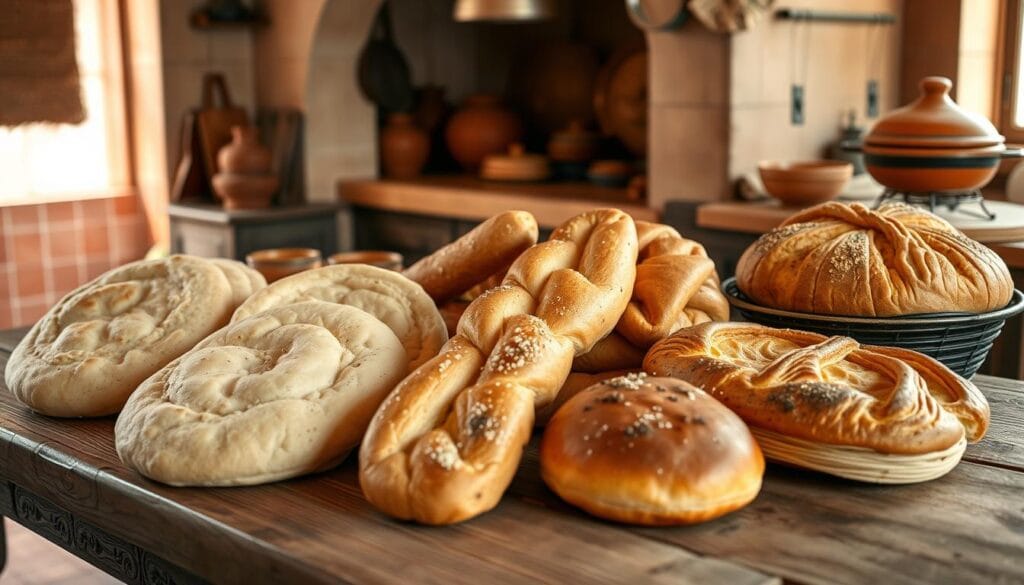
There’s something special about the sound of semolina dough hitting a hot skillet. The smell of butter-infused msemmen fills your kitchen. A warm khobz holds a spoonful of spiced stew perfectly. This is the magic of Moroccan bread.
It turns simple ingredients like flour and water into something that nourishes both body and soul. I’ve spent years learning this tradition. Today, I want to share it with you.
My easy moroccan bread recipe is perfect for everyone. Imagine sharing 8 golden flatbreads with your family. Or freezing a batch for busy days.
Every bite tells a story of markets in Marrakech and family kitchens. In these places, bread is more than food—it’s a way to connect.
FAQ
What is the best Moroccan bread recipe for beginners?
I suggest starting with Khobz, the traditional round loaf. It’s easy to make and needs just a few ingredients like flour, yeast, and water. Once you’re comfortable, you can try Msemmen and Harcha.
Can I make Moroccan bread with semolina flour?
Yes, you can! Semolina flour is great for Harcha. It adds a nice texture and a nutty taste. Just remember to adjust the liquid because semolina soaks up more water.
How do I achieve a crispy crust on my Moroccan bread?
To get a crispy crust, preheat your oven to 425°F (220°C). Also, put a dish of water inside while baking. This steam helps create a beautiful crust.
What are the common types of Moroccan bread?
The three main types are Khobz (round loaf), Msemmen (flaky flatbread), and Harcha (semolina bread). Each has its own role in Moroccan cuisine and is enjoyed in different ways.
How long can I store homemade Moroccan bread?
Homemade Moroccan bread is best eaten fresh. But it can last 2-3 days at room temperature, wrapped in a towel. For longer storage, freeze it in portions for up to 2 months.
What are some traditional pairings for Moroccan bread?
Moroccan bread is often paired with tagines, dips like zaalouk, or spreads like amlou. It’s also great with honey and butter, especially for breakfast with Msemmen.
Can I use different ingredients to experiment with my Moroccan bread?
Yes, you can! Try adding honey, sesame seeds, or spices like anise. These can give your bread unique flavors while keeping its traditional essence.
What should I do if my dough isn’t rising?
First, check if your yeast is fresh. Make sure your water is warm but not too hot (around 105-110°F). If it’s cold, try warming up your kitchen for the dough to rise.
Introduction to Moroccan Bread
My first taste of traditional Moroccan bread was unforgettable. It’s more than just food; it’s a part of Morocco’s everyday life and celebrations. It brings together Berber, Arab, and Mediterranean flavors, making every meal special.
What Makes Moroccan Bread Unique?
The secret is in its ingredients and the way it’s made. Dough is shaped by hands passed down through generations. It’s baked in ovens or hearths, creating a crisp crust and a soft inside.
This bread is different from what you find in stores. It uses simple grains and slow fermentation. This honors the traditions of Moroccan families.
Common Moroccan Bread Types
- Khobz: The everyday round loaf, a silent companion to tagines and salads.
- Msemmen: Layered like a pastry, this flaky flatbread is a breakfast staple, drizzled with honey or olive oil.
- Harcha: Crumbly and semolina-rich, it’s often served with mint tea and cheese.
Each bread type has its own story. Khobz is simple, like everyday life. Msemmen’s layers remind us of festive mornings. Moroccans treat bread with respect, never throwing it away.
Ingredients Needed for Moroccan Bread
Every loaf starts with simple things: flour, water, and a bit of warmth. Let’s look at what you need to make that perfect khobz. I’ve tried these amounts many times to make sure they work well in your kitchen.
Essential Ingredients
These are the basics of your bread:
- 500g (4 cups) flour blend (70% whole wheat, 30% white)
- 7g (1 tbsp) yeast—your dough’s rising partner
- 1 tsp salt to awaken flavors
- 160ml lukewarm water (105°F/40°C)
- 3 tbsp olive oil for richness
| Ingredient | Traditional Role |
|---|---|
| Semolina | Creates signature crunch in baghrir’s holes |
| Yeast | Triggers rise in khobz’s airy crumb |
Optional Ingredients for Variations
Now, let’s get creative. Adding ras el hanout spices or nigella seeds can deepen the flavor. Try:
- 1 tbsp honey for sweetness
- Sesame seeds or caraway for texture
- Anise for a licorice hint
When making harcha with semolina, keep the mix balanced. Use 44% semolina to flour for that nutty taste without drying out. Always mix dry ingredients first. It’s a gentle way to honor tradition while making it your own.
Tools and Equipment for Baking
Making homemade moroccan bread is easy, even without a fancy kitchen. What’s important is the tools that help you bake with care. Whether you’re baking Khobz or Msemmen, these basics will make your kitchen a cozy place to bake.
Must-Have Kitchen Tools
- A large mixing bowl for dough development
- Measuring cups and spoons for precise ingredients
- A clean, floured counter or table for kneading
- Hands! Your touch ensures the dough’s perfect texture
Recommended Baking Equipment
For stovetop wonders like Harcha, a 12-inch cast-iron skillet is perfect. Oven-baked loaves do well on baking sheets. A dough scraper keeps things neat, and a pastry brush adds a nice touch to egg washes.
If you’re looking for a shortcut, a stand mixer with a dough hook can help. But, let’s be honest, nothing beats using your hands. Every tool is important in keeping tradition alive. Even small things, like a Dutch oven for extra steam, can make a big difference. But remember, simplicity is key. Start with the basics and let your kitchen’s warmth guide you. Your next loaf is just around the corner!
Step-by-Step Guide to Making Moroccan Bread
Let’s make the best moroccan bread recipe come to life. Every fold and stretch is important. This is where patience turns simple ingredients into something amazing. Let’s start.

Preparing the Dough
First, wake up your yeast by mixing it with warm water and a bit of sugar. Wait 10 minutes for it to get frothy. This step is key for the dough to rise well.
Next, mix flour, salt, and sugar in a bowl. Add the yeast mixture and mix well. Knead the dough for 8–10 minutes until it’s smooth and bouncy. Cover it and let it rest in a warm place (23–24°C) for three 30-minute rises, with gentle folds in between. A 13% protein flour is the best for the dough’s texture.
Shaping the Bread
Split the dough into parts. For Khobz, shape into balls and flatten them to about 1 inch thick. Msemmen needs careful layering: roll thin, fold into squares, and brush with oil between layers. Harcha shapes are smaller rounds dusted with semolina. Be gentle when shaping to keep the layers flaky.
Baking Tips for Perfect Results
Heat your oven to 425°F (220°C). Place the dough on a hot skillet or baking sheet. For steam, add a splash of water to a pan under the bread. Bake Khobz for 20–25 minutes until it’s golden.
Flip Msemmen halfway to get even browning. Check if it’s done by tapping on the base; it should sound hollow. The best moroccan bread recipe is all about baking with care. Enjoy the journey; each batch has its own story.
Popular Variations of Moroccan Bread
Exploring moroccan bread types is like a journey through Morocco’s kitchens and markets. Each loaf carries generations of tradition. These three favorites offer endless ways to enjoy the magic of moroccan flatbread recipe techniques. Let me walk you through their stories.
Khobz: The Traditional Loaf
This round loaf is Morocco’s everyday companion. Its crisp crust gives way to a soft interior perfect for mopping up tagine juices. I often bake mine with a sprinkle of sesame seeds, adding a nutty crunch. Street vendors sell it warm, slathered with cumin or harissa—a simple pleasure that never gets old.
Msemmen: Flaky Moroccan Flatbread
Layers of buttery dough create Msemmen’s signature flakiness. The secret? Folding and stretching the dough until it’s paper-thin. Drizzled with honey, it’s a breakfast favorite. This moroccan flatbread recipe shines with just a drizzle of olive oil and a dusting of powdered sugar.
Baghrir: Moroccan Semolina Pancakes
These spongy disks are dotted with tiny holes—tiny pockets that soak up butter and honey like a sponge. Made with semolina and yeast, they’re best enjoyed warm. My family serves them at brunch, golden and fragrant with anise.
Each of these breads holds a piece of Morocco’s heart. Whether you’re making a quick moroccan flatbread recipe or diving into layered techniques, every bite connects you to centuries of tradition. Which will you try first?
Serving Suggestions for Moroccan Bread
Sharing a loaf of homemade moroccan bread is special—it’s more than food, it’s a moment to cherish. Whether you’re new to baking or have experience, I’ll help you make these loaves a part of your meals.
“The beautiful thing about homemade Moroccan bread is how it transforms a meal from ordinary to extraordinary.”
Pair traditional moroccan bread with dishes that show off its rich, nutty taste. For a classic breakfast, tear warm Harcha into pieces and drizzle with honey or amlou—a sweet almond spread. Enjoy it with mint tea, a perfect start to the day. When you’re sharing a family meal, place a round of Khobz in the center. Let everyone grab a piece to scoop up hearty tagines or tangy salads. Here’s how to bring it all together:
- With mains: Use bread to soak up harira soup or wrap around spiced kefta.
- As a snack: Dip Msemmen into zaalouk—a roasted eggplant dip—or spread it with labneh yogurt.
- For gatherings: Arrange Baghrir pancakes on a platter with spiced butter and orange blossom syrup for a sweet finish.
Remember, brushing homemade bread with olive oil and sea salt before serving is simple yet effective. These loaves are best when shared, so invite friends over. Let the bread be the thread that weaves the meal together. Every bite should feel like a warm hug from the kitchen.
Storing Leftover Moroccan Bread
Seeing perfect moroccan bread recipe results go stale is a bummer. I’ve spent years perfecting the best moroccan bread recipe. I’ve learned how to keep every crumb fresh and crisp.
| Bread Type | Storage Method | Max Time |
|---|---|---|
| Khobz | Airtight container at room temp | 3 days |
| Msemmen | Freezer-safe bags (layered with parchment) | 2 months |
| Harcha | Refrigerated with wax paper separation | 5 days |
For optimal freshness:
- Wrap warm bread in a kitchen towel first before sealing
- Freeze individual portions in labeled bags
- Use parchment paper between layers to prevent sticking
Reviving your bread with these tricks:
- Pan-fry frozen dough in a dry skillet until golden
- Reheat baked bread at 300°F for 5-7 minutes
- Never microwave unless absolutely necessary
Planning ahead? The halal meal prep guide has great ideas for using leftovers. Proper storage keeps your homemade goodness fresh for weeks.
Troubleshooting Common Issues
Baking moroccan bread with semolina can be tricky. But, with a few tweaks, you can overcome common problems. The right ingredients and techniques are not just about perfection. They’re about creating a special bond with your food. Here are some tips to help you through the most common challenges:
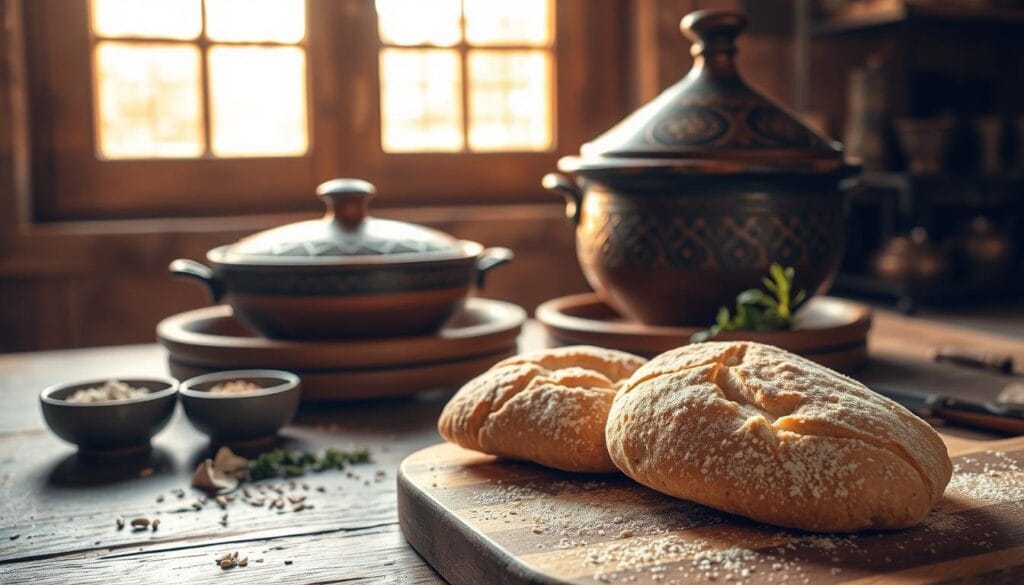
“The dough should stretch like a windowpane, not tear easily,” shared by generations of Moroccan home cooks.
Dough Not Rising?
- Check yeast freshness: Old yeast won’t work. Try mixing it with warm water and sugar. If it foams, it’s good to go.
- Water temperature is key: Use water between 105-110°F. Too hot, and it kills the yeast. Too cold, and it slows it down.
- Be patient with semolina: moroccan bread ingredients with semolina take longer. Give it 1-2 hours extra. A warm spot, like a turned-off oven with a light on, helps.
Bread Too Dense?
- Watch hydration levels: Too much kneading tightens the dough. For moroccan bread with semolina, stop when it’s soft but still holds shape.
- Test the dough: Stretch a small piece thin. If it tears, knead a bit more. If it stays thin, it’s ready.
- Resting is important: Let the dough rest for 30 minutes before shaping. This helps it keep its air pockets for a light texture.
Even experienced bakers tweak their recipes. Trust your instincts and your hands. They’ll tell you when the dough is ready.
Conclusion and Final Thoughts
Every time you shape dough into rounds or fold layers, you connect with history. Moroccan flatbread is more than food; it’s a link to communal ovens and family gatherings. These recipes are moments to pause, create, and connect with others.
Embracing Moroccan Culinary Traditions
Traditional Moroccan bread like Khobz celebrates shared labor. Imagine village ovens where neighbors laughed and dough rose. Today, the Mediterranean diet’s simple ingredients nourish both body and soul.
When you bake your first loaf, you’re weaving heritage into a tapestry. It’s not just baking; it’s a way to honor tradition.
Encouragement to Experiment with Recipes
Try adding sesame seeds or herbs to your Moroccan flatbread. Batbout’s softness is perfect for breakfast or in tagine broth. Even small changes, like orange blossom water or cinnamon, make your dough unique.
Share your creations and let your kitchen be a place where tradition meets innovation. It’s a space for discovery and connection.
We are interested in your feedback
Catchy recipe
Sounds delicious
Original idea
Yummy
Healty and nutritious
Well done
Interesting
Just good