

I often think back to a cozy kitchen in Fez, Morocco. The smell of cumin and preserved lemons felt like a warm hug. That’s where my love for Moroccan chicken tagine started. Today, I’m sharing a recipe that brings those same comforting flavors to your home.
This authentic moroccan chicken tagine recipe is more than just ingredients; it’s a story of patience. Chicken thighs cook slowly with apricots and green olives. The spices, like turmeric and ginger, add their magic over time. I’ve perfected every step, from the 24-hour marinade to the perfect mix of tangy lemons and sweet fruit.
What I love most is how this recipe fits into your kitchen. You can use an oven or stovetop, and the result is always comforting. Each bite brings North African markets and family tables to your table. It’s easy enough to make on a weeknight, turning your kitchen into a place of discovery.
FAQ
What makes this chicken tagine recipe authentic?
This recipe is true to Moroccan cuisine. It uses spices like cumin, ginger, and turmeric. It also includes preserved lemons and olives, showing the heart of Moroccan cooking.
Can I make this tagine if I don’t have a traditional tagine pot?
Yes, you can! A Dutch oven or braiser works well. Even the Instant Pot can be used. Just remember to cook slowly and patiently.
How can I ensure my chicken remains tender in the tagine?
Use bone-in, skin-on chicken for moisture and flavor. Marinate the chicken for at least 2 hours, or better yet, overnight. This makes the chicken tender and flavorful.
What spices are essential for a flavorful chicken tagine?
Key spices include cumin, ginger, turmeric, coriander, and smoked paprika. Some add cinnamon and saffron or ras el hanout for extra depth.
What traditional accompaniments should I serve with my tagine?
Serve with khobz, a round flatbread, and couscous. A fresh salad with cucumbers and tomatoes adds a nice contrast to the rich tagine flavors.
How should I store and reheat leftover tagine?
Keep leftover tagine in shallow airtight containers in the fridge for 3-4 days. Freeze for up to three months. Reheat gently on the stovetop, adding water if it’s too thick.
Can I make the tagine spicy if I prefer it that way?
Yes! Add cayenne pepper or spicy harissa paste for heat. Just make sure the spices balance well together.
How can I enhance the presentation of my tagine when serving?
Serve the tagine in its cooking vessel for a special touch. Garnish with herbs, lemon slices, and olives. This makes the dish colorful and inviting, just like Moroccan hospitality.
Introduction to Moroccan Tagine
When I first held a tagine pot, its clay curves felt like holding a piece of history. The steam rising from its cone-shaped lid carried the scent of centuries-old traditions—proof that cooking with a tagine isn’t just about meals, but memories.
What is Tagine?
A tagine is both the clay pot with its signature sloping lid and the slow-simmered dish it creates. The pot’s design traps steam, gently braising ingredients like chicken, spices, and dried fruits until they melt into harmony. Think of it as North Africa’s original slow cooker—no electricity needed, just patience.
The Importance of Tagine in Moroccan Cuisine
In traditional moroccan cuisine, tagine is more than dinner—it’s a gathering. Families pass it around, using bread to soak up sauces, sharing stories as flavors deepen. For a taste of this warmth, explore halal meal ideas that mirror this communal spirit. Every spoonful carries the care of generations, blending spices like cumin, ginger, and cinnamon into a dish that nourishes body and soul.
Key Ingredients for Chicken Tagine
Every flavorful chicken tagine starts with special ingredients. They mix tradition with a touch of magic. Let’s look at what makes this dish a cozy tradition in your kitchen.
Chicken Selection
I always choose bone-in, skin-on thighs or leg quarters. Their richness is perfect for slow cooking. The marrow and fat make the meat tender, soaking up all the moroccan spices.
I use 900g thighs, marinating them for at least an hour. This helps keep them moist.
Aromatic Spices
The magic begins with moroccan spices like ras el hanout, cumin, turmeric, and ginger. A mix of 1 tsp cumin, ½ tsp saffron threads, and a pinch of cinnamon gives that earthy warmth. Fresh ginger adds a zing, balanced by the tang of preserved lemons.
Fresh Produce
- Golden onions caramelized to sweeten the base
- 3 preserved lemons for their briny kick
- Green olives (100g) and dried apricots for texture contrast
- Garlic and ginger root for depth
These ingredients come together beautifully. They create a dish that feels like a warm hug. Patience is key to letting the flavors blend into that flavorful chicken tagine you’ll want to make again and again.
Essential Cooking Equipment
When making an easy moroccan tagine recipe, the right tools are crucial. A traditional clay tagine pot is loved for its shape. It traps steam, making every ingredient taste richer. But, if you don’t have one, we’ve got alternatives!
- Traditional Tagine Pot: Clay pots keep heat and moisture even. Use a heat diffuser for stovetop cooking.
- Dutch Oven: Cast iron, like Le Creuset, is great. Its tight lid keeps juices and aromas in.
- Slow Cooker or Instant Pot: Ideal for quick meals. The Instant Pot cooks in just 30 minutes.
| Equipment | Best For | Cooking Time |
|---|---|---|
| Clay Tagine | Authentic slow cooking | 1–2 hours |
| Le Creuset Dutch Oven | Even heat distribution | 50 minutes |
| Instant Pot | Quick meals | 30 minutes total |
Choosing your equipment is important, but so is patience and love. These are the keys to a great homemade moroccan dish. Even a simple saucepan with a lid works if you cook slowly. It’s the slow mixing of flavors that makes tagine special, not the pot.
Preparing the Chicken
The heart of any flavorful chicken tagine starts with how you treat the chicken. This step turns ordinary ingredients into the best chicken tagine recipe your kitchen has ever seen. Let’s care for this process with attention—every touch counts.
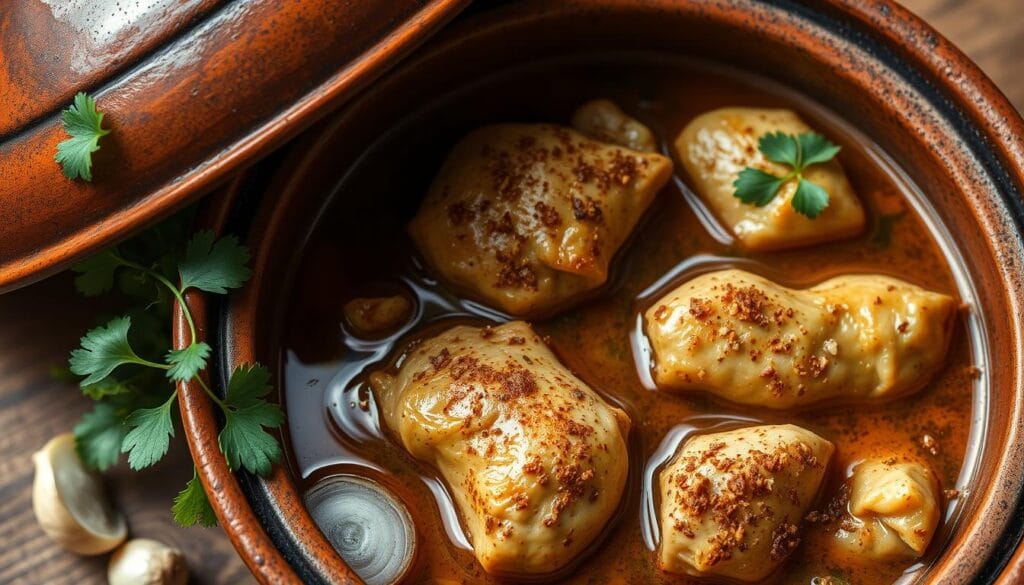
Start by picking bone-in, skin-on thighs—their fat keeps meat juicy. Trim visible fat but keep skin on; it’s where the magic is. I use 3.5–4 pounds of thighs for a family-friendly 4 servings.
Marinating for Flavor
- Rub chicken with minced garlic, fresh ginger, and ¼ cup olive oil
- Combine 2 tbsp paprika, 1 tsp cumin, salt, and pepper into a paste
- Massage this mixture into every crevice—this is where spices meet meat
- Cover and refrigerate for 2+ hours (overnight for maximum depth)
This step isn’t optional—it’s love in liquid form. The longer it rests, the deeper the flavors bloom.
Choosing the Right Cut of Chicken
Thighs aren’t just a cut—they’re a commitment to tenderness. Avoid boneless breasts; they dry out too easily. When trimming, keep skin intact but slice excess fat near the joint. Let the marinated chicken rest at room temperature 30 minutes before cooking. This simple step prevents uneven cooking and ensures every bite stays juicy.
Crafting the Perfect Spice Blend
Every authentic moroccan chicken tagine recipe starts with a mix of flavors from moroccan spices. Let me show you how to create this blend of warmth and balance. Picture the lively markets of Marrakech, where spices like cumin, coriander, and turmeric share secrets of old traditions.
Common Spices Used
My pantry always has these key spices:
- Ras el hanout—a magical mix of 20+ spices like cardamom and nutmeg
- Earthy cumin and citrusy coriander
- Golden turmeric and smoky paprika
- A pinch of cinnamon for sweetness and cayenne for a gentle fire
Balancing Flavors
It’s like playing a musical instrument—we aim for harmony, not chaos. Begin by toasting whole spices in olive oil before grinding them. When mixing, let each spice stand out: cumin grounds the flavor, while cinnamon adds a sweet melody. Add ras el hanout last to keep its delicate flavor intact. Taste as you go—this is your creation, not a set formula.
Don’t forget the preserved lemon’s tang—it’s our secret to balance richness and let spices shine. Trust your senses as you adjust—this is how tradition becomes personal.
Cooking Techniques
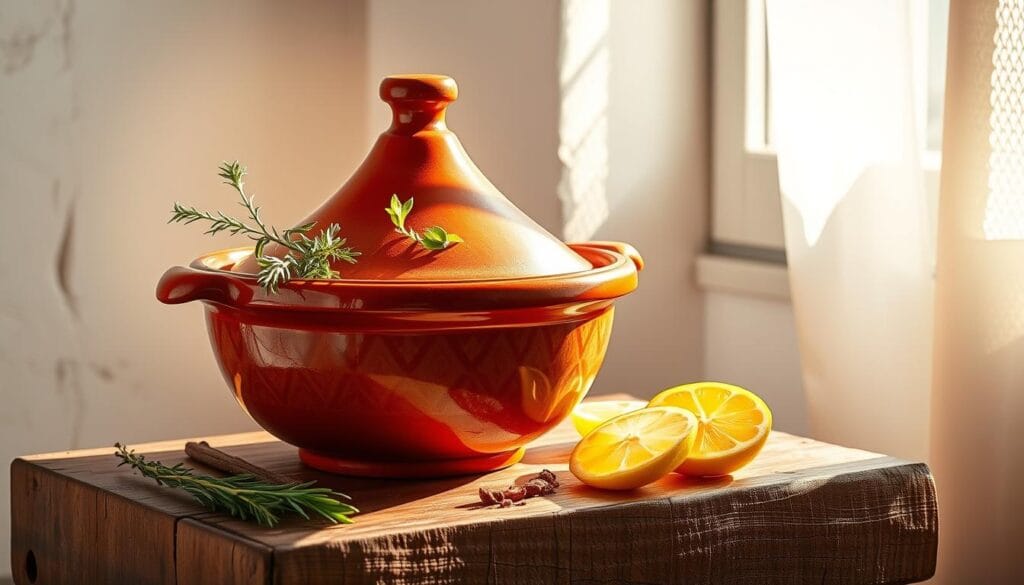
Let’s dive into the secrets of making this easy moroccan tagine recipe a hit. Every step is crucial, from browning to layering. These techniques transform simple ingredients into a delicious homemade moroccan dish that everyone adores.
Browning the Chicken
Patience is essential here. Heat 2 tablespoons of olive oil until it shimmers. This creates a golden crust. Place chicken pieces skin-side down first, letting them sear untouched for 5-7 minutes.
The Maillard reaction happens quickly, so don’t rush. Once golden, flip and finish browning the other side. Set aside but keep that flavorful oil in the pot.
Layering Ingredients
Begin with caramelized onions as your base—they create a sweet foundation. Arrange chicken around the pot’s edges, then nestle potatoes and apricots in the center. Pour the marinade over everything, adding broth last.
The layered structure ensures even cooking under the tagine’s cone lid.
| Step | Action | Time |
|---|---|---|
| 1 | Brown chicken | 10-15 mins |
| 2 | Layer onions & aromatics | 5 mins |
| 3 | Add chicken & spices | 5 mins |
| 4 | Simmer gently | 45-60 mins |
Let flavors meld without stirring too much. After 30 minutes, drizzle broth over the top layer if needed. This method keeps the dish moist and full of depth. Trust this process—it builds layers of flavor that make every bite special.
Traditional Accompaniments
Enjoying a hearty tagine is even better with the right sides. These sides are like a canvas for the dish’s rich flavors. Let’s see what you should have on your table.
In many homes, a warm loaf of khobz is passed around like a shared story—each tear a chance to soak up the sauce’s soul.
couscous
Couscous is a great side, even if it’s not traditional. It’s a cozy bed for the tagine’s juices. For a real North African feel, steam it with olive oil and parsley. Serve it loose so everyone can mix it with the stew.
moroccan bread
Khobz, a dense, round flatbread, is a must. Tear it to dip into the sauce, letting every crumb soak up the spices. It’s a ritual that encourages slow eating and laughter.
| Accompaniment | Role | Tradition Note |
|---|---|---|
| Couscous | Flavor absorber | Popular modern pairing |
| Khobz | Sauce-soaking tool | Timeless staple |
| Fresh salads | Crunchy contrast | Modern addition |
Try a crisp salad of cucumber and tomato to balance the meal. For a real experience, serve the bread warm. Its scent will remind you why Moroccan cuisine is a journey for the senses.
The key is balance. Let the bread and couscous support the tagine, not take over. This way, meals become lasting memories.
Tips for Serving
When it’s time to serve your best chicken tagine recipe, think of it as a story. My family always says the first bite begins with the eyes. So, let’s make your table feel like a taste of Marrakech.
Start by placing your finished tagine directly on the table in its cooking pot. Surround it with bowls of couscous or warm bread. This authentic moroccan chicken tagine recipe shines brightest when presented with care.
- Place the tagine vessel on a wooden board for rustic charm
- Arrange lemon wedges like jewels around the rim
- Drizzle with extra virgin olive oil before serving
Garnishing is your final brushstroke. Sprinkle chopped cilantro and parsley over the top—like confetti of freshness. A squeeze of lemon over each portion adds brightness. Here’s how to layer flavors visually:
| Herb | Flavor Profile |
|---|---|
| Cilantro | Briny freshness |
| Parsley | Herbaceous balance |
| Preserved lemon zest | Salt-cured tang |
Let the steam rise dramatically when you lift the lid—this moment invites conversation. Serve family-style so everyone can enjoy the shared warmth of this dish. Each spoonful should tell a story, and every bite should feel like a hug from North Africa.
Storing and Reheating Leftovers
Enjoying your homemade moroccan dish doesn’t have to end with one meal. Leftovers from this easy moroccan tagine recipe can shine again if stored and reheated thoughtfully. Here’s how to keep those flavors vibrant for days or even months.
First, let your tagine cool to room temperature—never refrigerate hot leftovers. Then, transfer it to shallow airtight containers to speed cooling. In the fridge, it stays fresh for 3-4 days. For longer storage, freeze portions in labeled bags or containers. Frozen tagine keeps its richness for up to 3 months—just thaw overnight in the fridge before reheating.
- Let cool completely uncovered
- Divide into meal-sized containers
- Seal tightly with airtight lids
Reheating brings the dish back to life gently. On the stovetop, simmer over low heat with a splash of broth to revive moisture. For the microwave, cover with a damp cloth and heat in 30-second bursts. Always avoid high heat—gentle warmth preserves tenderness and spice harmony.
- Add a tablespoon of water if needed
- Avoid microwaving in large portions
- Never boil—keep it warm, not scalding
Leftovers often surprise with deeper flavors than the first serving. The spices meld further, and the chicken stays juicy if reheated right. This slow-cooked dish rewards patience even after it’s off the stove. When you’re done, savor every bite—your kitchen deserves to feel like a comforting space, not a science lab.
Conclusion: Embracing Moroccan Flavors at Home
Cooking this recipe is more than just making a meal. It’s a way to taste centuries of tradition. Moroccan cuisine tells stories of shared meals and cooking passed down through generations. When you cook chicken in a tagine pot with preserved lemons and spices, you’re holding a piece of North Africa’s history.
Every ingredient has its own story. The mix of cumin, cinnamon, and turmeric shows how Moroccan cuisine balances bold flavors with harmony. Even small details, like crumbling msemmen bread over couscous or making mint tea, show the warmth of communal meals. These dishes are more than food; they’re invitations to slow down and enjoy connection.
Authentic North African dishes like this tagine rely on simplicity and patience. The tagine pot, with its cone-shaped lid, helps flavors blend gently. This mirrors how Moroccan culture combines Berber, Arab, and Mediterranean influences into something unique. Serving it with couscous or over crusty bread makes it a bridge to a heritage that values nourishment and togetherness.
Next time you want something comforting yet adventurous, use your spices. The scent of saffron and the tang of preserved lemons remind you that every bite honors traditions. Share this dish with loved ones—it’s a small way to keep alive the spirit of Moroccan kitchens, where every meal is a celebration of shared stories and slow-cooked care.
We are interested in your feedback
Catchy recipe
Sounds delicious
Original idea
Yummy
Healty and nutritious
Well done
Interesting
Just good