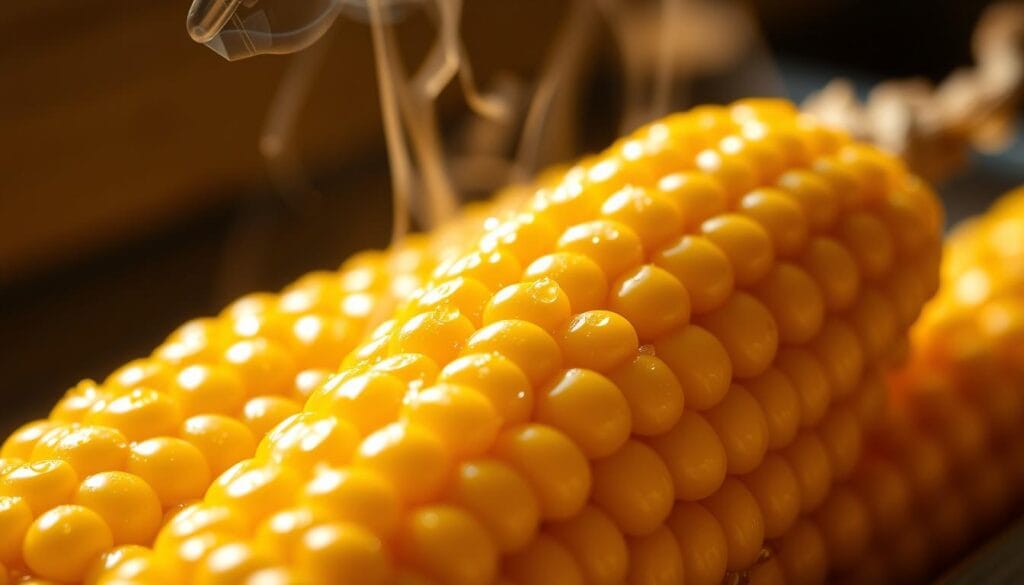
There’s something magical about boiling water and the smell of corn on the cob. I remember the sweet kernels and butter on my wrists during picnics. Boiled corn on the cob brings back those happy times. It’s ready in just 8 minutes, perfect for summer.
Boiled corn is more than a recipe. It’s about the moments we share. Whether it’s with chili-laced cotijena or herby basil butter, it’s special. Even now, I enjoy it with chorizo dinners or a sprinkle of sea salt. Each kernel is a burst of flavor, reminding me of home.
FAQ
How do I select the best corn for boiling?
Choose corn with bright green husks that are firm. The silks should be light and slightly sticky. Each ear should feel heavy, showing plump kernels inside.
Fresh sweet corn is best, but frozen corn is good when fresh isn’t available.
What’s the ideal cooking time for boiling corn on the cob?
Boil fresh corn for 3-4 minutes. For a richer flavor, try a milk-butter bath for 6-8 minutes. Avoid overcooking to prevent mushy kernels.
Can I boil corn that’s frozen?
Yes! Boil frozen corn straight from the freezer. Cook for 5-7 minutes until it’s heated through. It’s a quick and easy option!
What are some great flavor enhancements for boiled corn?
Add olive oil, sea salt, and fresh lemon juice for a sweet taste. Try herb-infused butters or chili and lime for a twist!
How should I serve boiled corn at a gathering?
Use individual corn holders for clean eating. Cut corn into sections for easy handling. Serve with grilled meats and summer salads for a great meal.
How can I store leftover boiled corn?
Wrap leftover corn in foil or store it in an airtight container in the fridge for up to four days. This keeps it fresh and flavorful.
Is grilled corn better than boiled corn?
Both have their own benefits! Boiling keeps moisture and sweetness in, while grilling adds smoky flavor. Your choice depends on what you like and your cooking setup.
What can I make with leftover boiled corn?
Turn leftover corn into tasty salsas, refreshing salads, or cozy chowders. Get creative and mix it with fresh ingredients for new dishes!
How do I reheat boiled corn without losing flavor?
Reheat by wrapping corn in a damp paper towel and microwaving gently. Or use quick steam to revive its flavor and moisture without overcooking.
Are there any myths about corn on the cob I should know about?
Yes, one myth is that all corn is sweet. Different types have varying sweetness and textures. Another myth is that corn is unhealthy, but it’s actually good for you when eaten in moderation!
The History of Corn and Its Culinary Use
Imagine sitting around a fire, enjoying boiled corn on the cob like our ancestors did. This simple dish has a rich history. Let me tell you how corn’s journey has shaped our tables.
“The earth gives us corn to feed our people and honor our way of life.” — Anishinaabe teachings
Native peoples in southern Mexico first grew corn over 10,000 years ago. They shared their knowledge of growing and preparing it. By the time Europeans arrived, corn had spread to Maine. Today, it covers 92 million acres in the U.S., showing its lasting importance.
Before traditional boiled corn on the cob became popular, corn was sacred. Tribes like the Iroquois and Hopi saw it as a gift from the Great Spirit. They taught settlers to boil it in salted water, a practice we still enjoy today.
This method was more than just food. It was a way to connect with community and land.
Early recipes were simple: fire-roasted or boiled with herbs. Over time, settlers added butter and spices, making it a comfort food. Today, we try new toppings like chili-lime or garlic butter. Yet, the heart of boiled corn on the cob stays true to its ancient roots.
Every bite of corn tells stories of resilience and sharing. It’s more than a side dish—it’s a link to the past.
Choosing the Right Corn for Boiling
When I walk through the market, I know the secret to the best boiled corn on the cob recipe. It’s all about feeling the husk. It should be bright green and tight, not dry. The golden tassels are a sign of freshness.
And when the corn feels heavy, it’s ready to be boiled. Let’s dive into the details.
Fresh vs. Frozen: What’s Best?
Fresh corn is at its best from July to September. But when that time ends, frozen corn is still tasty. Just thaw and dry it before boiling.
Fresh corn is sweeter, but frozen corn is always a good choice.
Sweet Corn Varieties to Try
- Silver Queen: buttery and mild, perfect for simple seasoning.
- Butter & Sugar: extra-sweet, ideal for summer feasts.
- Bi-color: a sunny mix of yellow and white for visual delight.
Tips for Selecting the Perfect Ear
Check the kernels by peeking under the husk. Plump kernels mean it’s fresh. Avoid husks with brown spots or dry silk. The tassels should be light golden or creamy white. Dark or sticky tassels are a no-go. And remember, a rattle means the kernels are dry.
Preparing Corn on the Cob for Boiling
Every step is important for perfect corn. Let’s start with preparation. This is where flavor and tenderness begin. Proper prep ensures your how to cook boiled corn on the cob journey stays smooth from start to finish.
How to Husk Corn Effectively
Gently peel the husks like unwrapping a gift. Hold the ear upright and pull the leaves downward, revealing the kernels. Discard any dried leaves but leave a few layers to protect the kernels. A quick rinse under cool water finishes the job—no soggy mess needed.
Removing Silks Like a Pro
Silks vanish with this trick I’ve learned: wrap a slightly damp paper towel around the ear and twist. The moisture lifts the threads effortlessly. For any leftovers, a soft brush or rinse does the trick. No more sticky threads clinging to your meal!
The Ideal Size for Boiling
Large ears? Split them lengthwise for even cooking. This makes quick boiled corn on the cob achievable in just minutes. Use a sharp knife—clean cuts mean no wasted kernels. Smaller pieces also mean less waiting time, especially when little hands are eager to eat!
These steps turn routine prep into a ritual of care. Every kernel deserves love before it hits the pot. Trust me—these steps save time and frustration, making every bite worth the effort.
Boiling Techniques for Perfect Corn
Let me show you how to cook boiled corn on the cob perfectly. Every step is important. We want the corn to be just right.
Essential Boiling Equipment
Here’s what you’ll need:
- A 12-quart stock pot with a snug-fitting lid
- Sharp kitchen shears or a knife to trim husks
- Tongs for easy handling
- A colander for draining
Step-by-Step Boiling Instructions
1. Fill the pot with water until it reaches half an inch above the corn. Add a teaspoon of sugar to enhance natural sweetness.
2. Bring water to a rolling boil. Gently lower husked ears into the water, ensuring they’re spaced evenly.
3. Reduce heat to medium-low—keep the water at a steady simmer.
4. Cook for 5 minutes. Taste a kernel: it should feel tender but still firm to the touch.
Timing: How Long to Boil Corn
Overcooking turns sweetness to starch—so patience is key. Fresh corn needs just 5-7 minutes. For a creamy twist, add ¼ cup milk and ½ tsp butter to the water during the last 2 minutes of cooking.
A quick tip: Check corn after 5 minutes. If kernels gleam and release easily from the cob, it’s ready. Trust your senses—the aroma will intensify as it cooks.
We recommend serving immediately to lock in that crisp-tender perfection. Remember, quality starts with fresh corn: pick ears with moist husks and damp silk.
Flavor Enhancements: Beyond Butter and Salt
Boiled corn doesn’t have to be boring. The best recipe adds a splash of creativity. Try a zesty lemon drizzle or a smoky paprika rub. These simple twists bring out corn’s natural sweetness.
Seasoning Ideas for Boiled Corn
Begin by brushing corn with olive oil before boiling. This keeps it moist. Then, add these flavor boosts:
- Garlic powder and black pepper for a savory kick
- Cayenne or chili powder for a gentle heat
- Zested lemon or lime for brightness
- Smoked paprika or chipotle powder for depth
Toppings That Elevate the Experience
Don’t just use butter. Here are some ways to make your corn special:
- Cotija cheese and chili flakes (like street corn’s creamy crunch)
- Chive-lime yogurt drizzle
- Caramelized onions or grilled scallions
- Balsamic glaze for a tangy twist
Unique Flavor Combinations to Try
My favorite is basil butter. It’s made with softened butter, minced basil, garlic, and Parmesan. Spread it warm for a herby flavor.
For something bolder, try this Mexican-inspired treat:
Mexican Street Corn (Elote): Slather boiled corn with mayo or crema. Then, sprinkle cotija cheese, lime juice, and chili powder. Finish with fresh cilantro leaves. This 3,000-year old tradition makes corn a flavorful treat!
Even a little hot honey or toasted cumin seeds can change the game. Don’t be afraid to experiment. Your taste buds will love it!
Serving Suggestions for Boiled Corn
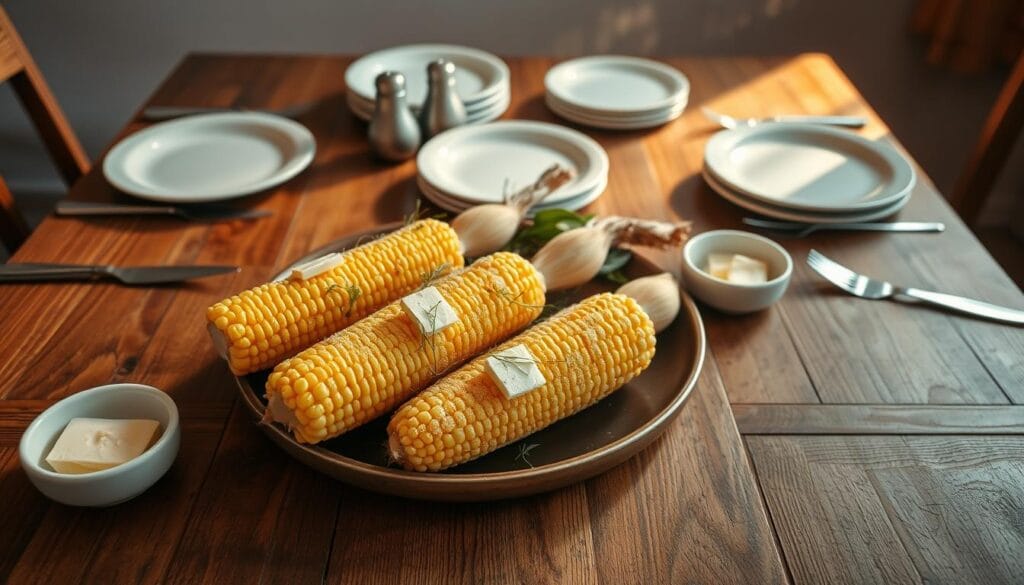
Sharing a platter of easy boiled corn on the cob with friends is magical. Start by presenting it in a special way. Arrange ears on a wooden board with toppings like chili-lime butter or herb salt.
Kids enjoy bite-sized pieces, so slice corn off the cob. Toss it with a zesty vinaigrette for a quick salad.
Pair your traditional boiled corn on the cob with summer dishes. Try veggie burgers with black bean sauce or avocado tacos. The sweet corn pairs well with tangy salsas or smoky grilled fish.
For picnics, pack corn with Oyster Mushroom Po’ Boys. Their crisp breading and tangy remoulade are perfect with buttery corn.
- Create a toppings bar with honey-butter, cotija cheese, and smoked paprika.
- Serve corn alongside summer staples like BBQ jackfruit sandwiches or fresh watermelon wedges.
- Host a corn tasting night—compare plain boiled ears with spiced variations.
The best meals are shared. Whether it’s a backyard gathering or a cozy family dinner, boiled corn brings everyone together. Its simplicity sparks conversation, making it the heart of any summer table.
Health Benefits of Eating Corn on the Cob
There’s more to boiled corn on the cob than its buttery crunch—it’s a nutritional powerhouse packed with goodness. Let me break down how this summery treat supports your well-being without sacrificing flavor.
Nutritional Value of Corn
Each ear of easy boiled corn on the cob offers:
| 1 ear of corn | Nutrition |
|---|---|
| Calories | ~122 (similar to an apple) |
| Fiber | 3g—great for digestion |
| Protein | ~5g per cup of kernels |
| Fat | Only 1g per ear |
And it’s gluten-free! Corn also delivers vitamins C, B6, and folate, plus antioxidants like lutein—those yellow kernels are nature’s gift to eye health, according to Johns Hopkins Medicine.
Why Corn is a Great Summer Snack
Summer calls for light, satisfying bites—and corn fits the bill. With 5g of natural sugar, it’s sweet yet low-glycemic, making it a smart choice for blood sugar balance. Compare that to a banana’s 14g of sugar or an apple’s 19g. Plus, its fiber keeps hunger at bay between beach days or backyard barbecues.
Fiber and Digestive Advantages
That crisp texture comes with a bonus: insoluble fiber. This “dietary broom” sweeps through your system, feeding gut-friendly bacteria and easing constipation. Studies show corn’s fiber may even lower cholesterol levels. Pair it with herbs like cilantro or lime for a easy boiled corn on the cob side that does double duty for your gut and heart.
Grilling vs. Boiling: Which is Better?
Enjoying corn is all about choice. I’ve tried both boiling and grilling. Boiling makes corn sweet and juicy. Grilling adds a smoky flavor. Choose based on what you’re in the mood for.
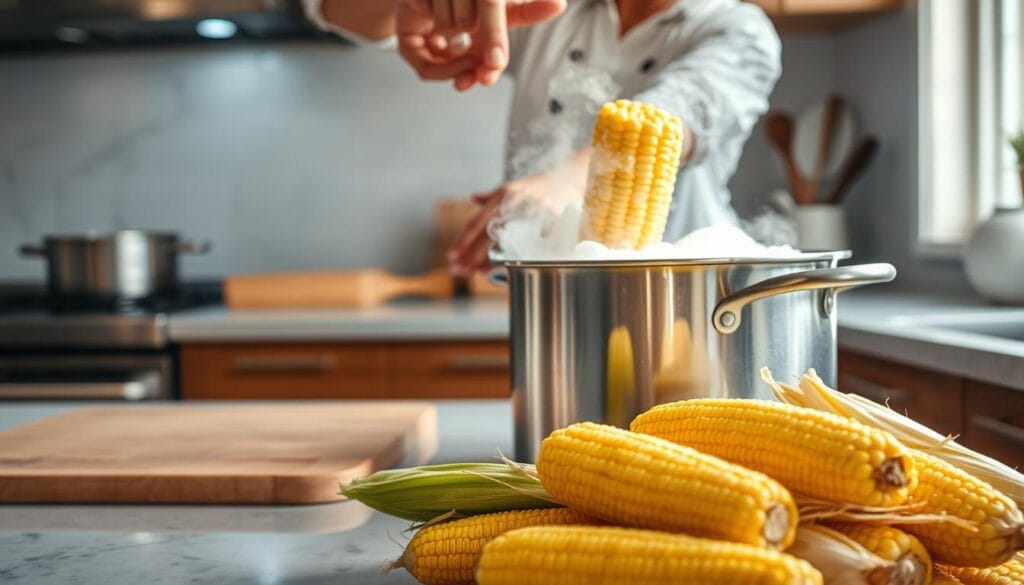
- Boiling: Quick at 3-5 minutes. Add milk and butter for the best boiled corn on the cob recipe.
- Grilling: Takes 8-10 minutes. It brings a savory, caramelized taste.
- Steaming: My secret go-to—ready in 5 minutes with no soggy husks.
Boiling keeps vitamins like vitamin C and folate safe. Grilling adds a rich flavor. Boiled corn has 80 calories per ear, making it a light but filling choice.
Boiling is great for quick meals or indoor cooking. But grilling is perfect for summer. The best method is the one that brings your family together.
Creative Recipes Featuring Boiled Corn
Did you know perfectly boiled corn on the cob can star in many dishes? I’ve used leftover corn in salsas, salads, and soups. It shows that summer’s simplest veggie can be more than just a side dish. Here are three recipes that highlight the quick boiled corn on the cob.
“Corn isn’t just a side—it’s a blank canvas for creativity.” – Chef Maria Rivera
Begin by boiling extra ears using the quick boiled corn on the cob method. Once they cool, chop the kernels. Then, you can turn them into:
Simple Corn Salsa
Mix boiled corn with diced tomatoes, jalapeños, and lime juice. Add a bit of cilantro and lime for a zesty salsa. It’s great with tacos or chips. Try it with grilled fish for a light dinner.
Boiled Corn Salad
Toss chilled corn kernels with cucumbers, red onions, and a tangy vinaigrette. Top with feta cheese and basil for a refreshing lunch. It’s a hit at summer gatherings!
Corn Chowder
Simmer perfectly boiled corn on the cob in a creamy broth with potatoes and onions. Add paprika and cream for a hearty bowl of comfort. This soup is perfect for transitioning summer into fall.
These recipes are just the beginning. Try adding corn to pancakes, salads, or even desserts. The secret? Always use corn that’s been gently boiled to keep its sweetness. Now, let your cob shine with more than just butter and salt!
Corn on the Cob Myths and Facts
Let’s clear up some corny myths! You might’ve heard that boiling corn is tricky. Like, adding salt makes it tough or soaking is a must. But, let me tell you the truth with kindness and clarity.
Debunking Popular Misconceptions
- Myth: Salt toughens corn kernels. Fact: Salt makes it taste better without changing its texture—so go ahead and add it!
- Myth: Soaking corn before boiling is essential. Fact: Fresh corn doesn’t need prep—boiling it right away keeps it crunchy.
Fun Facts About Corn
Did you know each ear of corn has about 800 kernels in 16 rows? That’s a lot of sweetness! Modern corn keeps its sugars longer than old-fashioned types, thanks to breeding. And, while corn has natural sugars, a medium ear has less sugar than an apple or banana—so it’s a guilt-free snack.
The Truth Behind Corn’s Sweetness
Traditional boiled corn on the cob gets its sweetness from sucrose. But, it’s science that keeps it tasting fresh. Newer hybrids slow down sugar-to-starch change, so even day-old corn stays sweet. No need to rush to the stove right after picking anymore!
Next time you boil corn, remember: simplicity is key. Follow basic boiled corn on the cob cooking instructions with confidence. You’ll see tradition meets science in every bite.
Storing and Reheating Boiled Corn on the Cob
Learning to cook boiled corn on the cob is just the beginning. Keeping it fresh makes meals easy. Here’s how to enjoy every bite like it’s straight from the stove.
Best Practices for Storing Leftovers
Wrap corn tightly in foil or a clean container and refrigerate within two hours of cooking. For the best texture, store husked ears in a damp paper towel inside a sealed bag. This way, corn stays juicy for up to four days.
How to Reheat Corn Without Losing Flavor
For a quick warm-up, microwave unwrapped corn in 20-second bursts—check after 40 seconds. In the oven, bake at 350°F for 5-7 minutes, rotating every 30 seconds for even heat. A gentle steam bath in boiling water for 2-3 minutes also works wonders.
Freezing Corn: Tips for Long-Term Storage
Freezing lets you enjoy summer’s sweetness year-round. Blanch corn for 2 minutes, cool quickly, then freeze kernels in airtight bags. Squeeze out air pockets to prevent ice crystals. Thaw overnight in the fridge before reheating.
With these steps, you’ll always have summer’s taste within reach—even in winter. For more easy boiled corn on the cob ideas, explore our griddle breakfast guides at Gustative Recipes. Every kernel deserves to shine, so store wisely and savor slowly.
We are interested in your feedback
Catchy recipe
Sounds delicious
Original idea
Yummy
Healty and nutritious
Well done
Interesting
Just good