
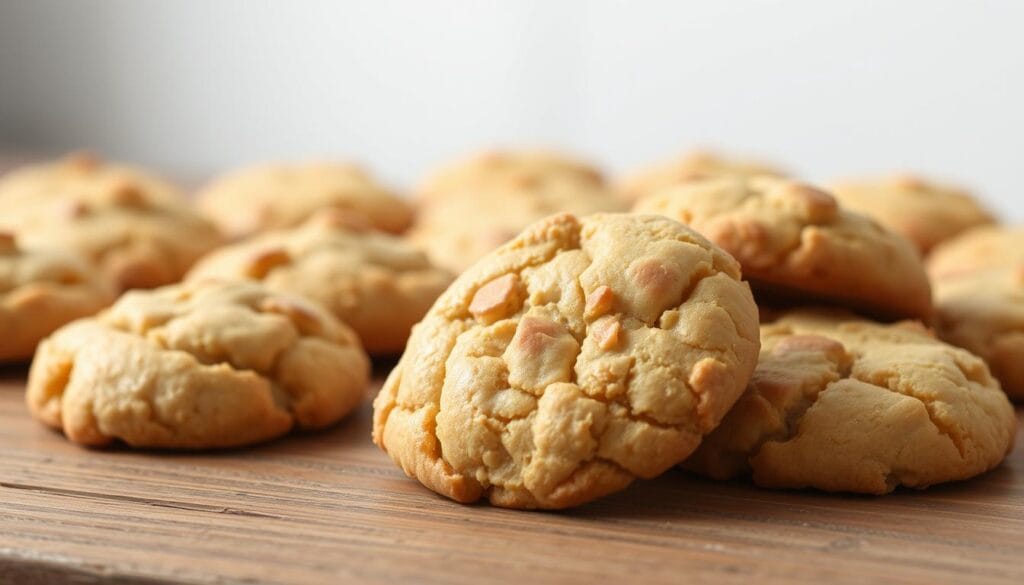
There’s a special magic in the kitchen when simple ingredients turn into something warm and comforting. I once found myself in a panic when I realized I was out of butter. But then, I discovered how to bake without it, using oil and coconut sugar.
These butter-free cookies are more than just a solution. They celebrate our ability to adapt. They show us that even without butter, we can still make delicious treats.
Whether you’re avoiding dairy, looking for healthier options, or just out of butter, this recipe is for you. With coconut oil and chocolate chips, you can make 13 large cookies in just 25 minutes. They stay soft and sweet, proving that every bite can feel like home.
Let’s bake together. This recipe reminds us that even small hiccups can lead to tasty discoveries. Your kitchen is full of possibilities, and these cookie recipe no butter prove it.
FAQ
Yes, they taste different. But that doesn’t mean they’re less tasty! Without butter, other ingredients like brown sugar and vanilla get to stand out more.
Neutral oils like canola or vegetable oil are great substitutes. Light olive oil and refined coconut oil also work well. They add richness without overpowering the flavor.
Absolutely! To make them vegan, use flax eggs instead of regular eggs. Make sure all your ingredients, like chocolate chips, are dairy-free.
Don’t overbake them and measure your wet ingredients right. If they’re too dry, add a bit more oil. You can also use applesauce or mashed banana to add moisture.
Try nuts, dried fruits, and different chocolate chips. You can also use coconut flakes, seeds, or flavored extracts to add more flavor and texture.
Store them in an airtight container with parchment paper between layers. For extra moisture, add a slice of bread or a small apple. You can also freeze them for longer storage.
Yes! Reduce the sugar and use natural sweeteners like mashed bananas or unsweetened applesauce. Choose whole grain flours for more nutrition without losing flavor.
Look for golden edges and slightly underbaked centers. They’ll set as they cool. This visual check is key for a soft, chewy texture.
Why Choose a Cookie Recipe Without Butter?
When I started using vegetable oil instead of butter, I opened up a new world of baking. It’s comforting and good for our bodies. A healthy cookie recipe means we can enjoy treats that are both nourishing and indulgent.
For those with dietary restrictions, a dairy-free cookie recipe is a blessing. It doesn’t feel like a sacrifice.
Health Benefits of Butter-Free Cookies
Choosing butter-free baking cuts down saturated fat by over 50%. Friends with heart health goals enjoy these cookies without guilt. Here’s why they’re a smart choice:
- Vegetable oil’s unsaturated fats are good for the heart
- They’re free from dairy allergens, yet stay soft and tender
- They have less cholesterol but still melt in your mouth
Ideal for Dairy-Free Diets
These recipes are great for everyone, whether you’re managing lactose intolerance or following a plant-based diet. My kitchen is a safe space for friends who’ve been left out of cookie exchanges. Here’s how they’re inclusive:
- They’re safe for those avoiding dairy proteins
- They’re ideal for vegan celebrations, needing no substitutions
- They’ve been rated 4.72/5 by 369 home bakers who value inclusivity
Every bite is a chance to connect, not exclude. Let’s bake with love—our hearts and loved ones will appreciate it.
Essential Ingredients for Butter-Free Cookies
When baking without butter, picking the right ingredients is key. Your cookies will be soft, sweet, and delicious. The best oil substitute for cookies varies based on taste and dietary needs. Let’s explore what makes these recipes stand out.
Common Substitutes for Butter
Vegetable oil and canola oil are great for a neutral taste. They balance other flavors well. Coconut oil adds a tropical warmth without being too strong.
For a healthier option, avocado oil or light olive oil are good choices. But, avoid extra-virgin olive oil in sweet treats as it’s too strong.
Check out this recipe to see how oil makes cookie recipes without butter into family hits. The dough stays moist, and the cookies remain tender.
Flavor Enhancers to Consider
Brown sugar and vanilla extract make every bite special. Try almond extract for a nutty flavor or espresso powder for chocolate. A little salt enhances sweetness without being too salty.
- Vanilla extract: Adds classic richness
- Almond extract: Elevates chocolate chip or oatmeal variations
- Warm spices like cinnamon or nutmeg: Enhance complexity without butter
Quality ingredients are crucial. Fresh oils and real extracts make your cookies taste amazing. Whether you’re dairy-free or saving money, these tips ensure your cookies are homemade with love.
Step-by-Step Guide to Making Cookies Without Butter
Let’s explore my favorite way to make cookie recipe no butter. It’s brought happiness to many kitchens. I’ve tested every step to make sure your cookies are tender and sweet.
Preparing Your Cookie Dough
Begin by mixing dry ingredients. You’ll need 1½ cups all-purpose flour, 1 tsp baking soda, ½ tsp baking powder, and a pinch of salt. Whisk until it’s light and fluffy.
In another bowl, mix ½ cup brown sugar, ½ cup granulated sugar, and ½ cup vegetable oil. Use an electric mixer for 1-2 minutes. Add two eggs (or 2 flax eggs for the vegan cookie recipe) and vanilla extract. Mix until it’s smooth.
Then, gently fold in the dry ingredients. Stir in ¾ cup dairy-free chocolate chips. Chill the dough for 30 minutes. This helps the cookies keep their shape.
Baking Tips for Perfect Cookies
Preheat your oven to 350°F. Scoop dough balls onto parchment-lined pans, leaving 2 inches between each. Bake for 10-12 minutes until the edges are golden.
Let them cool on the sheet for 5 minutes before moving them to a wire rack. For crisper edges, bake for 2 more minutes. Remember to rotate the pan halfway for even browning.
- Use parchment paper to prevent sticking
- Let dough rest after mixing to enhance texture
- Adjust baking time based on your oven’s personality
Following these steps will make every batch of cookie recipe no butter a hit. Patience during chilling and careful oven monitoring are key. Your kitchen will thank you, and so will your cookies.
Popular Variations of Butter-Free Cookies
Adapting classic recipes to fit everyone’s needs is magical. My vegan cookie recipe is as cozy as a hug. Two favorites show how easy it is to make butter-free baking work. Swapping flaxseed with water turns any eggless cookie recipe into a hit.
Chocolate Chip Delights That Melt Hearts (and Mouths)
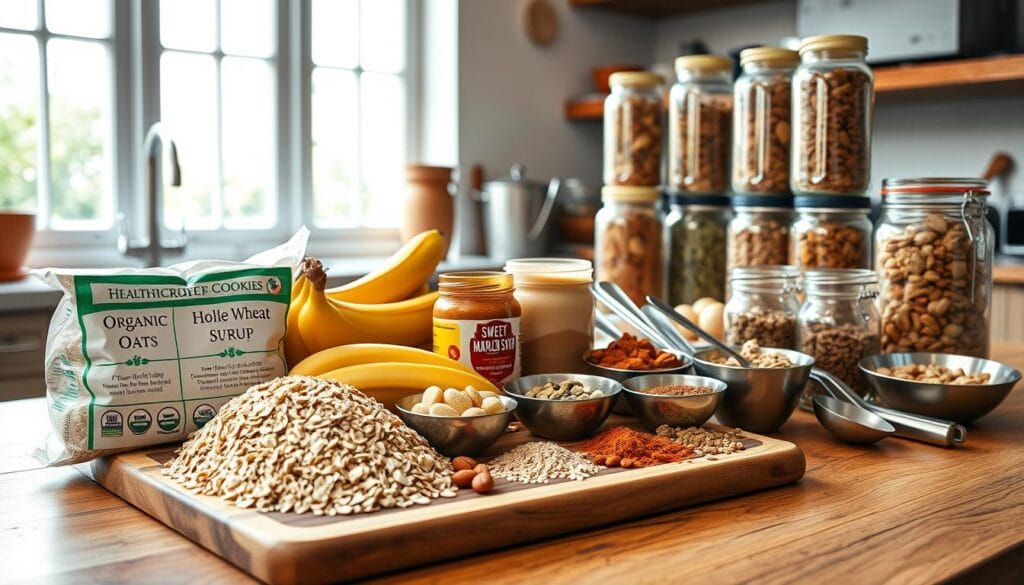
My vegan chocolate chip cookies use almond flour and maple syrup. They get a boost from dark chocolate chunks and sea salt. Adding ½ cup of dried cranberries or coconut gives extra texture.
Bake at 350°F for 12 minutes. This makes the centers chewy, perfect for sharing with friends!
Peanut Butter Oatmeal: A Nutty Comfort Classic
These eggless cookies mix creamy peanut butter with rolled oats. They’re gluten-free too. Adding a tablespoon of honey or maple syrup adds depth.
I love adding walnuts or dried apricots for extra flavor. Chilling the dough for 20 minutes helps it keep its shape.
Whether you’re gluten-free, dairy-free, or just looking for something new, these recipes are a journey of discovery. Swap in your favorite ingredients. Every bite is a chance to spread joy, one delicious experiment at a time.
Tips for Achieving the Perfect Texture
Learning to bake butter-free cookies taught me patience and precision. The right texture isn’t just about time—it’s about observing subtle changes. Here’s how to perfect that soft center and golden edge without guessing.
How to Know When Cookies Are Done
- Look for golden edges—they signal crispness without overbaking.
- Touch the center gently; it should feel soft but not doughy.
- Let them rest 3–5 minutes on the pan—they firm up as they cool.
Adjusting Bake Time for Different Cookie Types
| Cookie Type | Bake Time | Key Tip |
|---|---|---|
| Standard | 9–11 minutes | Use ½ teaspoon baking soda for softer edges. |
| Larger | 12–14 minutes | Flatten dough slightly before baking. |
| Chewy | 10–12 minutes | Add an extra egg yolk for moisture. |
A healthy cookie recipe thrives on precision. For crispier edges, chill dough 24 hours—this firms fats evenly. And remember: patience is key. Those golden edges mean success!
Storage Tips for Your Butter-Free Cookies
Keeping your butter-free cookies fresh is key. Whether you’re enjoying our low-fat cookie recipe or a warm oatmeal treat, these tips will help. They ensure every bite tastes as good as the first one.
Best Practices to Keep Them Fresh
Texture is crucial when storing butter-free treats. Here’s how to keep them just right:
- Soft cookies (like chocolate chip): layer in airtight containers with parchment between layers.
- Crispy varieties (gingerbread, shortbread): leave container lid slightly open to avoid sogginess.
- Add a slice of white bread in soft cookie containers—replace every three days to maintain moisture.
- Store chocolate, nuts, and spices separately to prevent flavor blending.
Freezing Cookies for Later Enjoyment
Freezing is great for long-term storage. Follow these steps:
- Let cookies cool completely before wrapping individually in parchment.
- Place in freezer bags with date labels—use within three months for peak quality.
- Rehydrate frozen cookies by baking at 325°F for two minutes for a warm-oven effect.
Freezer-safe containers keep flavors intact. My top tip? Use wax paper layers to prevent sticking. It’s perfect for peanut butter and oatmeal cookies.
Addressing Common Concerns in Butter-Free Baking
Starting with a dairy-free cookie recipe can seem tough at first. But, I’ve been there and found ways to overcome it. The taste won’t be exactly like butter, but it’s still great. Oil substitute for cookies like coconut oil or canola oil let other flavors take center stage.
Texture vs. Flavor: What to Expect
Without butter, flavors change, but that’s where the fun begins. Brown sugar and vanilla become the main attractions. Oil-based doughs spread more, which is a plus.
| Oil Substitute | Ratios | Best For | Notes |
|---|---|---|---|
| Coconut Oil (solid) | 1:1 | Classic chocolate chip cookies | Imparts tropical undertones |
| Canola Oil | ¾ cup per 1 cup butter | Soft, chewy textures | Use in place of melted butter |
| Applesauce | ½ cup per 1 cup butter | Oatmeal or spice cookies | Adds moisture and sweetness |
Overcoming Dryness Issues
Concerned about dry cookies? Here’s what helps:
- Choose a oil substitute for cookies with a neutral taste, like refined coconut oil.
- Chill the dough for 30 minutes to control spread.
- Reduce flour by 2 tbsp if cookies are too crumbly.
- Make sure the oil is fresh—bad oil can mess up the texture.
If your cookies are dry after baking, try storing them with a slice of apple or bread in a sealed container overnight. This trick makes them soft again.
Creative Add-Ins for Butter-Free Cookies
Adding mix-ins is where the magic happens in any healthy cookie recipe. It’s how you turn a basic dough into a personalized masterpiece. The right add-ins can elevate texture, nutrition, and joy in every bite. For those following diabetic-friendly diets, options like low-sugar recipes shine when paired with strategic toppings.
Nuts and Dried Fruits
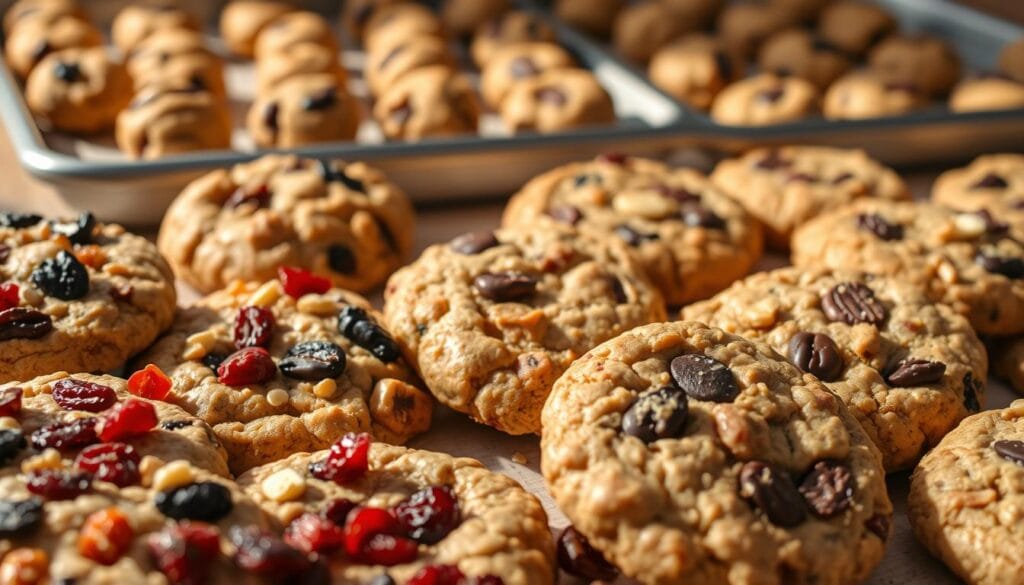
Crunchy textures and natural sugars make nuts and dried fruits a winning combo. Try:
- Toasted walnuts or pecans for a nutty depth
- Dried cranberries or apricots for bursts of tangy sweetness
- Pistachios and cherries for a sophisticated twist
These add-ins boost fiber and healthy fats—perfect for balancing flavors without butter. Just remember: when adding ½ cup or more, reduce flour by 1-2 tablespoons to keep dough moist.
Chocolate Chips and Alternatives
Chocolate lovers can still indulge with mindful choices. Opt for dark chocolate chunks (70%+ cocoa) or cacao nibs for rich antioxidants. For a lighter option, try:
- Carob chips (naturally sweet and lower in sugar)
- White chocolate paired with dried cranberries for festive flair
- Melted coconut flakes for a tropical twist
Pro tip: Mini chocolate chips distribute evenly, ensuring every bite has flavor. And don’t forget—these additions work beautifully in our cookie recipe no butter, keeping treats moist and indulgent without dairy.
How to Make Cookies Healthier
Every bite of a healthy cookie recipe can nourish both body and soul. Through countless kitchen experiments, I’ve learned that small swaps transform classic treats into guilt-free indulgences. These tips balance flavor and nutrition without sacrificing that cherished cookie warmth.
reducing sugar in your recipe: Start by trimming sugar by 25%—this subtle shift maintains texture while lowering sweetness. My favorite trick? Swapping ¼ cup sugar with mashed banana or unsweetened applesauce adds natural sweetness and moisture. For a boost of minerals, a dash of blackstrap molasses enriches chocolatey notes while cutting refined sugar. Here’s how it works:
- Replace 25% of sugar with fruit purees
- Use maple syrup or monk fruit for a lower glycemic index option
- Maintain structure with a sugar blend (white + brown sugar)
| Traditional Cookie | Healthy Version |
|---|---|
| 100 calories | 75 calories |
| 12g sugar | 8g sugar |
| 0g fiber | 2g fiber |
using whole grain flours: Whole grains turn low-fat cookie recipe dreams into reality. White whole wheat flour sneaks fiber in without bitterness—perfect for beginners. For adventurous bakers, blending oat flour (made by grinding oats) with all-purpose flour adds natural sweetness. Almond flour’s protein-rich profile shines when substituting up to 25% of flour for a nutty crunch. Pro tip: Add 1 tbsp oil when using 100% whole grain to prevent dryness.
- White whole wheat flour: 1:1 swap for AP flour
- Oat flour: Blend ½ cup rolled oats for ¼ cup flour
- Almond flour: Adds 3g protein per ¼ cup
These tweaks create treats that fuel energy instead of cravings. Whether swapping sugars or upgrading flours, every change honors your health journey without sacrificing joy.
Pairing Suggestions for Butter-Free Cookies
Finding the perfect match for your butter-free cookies is magical. Enjoying them as a snack or sharing with others can be a joy. The right drink or dip can make every bite special and comforting.
Perfect Beverages to Elevate the Experience
- Rich coffee or espresso: The bold flavor balances the sweetness, especially with eggless cookie recipe dark chocolate.
- Warm spiced tea: Cinnamon or chai blends bring out the spices in ginger or oat-based cookies.
- Cold brew or iced tea: A crisp drink complements dense, nutty almond flour cookies.
- Plant-based lattes: Oat milk or coconut milk lattes pair well with coconut oil-infused cookies.
Delicious Dips and Toppings
- Whipped coconut cream with honey—adds a silky contrast to chewy textures.
- Dark chocolate ganache for a rich, melt-in-your-mouth surprise.
- Salt caramel sauce to enhance nutty or seed-based butter-free cookies.
- Spiced apple butter for a seasonal twist on fall or holiday batches.
These pairings are more than just taste. They’re about creating special moments. By experimenting, you can make each treat unique to your mood or occasion. This turns a simple cookie into a celebration of creativity and care.
Conclusion: The Joy of Baking Without Butter
Baking without butter opens up a world of new flavors. Every time I make dough with coconut oil or applesauce, I feel like I’m creating something special. These cookies show that you can have rich flavors without using butter.
The guide shows how easy it is to make delicious cookies without butter. You can use coconut oil or applesauce instead. This makes the cookies not only tasty but also healthier.
Encouragement to Experiment with Recipes
Try using different ingredients to find your favorite. Avocado can make cookies creamy, while nut butter adds a rich flavor. My kitchen has become a place where I love to try new things.
Even small changes can make a big difference. For example, adding espresso powder to chocolate chip dough makes it taste even better. These cookie recipes without butter are easy to make and always a hit.
Next time you bake, don’t be afraid to try new things. Add different sugars, try crushed pretzels, or freeze some dough for later. The fun is in the process, not just the end result. Every cookie is a chance to create something amazing.
We are interested in your feedback
Catchy recipe
Sounds delicious
Original idea
Yummy
Healty and nutritious
Well done
Interesting
Just good