
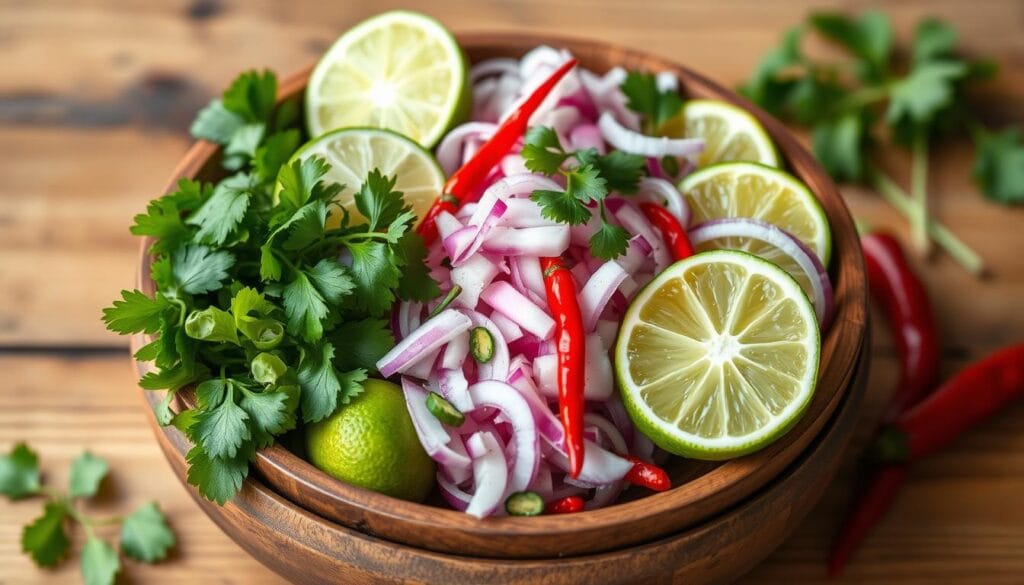
There’s something special about a dish that feels like a warm hug from another culture. For me, that moment was when I first tasted leche de tigre. It’s a bright, zesty marinade that makes simple seafood taste amazing.
This Peruvian leche de tigre is more than a recipe. It’s a story of coastal kitchens and families sharing flavors for generations.
Imagine a quick 10-minute mix of lime juice, garlic, and aji amarillo paste. It turns fish into something radiant. No cooking needed—just the magic of citrus and time. When I learned to make it, I fell in love with its balance of tangy, spicy, and herbaceous flavors.
Today, I want to share that joy with you. Let’s explore how this 8-ingredient marinade becomes a cultural icon. It’s used not just for ceviche, but also as a morning drink or even a hangover cure! With only 120 calories per serving and 14g of protein, it’s both light and satisfying.
Whether you serve it in coconut shells or sip it as a shot, leche de tigre recipe is a flavor adventure you won’t forget. Ready to bring a piece of Peru’s coastal kitchens to your table? Let’s start this journey with the simple, soul-warming magic of this tiger’s milk.
FAQ
What is leche de tigre?
Leche de tigre, or “tiger’s milk,” is a bright citrus marinade. It’s key in Peruvian cooking, especially for ceviche.
How is leche de tigre traditionally used in Peruvian dishes?
It’s used as a ceviche marinade. It’s also served in small glasses as a refreshing starter. Some believe it has energizing properties or helps with hangovers.
What are the key ingredients in an authentic leche de tigre recipe?
You need fresh white fish, like sea bass or snapper. Add fresh lime juice for acidity. Onions, garlic, ginger, cilantro, and a chili pepper are also essential.
Can I make an easy leche de tigre recipe at home?
Yes! Making it at home is easy. Just blend your ingredients and strain for a tasty marinade.
What variations can I try with leche de tigre?
Try adding different herbs or adjusting the heat with various chilies. You can also add tropical fruits for a unique flavor.
How do I store leftover leche de tigre?
Store it in an airtight glass container in the fridge. Use it within 24-48 hours for the best taste.
What dishes pair well with leche de tigre?
It’s great with ceviche, crispy tostadas, grilled seafood, and fresh salads. It adds a burst of flavor and tanginess.
Is leche de tigre nutritious?
Yes! It’s full of protein from seafood, vitamin C from limes, and antioxidants from onions and cilantro.
Where can I find authentic leche de tigre in the U.S.?
Find it in top Peruvian restaurants in Miami, New York, and Los Angeles. Also, check specialty seafood markets for fresh ingredients.
How has leche de tigre influenced popular culture?
It’s become popular in high-end restaurants across America. Celebrity chefs love it, adding their twists while keeping its traditional essence.
What is Leche de Tigre?
In Peruvian coastal kitchens, leche de tigre is a zesty liquid. It’s not just a ceviche byproduct; it’s a cultural treasure. Its name, “tiger’s milk,” suggests its bold flavor.
Curious about its roots? The original ceviche recipes
Origin and Cultural Significance
Leche de tigre started in Peru’s coastal communities. It was the citrusy liquid from fish marinating. Over time, it became a symbol of resilience.
Indigenous, Spanish, and Asian flavors mixed here. This liquid reflects Peru’s identity. Locals drink it like a shot, believing it boosts energy and eases hangovers.
Its tanginess carries the sea’s salt and chili’s warmth. It embodies Peru’s culinary soul.
Traditional Uses in Peruvian Cuisine
Today, leche de tigre is enjoyed in many ways:
- Served chilled in tiny glasses as a palate cleanser between dishes
- Mixed into cocktails like the fiery “bloody tigre” for a seafood bar twist
- Drizzled over tostadas or used to braise vegetables for added depth
| Calories | 120 kcal |
|---|---|
| Protein | 14g |
| Fat | 6g |
| Carbs | 4g |
| Sodium | 280mg |
Its simplicity hides its complexity. Whether with fresh ceviche or alone, it tells stories of Peru’s coastal kitchens. Next time you taste it, remember the fishermen who first marinated fish with lime, salt, and fire.
Key Ingredients for Leche de Tigre
Creating the best leche de tigre recipe begins with fresh, vibrant ingredients. Each part of this citrusy marinade has a purpose. It brightens flavors and preserves tradition. Let’s dive into what makes these components crucial for your homemade sauce.
Fresh Fish or Seafood
Quality fish is the heart of leche de tigre sauce. Choose mild white fish like mahi-mahi or sea bass—1kg is perfect for the right texture. Their clean taste lets other ingredients stand out.
Fish trimmings add depth without overpowering, just as Peruvian chefs do. Always pick super fresh fish to avoid a fishy taste.
Citrus Juices
The tang comes from lime and lemon juice (½kg each). The acid “cooks” the fish, giving it a translucent look. Use ripe fruit for the best vitamin C—this is what makes leche de tigre sauce so zesty!
Other Flavor Enhancers
Balance is key. Red onion’s sweet bite, garlic’s warmth, and aji amarillo’s fruity heat create layers of complexity. Fresh cilantro and grated ginger add bright freshness, while a celery stalk brings subtle green notes.
Mix these with love—just like my abuela taught me!
Pair this dish with tostadas or corn nuts (cancha) for a full experience. If you’re looking for more seafood recipes, check out quick chorizo dinners at Gustative Recipes for a flavor boost. Remember, the best leche de tigre recipe respects tradition while letting your taste buds guide you.
A Step-by-Step Leche de Tigre Recipe
Learning how to make leche de tigre at home is easier than you think! This homemade leche de tigre recipe opens the door to Peruvian flavors. Let’s dive into it with care and patience.
- Start with ½ cup fresh fish trimmingsss (like tilapia or sea bass). Rinse gently, pat dry.
- Chop ½ red onion, 1 garlic clove, ½ tsp grated ginger, and ¼ cup cilantro stems.
- Squeeze 1 cup lime juice—fresh is key!—and measure ½ cup fish stock or water for balance.
Pulse ingredients in a blender: fish trimmings, veggies, and 1 tsp salt. Blend for 10–15 seconds until smooth but still textured. Add lime juice and stock, then blend again until well mixed. Taste here!
Strain the mixture through a sieve for a silky finish. Adjust seasoning—add more lime for zing or salt to taste. Chill for 15 minutes before using. Store leftovers safely for up to 24 hours.
“The magic happens when acidity dances with freshness.”
Ready to serve? Pair with raw fish or veggies. Celebrate your kitchen triumph—it’s worth every squeeze!
Variations of Leche de Tigre
Once you’ve mastered the leche de tigre recipe, it’s time to get creative! Let your taste guide you as you tweak this Peruvian favorite.
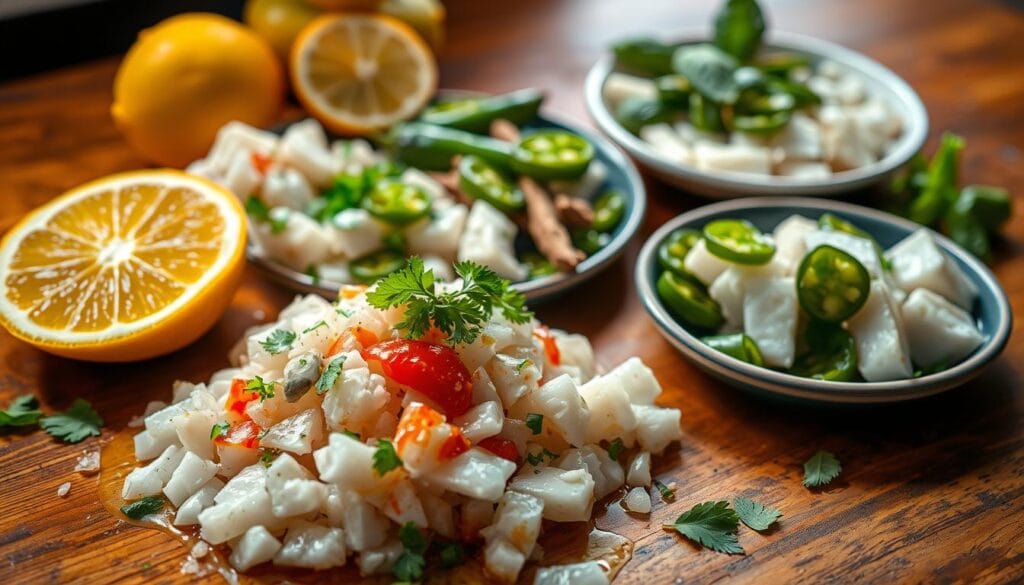
Begin with aji amarillo, the fiery heart of Peruvian cooking. Its citrusy heat pairs well with tangy limes. For a easy leche de tigre recipe twist:
- Remove seeds for mild warmth
- Add a whole pepper for bold heat
- Blend in smoked paprika for earthy depth
Try swapping cilantro for herbs that tickle your taste buds:
- Basil: Mediterranean sunshine in every sip
- Mint: Refreshing coolness for summer feasts
- Parsley: Light and bright for everyday meals
| Variation | Key Ingredient | Flavor Profile |
|---|---|---|
| Fiery Twist | Aji amarillo + paprika | Fruity heat with smoky undertones |
| Herb Garden | Basil or mint | Light, aromatic freshness |
| Tropical Touch | Pineapple or mango | Sweet-tart balance |
Remember, there’s no wrong way to make your leche de tigre recipe your own. Whether you add herbs or fruits, follow your taste.
Tips for the Best Leche de Tigre
Creating the best leche de tigre recipe is all about the little things. These steps keep it true to its authentic leche de tigre spirit.
Choosing the Right Fish
Choosing the right fish is key. Here’s what you should look for:
| Fish Type | Flavor Profile | Best For |
|---|---|---|
| Mild Fish (tilapia, flounder) | Clean, subtle taste | Highlighting citrus and herbs |
| Flavorful Fish (sea bass, snapper) | Natural sweetness and depth | Bold, layered dishes |
Make sure the fish smells like the ocean, not ammonia. Buy it from markets that sell it fresh every day. This means it hasn’t been frozen.
Balancing Acidity and Flavor
- Use freshly squeezed limes for the best flavor.
- If it’s too sour, add a little water or sugar to balance it.
- Let the marinade chill in the fridge for 15 minutes. This lets the flavors blend well.
Listen to your taste buds! Adjust the garlic and chili to your liking. But don’t skip the cilantro—it’s the authentic leche de tigre secret to a bright taste.
Every little detail counts. From choosing fresh fish to tasting it just right, these steps make a big difference. Your loved ones will definitely notice!
Pairing Leche de Tigre with Dishes
Leche de tigre sauce is more than a marinade. It’s a flavor enhancer that makes dishes pop. Let’s dive into how to use its zesty citrus and chili flavors. Start with the classic: drizzle it over ceviche, the dish it’s famous for.
Did you know UNESCO named Peruvian ceviche as Intangible Cultural Heritage in 2022? It has a rich history, dating back to a 1820 song celebrating this vibrant dish. The sauce gently “cooks” raw fish, blending sharpness with fresh herbs and onion.
For a stunning presentation, serve it in coconut halves or chilled shot glasses. Add cilantro sprigs for color. Pair it with crispy tostadas, topped with ceviche and a drizzle of leche de tigre sauce. The crunch and tangy liquid make a great contrast. Avocado slices or boiled corn soften the sauce’s boldness.
Wine lovers, try Sauvignon Blanc from Pacific-coast vineyards like Ventisquero Grey 2023. Its bright acidity matches the sauce’s citrus. For a sweet contrast, Domaine des Baumard Clos du Papillon Chenin Blanc 2019 adds floral undertones. Tequila enthusiasts might enjoy Cierto Blanco’s floral agave notes with ceviche, while reposado pairs well with smoky flavors.
- Wine Pairings:
- Sauvignon Blanc (Ventisquero Grey 2023)
- Savennières Chenin Blanc (Domaine des Baumard 2019)
- Rías Baixas Albariño from Spain’s Salnés region
Explore halal-friendly pairings by visiting Gustative Recipes. They offer creative twists on classics. Whether over grilled shrimp or in a cocktail, this sauce encourages creativity. Let it lead you through Peru’s vibrant culinary traditions, one bold bite at a time.
Storing and Using Leftover Leche de Tigre
When you make your own homemade leche de tigre, keeping it fresh is key. This ensures its flavors stay vibrant. Here’s how to enjoy every last drop of your leche de tigre recipe:
Refrigeration Tips
- Store in a glass container—glass keeps flavors pure, not plastic.
- Push the lid down firmly, leaving no air pockets.
- Keep it in the fridge’s coldest spot (back shelf) for up to 24 hours.
- For longer storage, strain out fish solids first. Freeze the liquid in ice cube trays for later use.
Creative Uses in Other Dishes
Don’t let leftovers go to waste! Here’s how to reinvent what’s left:
- Marinate shrimp or chicken for 15 minutes before cooking—adds bold citrus depth.
- Whisk into salad dressings for a tangy kick. Try it over greens with avocado and grilled fish.
- Mix into yogurt or sour cream for a spicy dip with veggies or chips.
- Drizzle over scrambled eggs for a breakfast surprise—my family loves this trick!
Remember, even frozen cubes lose some brightness, so use them within a month. Taste before adding extra lime to balance the flavors. Every drop of your hard work deserves to shine!
Nutritional Benefits of Leche de Tigre
Enjoying authentic leche de tigre is more than just a taste experience. It’s also a way to nourish your body. This Peruvian leche de tigre is packed with nutrients in every sip. Fresh fish like sea bass or snapper gives you 25g of protein, great for muscle repair.
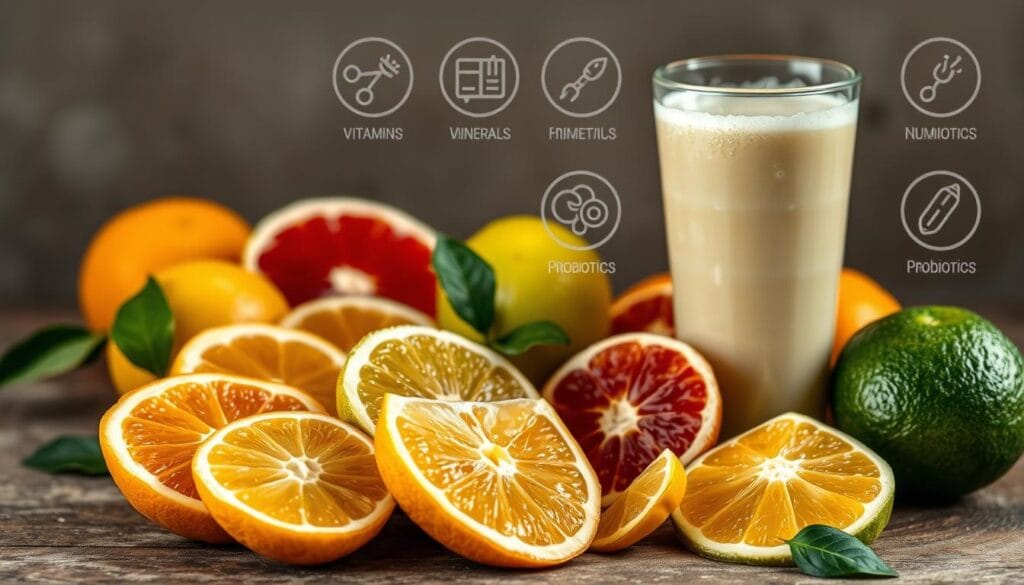
- Protein-rich seafood like salmon offers 38g per serving, plus heart-healthy omega-3s.
- Citrus juices provide 14mg of vitamin C—over 15% of your daily needs.
- Herbs like cilantro add antioxidants that support immunity.
This dish is like a nutrient-packed elixir. The FDA says high-quality seafood in it boosts lean protein intake. Limes and lemons add vitamin C for healthy skin and strong immunity. Ginger and garlic have allicin, good for the heart. Onions add 2g of fiber to keep digestion smooth.
“Fresh ingredients make all the difference,” says Chef Maria Rivera of Lima’s Cevicheria La Mar. “Our authentic leche de tigre uses only sushi-grade fish to maximize health benefits.”
Each serving has 160–421 calories, depending on ingredients. For a light choice, try the classic recipe. Check out this Delish recipe for a balanced dish. Always use fresh limes for extra vitamin C!
Whether you’re sharing with friends or enjoying it alone, this dish is a mix of nutrition and joy. Your body and taste buds will appreciate it.
Leche de Tigre in Popular Culture
Leche de Tigre’s bright citrus flavor has made waves in American kitchens. It’s moved from a simple marinade to a star on menus everywhere. Its journey shows how people around the world love real flavors.
Feature in Restaurants Across America
In places like Miami and L.A., chefs are loving this marinade. Ceviche NYC sticks to the classic with lime, fish, and onions. Meanwhile, Andina in Chicago adds a twist with smoked paprika or pineapple.
Even non-Latin restaurants are using it. They marinate chicken or shrimp, showing how versatile it is.
Celebrity Chefs and Their Twists
Chefs are sharing their best leche de tigre recipe ideas:
- Virgilio Martínez (Lima’s Central) uses Andean herbs like huacatay
- Jose Andrés mixes coconut milk for a tropical twist
- Nobu Matsuhisa blends soy sauce and ginger for a unique flavor
Its popularity on Top Chef and Bon Appétit has sparked interest among home cooks. It’s a dish that celebrates Peru’s seafood while encouraging creativity. Try it on ceviche or grilled veggies. The options are endless!
Where to Find Quality Leche de Tigre in the U.S.
Looking for the real taste of leche de tigre sauce? I’ve found the best places to get authentic Peruvian leche de tigre in America. Let me share my findings to help you try this exciting flavor.
Top Peruvian Restaurants
Here are the top spots where chefs make leche de tigre with love:
| Restaurant | Location | Signature Touch |
|---|---|---|
| CVI.CHE 105 | Miami | Served with sweet potato and corn for a classic combo |
| Divino Ceviche | Miami | Uses fresh aji limo for bold flavor |
| Llama Inn | New York | Brooklyn’s take on coastal Lima recipes |
| Rosalie | Los Angeles | Artisanal leche de tigre sauce with citrus-forward notes |
Specialty Seafood Markets
For those who like to make it themselves, these markets have what you need:
- Latin American fish markets in coastal cities – ask for fresh white fish like corvina
- Asian markets carry aji amarillo paste in the international aisle
Online stores like Amaz Food and Zócalo Foods offer authentic chili pastes and herbs. If fresh fish is hard to find, look for frozen “ceviche-grade” fish filets.
When you order, ask the server about their leche de tigre secrets. Many chefs will tell you to use ice cubes to chill, not cook, the fish. Enjoy it within 24 hours for the best flavor.
Conclusion: Embrace the Flavor of Leche de Tigre
Let’s wrap up by thinking about our journey. Leche de tigre brings centuries of tradition and bold flavors into your kitchen. It’s not just a recipe; it’s a bridge to Peru’s vibrant culinary soul.
Why Start with the Easy Leche de Tigre Recipe?
Start with the easy leche de tigre recipe to capture its zesty essence. Fresh limes and seafood are key. Remember, the best way to make leche de tigre starts with quality ingredients.
Fresh fish like sea bass or flounder is essential. It ensures that tangy citrus gently “cooks” the proteins. This technique is rooted in Peru’s 2,000-year-old ceviche tradition.
Let Your Kitchen Speak Its Story
Don’t stop at the basics. Try adding aji amarillo for warmth or tropical mango for brightness. Just like chefs like Gastón Acurio, you can reimagine classics.
Pair it with corn or sweet potatoes, or drizzle it over grilled shrimp. Even small tweaks let you honor tradition while making it your own.
Every batch is a chance to connect with Peru’s coastal flavors. The growing love for authentic Latin American dishes in the U.S. is exciting. Whether you’re serving it at a summer gathering or experimenting alone, leche de tigre invites creativity. Let your taste buds guide you—after all, great recipes thrive when they’re loved, not perfected.
We are interested in your feedback
Catchy recipe
Sounds delicious
Original idea
Yummy
Healty and nutritious
Well done
Interesting
Just good