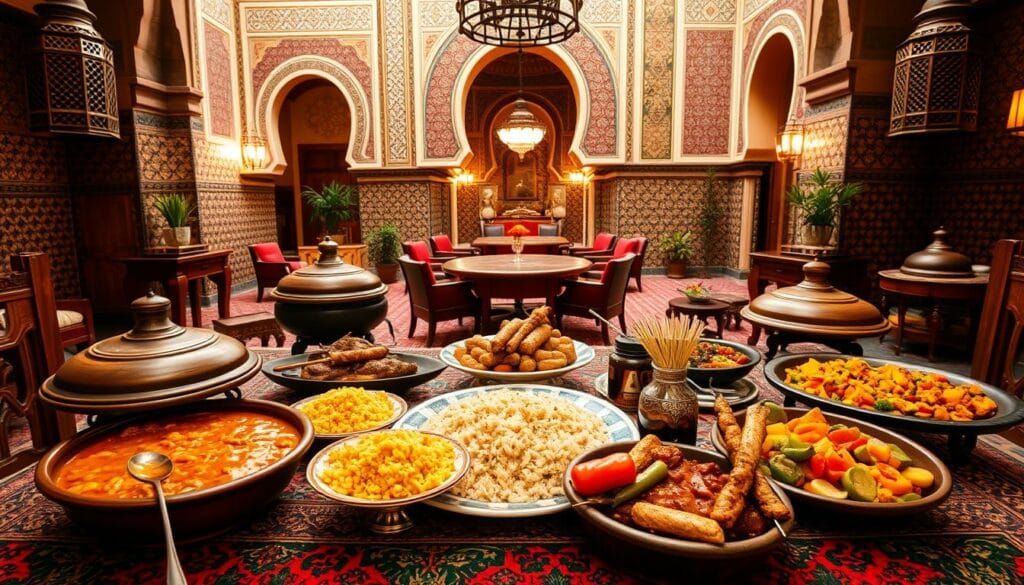
Imagine walking through a bustling market in Marrakech. The air is filled with the scent of cumin, saffron, and toasted almonds. Moroccan food recipes are like stories of centuries-old traditions.
I’ve spent years enjoying the rich flavors of lamb in tagines. Preserved lemons add a tangy touch to couscous. And ras el hanout makes simple ingredients extraordinary.
Authentic Moroccan cuisine is more than cooking. It’s about sharing meals and celebrating culture. Whether you’re making a spicy salad or a slow-cooked lamb tagine, these recipes bring the warmth of North Africa into your kitchen.
Let’s explore how spices like cumin and ginger can make your kitchen feel like a cozy corner of North Africa.
FAQ
What are some authentic Moroccan food recipes I can try at home?
Start with classics like tagine, couscous, and harira. These dishes show off Moroccan spices and flavors. They reflect the rich culinary tradition.
What key ingredients should I have for traditional Moroccan dishes?
You’ll need tender lamb, fluffy couscous, and sweet dried fruits. Don’t forget preserved lemons, olives, and spices like cumin and coriander. Ras el hanout adds depth of flavor.
How do I prepare couscous the authentic Moroccan way?
Couscous is steamed in a couscoussier. It’s fluffed between steaming to stay light and airy. Serve it with stewed veggies and protein for a full meal.
What makes harira soup special in Moroccan cuisine?
Harira is served during Ramadan to break the fast. It’s known for its nourishing ingredients like tomatoes, lentils, and chickpeas. Warm spices add comfort and flavor.
Can you suggest a simple Moroccan appetizer?
Try mechouia salad. It’s a grilled veggie salad with smoky flavors. It’s dressed with olive oil, garlic, and spices for freshness.
What is b’stilla and why is it a must-try?
B’stilla is a savory pastry filled with seasoned meat, almonds, and spices. It’s wrapped in thin pastry layers. It’s served at special occasions and shows Moroccan culinary artistry.
How can I make my Moroccan tea more authentic?
Use Chinese gunpowder green tea and spearmint leaves for Moroccan mint tea. Sweeten it generously and pour from a height for a frothy top. This reflects traditional hospitality.
Are there vegan Moroccan recipes I can explore?
Yes! Try vegetable tagines and chickpea and spinach stew. They highlight Moroccan spices and techniques without meat.
What cooking tools would I need to make Moroccan dishes at home?
A tagine is ideal, but Dutch ovens or slow cookers work too. The key is slow heat for deep flavors.
What regional variations should I be aware of while cooking Moroccan food?
Northern areas have lighter seafood dishes, while southern regions use bolder spices. Exploring these differences enriches your cooking.
Introduction to Moroccan Cuisine
Exploring Moroccan cuisine is like going on a sensory journey. Every bite tells a story. At the heart of flavorful moroccan cooking are layers of spices that make simple ingredients extraordinary. When I first tasted traditional moroccan dishes, I was amazed by the balance of warmth, depth, and contrasts.
Like sweet dates with savory lamb or tangy preserved lemons in a rich stew. It’s a mix that surprises and delights.
Unique Spices and Flavors
Imagine a pantry full of color and aroma. Ras el hanout blends up to 45 spices into one earthy perfume. Cumin and saffron whisper secrets to your taste buds.
Here are the stars of Moroccan flavor:
- Cinnamon: Adds warmth to both sweet and savory dishes
- Harissa: A fiery chili paste that ignites tagines and couscous
- Coriander: The green leaves brighten salads while seeds form the backbone of spice mixes
Flavorful moroccan cooking is all about harmony. Sweetness from apricots contrasts salty meats, and bright citrus notes cut through rich stews. Even mint tea becomes art, with sugar-crusted glasses symbolizing hospitality.
For home cooks, halal meal recipes show how to recreate these balances using accessible ingredients. Every spoonful tells a story of caravans crossing deserts and kitchens humming with generations of tradition. That’s the magic of Moroccan flavors—where every bite connects us to a timeless culinary conversation.
About Moroccan Cuisine
When I first sipped mint tea poured from a height, I understood Moroccan food’s true value. It’s not just about eating; it’s a way to connect through time. Authentic Moroccan cuisine mixes Arab spices, Berber earth, and Mediterranean freshness. Each traditional Moroccan dish tells a story of travelers, traders, and traditions.
Cultural Influences on Moroccan Dishes
| Influence | Cooking Wisdom | Signature Dishes |
|---|---|---|
| Arab | Spice blends like ras el hanout | Chicken with preserved lemons |
| Berber | Slow-cooking in tagine pots | Stew with dried fruits |
| Andalusian | Refined pastries | B’stilla (savory pie) |
| Mediterranean | Olive oil and veggie blends | Zaalouk (eggplant stew) |
These influences shape daily life, too. Families come together for couscous, washing hands in rose-petal water first. Street foods like mechoui and maakouda show the journey of flavors.
At weddings, meals start with salads, then tagine, and finish with mint tea. This mirrors how cultures unite over food.
Every traditional Moroccan dish tells a story of history. It’s a lesson in authentic Moroccan cuisine served on a plate.
Essential Ingredients for Moroccan Cooking
Spices are the heart of flavorful moroccan cooking. Imagine a kitchen where cumin, cinnamon, and paprika mix. They turn simple ingredients into something amazing. My journey started with learning how these spices make moroccan food recipes special. I’m excited to share their secrets with you.
“The heart of these dishes is in the spices.”
- Ras el hanout: A magical blend of up to 30 spices like cumin, cardamom, and cinnamon. It’s Morocco’s signature seasoning, perfect for tagines and stews.
- Cumin: Earthy warmth that grounds dishes like harira or couscous.
- Cinnamon: Adds a sweet twist to savory meals, balancing bold flavors.
- Paprika: Brings vibrant color and mild sweetness to dishes like chicken tagine.
- Saffron: A touch of gold—use sparingly for aroma and depth.
These spices are more than ingredients—they tell stories. Use them with patience, and you’ll make dishes that feel like a trip to Morocco’s markets. Whether you’re making a classic or trying new moroccan food recipes, these spices will help. Happy cooking!
More Ingredients for Moroccan Cooking
Creating easy Moroccan recipes starts with the right vegetables and proteins. These are the heart of delicious Moroccan food. Let’s explore the key ingredients that make each dish special.
- Vegetables: Tomatoes, bell peppers, and eggplant are at the core of many dishes. Onions, cooked until caramelized, add a rich flavor. Preserved lemons bring a tangy twist that’s essential.
- Proteins: Lamb is perfect for tagines, while chicken is versatile. Seafood adds a coastal touch, and chickpeas are great for plant-based options.
Dried fruits like apricots and raisins are secret ingredients. They balance bold spices with sweetness. Olives and saffron bring flavors together smoothly. Even simple grains like couscous become stars when paired with roasted veggies or chicken.
Shopping tip: Always have jars of preserved lemons and cans of chickpeas ready. They’re essential for quick easy moroccan recipes. A sprinkle of cumin or a drizzle of argan oil can turn simple meals into Moroccan delights. With these ingredients, making Moroccan flavors at home is easy and comforting.
Classic Moroccan Dishes You Must Try
Imagine the first time I saw a tagine unveiled—the steam rising like a whispered secret. This dish isn’t just food; it’s a slow-cooked story of patience and warmth. Traditional Moroccan dishes like tagine transform simple ingredients into something unforgettable. The clay pot, with its cone-shaped lid, is more than a tool—it’s a vessel for heritage.
Tagine’s magic starts with a gentle simmer. Meat, vegetables, and spices like cinnamon and cumin meld over hours, creating layers of flavor. A reader once shared,
“The balance of chili and lemon in a vegetable tagine was a revelation—it tasted as good cold the next day!”
Whether you choose lamb with apricots or chicken with preserved lemons, every bite tells a story of North African kitchens.
| Type | Ingredients | Region |
|---|---|---|
| Lamb Tagine | Lamb, prunes, honey, saffron | Central Morocco |
| Chicken with Olives | Chicken, green olives, preserved lemon | Coastal areas |
| Vegetable Tagine | Zucchini, carrots, tomatoes, ras el hanout | High Atlas Mountains |
Cooking at home? Even without a clay pot, a Dutch oven works wonders. Serve with couscous for a meal that feels like a hug. These best moroccan dishes are more than recipes—they’re invitations to savor moments of togetherness. Let the pot do the work, and let the flavors remind you why tagine stays close to every Moroccan heart.
Other Moroccan Dishes You Must Try
There’s something magical about a plate of couscous. It feels both humble and celebratory. This dish has been a cornerstone of popular Moroccan recipes for generations. Its fluffy grains and hearty toppings embody the warmth of shared meals.
When I first tasted it in a Marrakeech market, I instantly understood why it’s so beloved. It’s a staple for a reason.
“This is a great and very easy recipe,” says food reviewer BSTEPLEM. “The best part? It’s adaptable—whether you’re making it for a crowd or a cozy dinner for two.”
Traditional preparation is an art. Steaming semolina grains in a couscoussier pot until they puff into light pillows. Modern kitchens often use quick-cook grains, but the soul of the dish lies in its simplicity.
Savory Moroccan recipes like this pair couscous with seven vibrant vegetables. These include carrots, turnips, and zucchini, stewed in a spice-infused broth. Lamb or chicken crowns the dish, but vegetarians can enjoy it with chickpeas and herbs.
- Steamed couscous grains
- Seven seasonal vegetables (carrots, pumpkin, zucchini)
- Warm spices (cumin, cinnamon)
- Finishing touch: lemon wedges and fresh herbs
Every grain tells a story. Whether you’re recreating a festive feast or a weeknight dinner, couscous invites you to gather close. Its beauty lies in its adaptability—it’s a dish that grows richer with shared stories and laughter around the table.
Next time you cook, let it remind you that even simple ingredients can build memories that last lifetimes.
Traditional Moroccan Soups and Stews
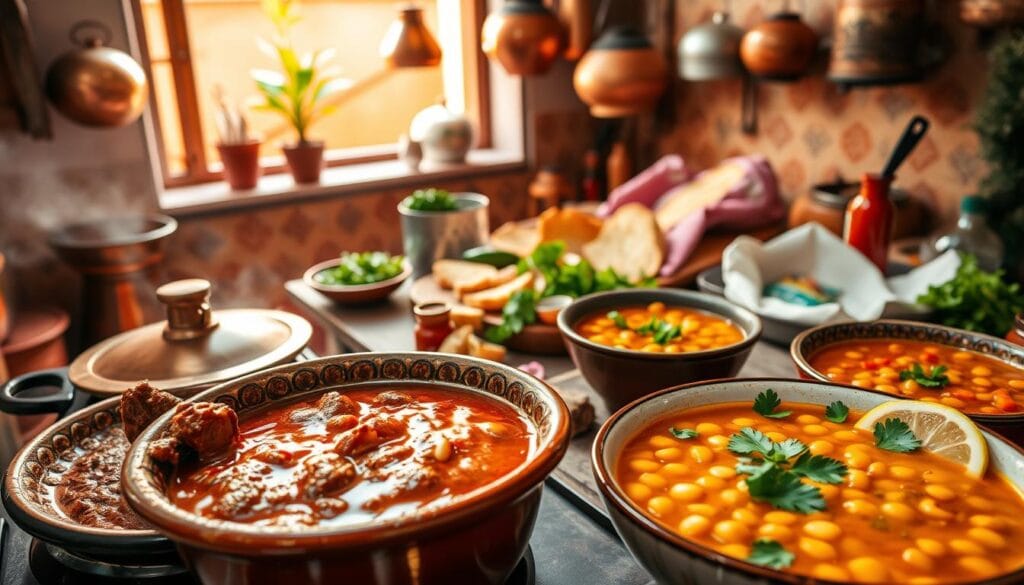
Harira feels like a warm hug in a bowl. It’s a key part of authentic moroccan cuisine. It mixes hearty ingredients with soft spices for a comforting dish. The first time I tried it during Ramadan, I loved how it balanced lentils and chickpeas with fresh herbs.
“This Moroccan-inspired stew has a hearty tomato sauce base and is loaded with fresh garlic, onion, and red and green bell peppers,” says CookingWithShelia. “The harissa adds the right amount of peppery smoke flavor that will have your taste buds dancing.”
- Tomatoes (6 peeled and pureed)
- Lentils and chickpeas (soaked overnight)
- Lean lamb or beef (or plant-based alternatives)
- A spice blend of cinnamon, turmeric, and cumin
This delicious moroccan food is great because you can change it to fit your diet. For gluten-free, use rice flour instead of flour. Cooking it fast or slow changes the taste. Serve it with bread or noodles for a nice texture.
Each bowl has 268 calories and 13 grams of protein. It’s proof that comfort food can be healthy. Freeze it for later or share it with family. Harira is a beloved dish in authentic moroccan cuisine, enjoyed any time.
Other Moroccan Soups and Stews
Imagine a dish where flaky pastry wraps a spiced meat-and-almond filling. It’s topped with powdered sugar and cinnamon. This is b’stilla, a true gem among best moroccan dishes that blends sweet and savory uniquely. It’s not just food; it’s a story of Andalusian influence and Moroccan creativity.
B’stilla layers paper-thin warqa pastry around shredded chicken or pigeon. It’s spiced with cinnamon, ginger, and saffron. The final touch is a dusting of sugar, making it a moroccan food recipes highlight. It’s a feast for the tongue.
Traditionally, b’stilla was a celebration dish. Now, modern moroccan food recipes make it easier with store-bought phyllo dough. Here’s why it’s unforgettable:
- Flaky layers of pastry, crisp and delicate
- Spiced meat and almond filling—sweetness meets saltiness
- Golden cinnamon-sugar topping for that iconic crunch
Its history is a tale of cultural exchange. The name comes from Spanish pastilla, but its heart is Moroccan. Try it as an appetizer or main dish. Guests will love its layers of flavor. And, simplified moroccan food recipes online make it easy for home cooks.
| Traditional B’stilla | Modern Adaptation |
|---|---|
| Pigeon meat | Chicken or vegetarian options |
| Hand-rolled warqa pastry | Phyllo dough for ease |
| Long assembly time | 30-minute prep with shortcuts |
Next time you crave something extraordinary, try b’stilla. It takes you to Moroccan tables. Its layers hold centuries of stories and a flavor adventure.
Mouth-Watering Moroccan Appetizers
When I want to share Moroccan flavors, I choose mechouia salad. It’s a popular Moroccan recipe with smoky grilled veggies. Bell peppers, tomatoes, and eggplant are charred to perfection. This makes it an easy Moroccan recipe perfect for any time.
The mix of lemon, cumin, and caraway turns simple ingredients into something special. It’s a favorite for summer picnics or quick dinners.
“The smokiness makes it feel like a hug from North Africa,”
Begin by grilling veggies until they’re charred. This step is key for the flavor. Then, peel off the charred skin and mix with olive oil and spices.
Adjust the texture as you like. Serve it chunky for salads or smooth as a dip. A sprinkle of flaky sea salt adds a nice touch.
| Serving Idea | Pairing |
|---|---|
| As a salad | With crusty bread or grilled fish |
| Blended dip | Served with warm khobz bread |
| Winter version | Add roasted red onions and drizzle with harissa oil |
It’s a dish that grows on you. Some add preserved lemons for tang, while others toss in fresh cilantro for brightness. The beauty lies in its adaptability—whether you’re hosting a dinner party or packing a picnic, mechouia adapts to your rhythm. This is the kind of recipe that makes Moroccan cooking feel inviting, not intimidating.
Other Moroccan Appetizers
There’s something magical about a well-made hummus. It feels like it belongs in every kitchen. In delicious moroccan food traditions, this creamy dip gets a boost from bold spices like cumin and a hint of harissa. Scooping it with warm flatbread is how meals here begin, sharing flavors that feel like a hug in a bowl.
My favorite twist? Adding toasted cumin or a squeeze of preserved lemon for a zing. This ties back to savory moroccan recipes. The base is simple: chickpeas, tahini, garlic. But the magic happens when you add local touches like:
- Cumin for depth
- Paprika for warmth
- A splash of olive oil for shine
“Moroccan cuisine is celebrated as one of the best international cuisines by Spanish newspaper La Razon.”
Serving it with roasted eggplant dip (zaalouk) and olives makes a mezze spread that invites sharing. When I host friends, they always ask, “How did you get this so creamy?” My secret? Soaking chickpeas overnight. The result? A dip that tastes like home, no matter where you’re from.
Try sprinkling sumac on top for color or mixing in roasted red peppers for depth. Whether you’re new to savory moroccan recipes or a seasoned cook, this dip is where comfort meets adventure. After all, the best meals are the ones that make you feel like part of the family.
Sweet Treats: Moroccan Desserts
When it comes to traditional Moroccan dishes, no meal feels complete without a touch of sweetness. In Moroccan culture, desserts aren’t just a finale—they’re a celebration of shared moments. Take baklava, for instance. This nutty pastry holds a special place in authentic Moroccan cuisine, blending Ottoman influences with local flair.
Think layers of delicate phyllo dough wrapped around toasted almonds, drizzled with honey infused by rose or orange blossom water. Unlike its Middle Eastern counterparts, Moroccan baklava shines with lighter syrup, letting the nutty richness take center stage. My family’s version skips excess sweetness, preserving the nuts’ natural flavor. The diamond-shaped layers are often crafted together—grandma’s hands guiding mine—to ensure every fold holds generations of care.
“Eat two of these as a snack or with some juice, and you’re satisfied,” writes Elizabeth Falkner. Her cardamom-spiced date bites prove even smaller treats carry big flavor.
Exploring beyond baklava, Moroccan sweets like kaab el ghazal (crescent-shaped cookies) or m’hanncha (coil-shaped pastries) show how creativity flows through tradition. These desserts aren’t just recipes—they’re stories. My kitchen becomes a classroom when I teach others to layer phyllo dough, sharing how patience turns into crispy, melt-in-your-mouth layers.
Next time you crave something sweet, try folding baklava with friends. The warmth of rose syrup, the crunch of almonds—every bite is a promise of connection. Like many traditional Moroccan dishes, it’s best enjoyed slowly, sipped with mint tea, and shared with those who make life sweeter.
Other Sweet Treats: Moroccan Desserts
When I think of the best moroccan dishes, m’hanncha comes to mind. This pastry, shaped like a snake, showcases Morocco’s creativity. It’s made with layers of warqa pastry, filled with almonds, cinnamon, and rosewater, and baked until golden.
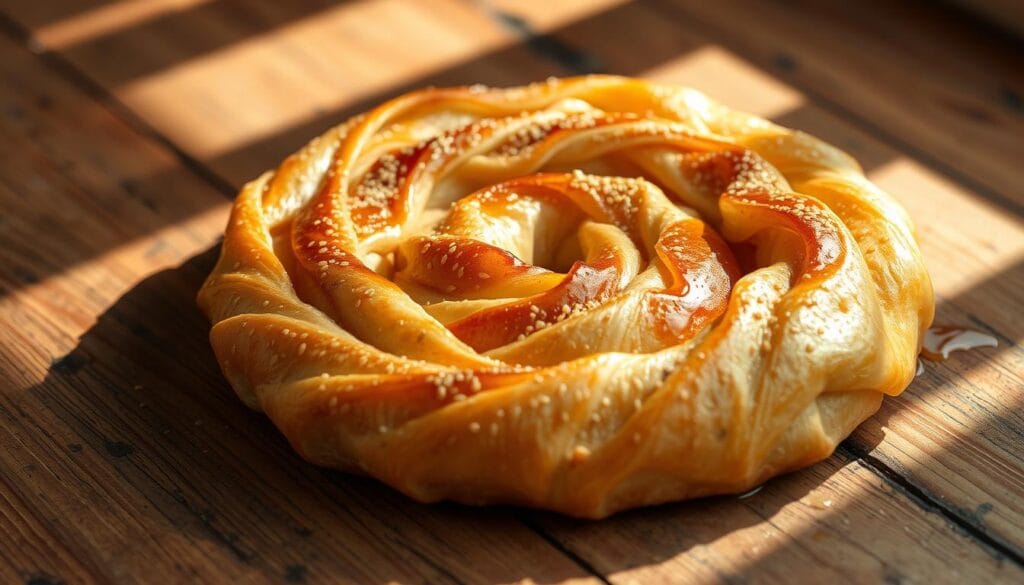
The filling is special, with ground almonds, sugar, and orange blossom water. Each layer is brushed with butter before being rolled and coiled. After baking, honey with rosewater is drizzled on top. It’s a dessert that’s loved for generations, turning simple ingredients into something amazing.
In Fes markets, artisans make m’hanncha into small coils for everyday treats. Its beauty is in the contrast of its crispy pastry, soft filling, and sweet honey. Even with store-bought phyllo dough, it’s still charming. Enjoy it with mint tea for a taste of why it’s loved.
Every bite of m’hanncha tells a story of patience and love. Whether you’re sharing it with others or enjoying it alone, it reminds us that food is a language of love and tradition.
Sipping Moroccan Tea: Ceremonial Brews
At the heart of authentic Moroccan cuisine is a ritual as important as the food: mint tea. Every family dinner and market chat starts with this sweet, fragrant tea. I’ve spent hours learning its secrets, and now I’m sharing them with you.
The magic begins with gunpowder green tea, crushed into tiny pellets for deep flavor. Here’s how to brew it:
- Boil 4 cups water and add 1 tbsp of the tea leaves.
- Steep 3-5 minutes, then add a generous handful of fresh spearmint leaves.
- Sweeten with 3-4 tbsp sugar, stirring until dissolved.
- Pour from high—12 inches above the glasses—to create a frothy top. This “pouring dance” shows respect and skill.
In moroccan food recipes, tea is more than a drink—it’s a way to start conversations. Adjust the sweetness to your liking, but remember, sugar is a symbol of generosity. My favorite moment is watching the steam rise as the first sip cools down. It reminds us to slow down and enjoy life’s small pleasures.
Try it at home. Gather your ingredients, and let the tea’s warmth connect you to Morocco’s spirit of hospitality. Every pour, every sip, carries centuries of warmth—and that’s the real recipe.
about tea traditions
Exploring easy moroccan recipes isn’t complete without learning about tea traditions. Morocco has many teas, each telling a story of its region. I’ve enjoyed many cups, each one sharing a secret of the land.
“The best tea is poured with love and served with patience.”
Here’s how different regions make their traditional moroccan dishes in a cup:
- Atay B’Louiza: In the Middle Atlas, lemon verbena tea is used instead of mint. It’s perfect with spicy foods.
- Sahrawi Tea: In the Sahara, tea is sweetened with extra sugar and poured three times. It symbolizes life’s sweetness, struggles, and hope.
- Atay B’Chiba: In the Rif Mountains, tea is made with wormwood. It’s bitter and helps with digestion after big meals.
| Type | Herb/Flavor | Region |
|---|---|---|
| Classic Mint | Fresh spearmint | Urban centers |
| Wild Thyme | Mountain herbs | Atlas foothills |
| Orange Blossom | Floral notes | Coastal towns |
Trying these teas at home is easy. Just swap mint for seasonal herbs, adjust the sugar, and pour it high. Every sip is a chance to connect with tradition and your taste. My kitchen has jars of wild thyme, a gift from a friend. It shows that tea is more than a drink—it’s a shared story.
Vegan and Vegetarian Moroccan Recipes
Exploring savory moroccan recipes, we find that plant-based dishes are full of flavor and warmth. Many classic dishes were vegetarian long before it was trendy. Let’s look at a favorite of mine—a vegetable tagine that’s both comforting and nourishing.
Flavorful Vegetable Tagine
“All of the spices combined with the sweetness of the raisins created a wonderful flavor,” says Mary G.
This dish begins with caramelized onions cooked in olive oil until they’re golden. Then, add carrots, sweet potatoes, and zucchini, letting their flavors grow. Chickpeas bring protein, while apricots and prunes add sweetness. A mix of cumin, turmeric, and cinnamon brings it all together.
- Prep time: 45 minutes (serves 5–6)
- Key ingredients: onions, 3 types of squash, chickpeas, dried fruits, and a spice blend
- Freezes well for up to 2 weeks
My secret is patience. Slow cooking blends the flavors, turning simple veggies into something amazing. Add saffron for depth or adjust spice with red pepper flakes. This dish shows vegan meals can be just as vibrant as meat-based ones.
Pair it with whole grain couscous for balance, or top with toasted almonds for crunch. Whether you’re new to plant-based cooking or experienced, this tagine offers many ways to adapt. Let seasonal veggies guide you—eggplant, fennel, or artichokes all work well in this dish.
Every spoonful tells a story of warmth and tradition. Moroccan cuisine welcomes all diets with open arms.
More Vegan and Vegetarian Moroccan Recipes
When I think of popular moroccan recipes, this chickpea and spinach stew comes to mind. It’s warm, earthy, and comforting. Made with simple ingredients like chickpeas, spinach, and spices, it’s truly special.
“This Moroccan-inspired stew has a hearty tomato sauce base and is loaded with fresh garlic, onion, and red and green bell peppers,” says CookingWithShelia. “The harissa adds the right amount of peppery smoke flavor that will have your taste buds dancing.”
This stew is special because it’s easy yet full of flavor. Start by cooking onions and garlic until they’re golden. Then, add cumin, paprika, and cinnamon. Mix in chickpeas, tomatoes, and broth, and let it simmer.
Finally, add fresh spinach and let it wilt. Serve it over jasmine rice or with naan bread. The spices, like ras el hanout and turmeric, make it even better.
Leftovers are amazing the next day. This recipe makes six servings, each with 146 calories and 6g fiber. It’s a comforting dish that’s also good for you.
This stew is perfect for anyone new to Moroccan flavors. It’s warm and inviting, showing that flavorful moroccan cooking is accessible. You don’t need exotic ingredients; just patience and a love for sharing.
Tips for Cooking Moroccan Food at Home
When I first fell in love with Moroccan dishes, I learned about the unique flavors of each region. The northern coast, like Tangier, loves seafood and bright citrus. Marrakech in the south is all about bold spices like ras el hanout and smoky harissa. Here’s how to bring these flavors into your kitchen:
“My first foray into Moroccan cooking was a tagine. It taught me that regional ingredients define the soul of the dish.”
- Northern Coast: Try easy Moroccan recipes like seafood tagines with lemon and cilantro. Fresh fish markets inspire dishes like chlehou—a simple grilled fish with olive oil.
- Central Fez: Experiment with sweet-savory contrasts. A honeyed chicken tagine or couscous with preserved lemons mirrors the refinement of this culinary heartland.
- Southwestern Ouarzazate: Bold flavors rule here. Use cumin and saffron in lentil stews or try spicy merguez sausages.
Start with one region at a time. Try central dishes like b’stilla (phyllo pastry) or southern merguez skewers. Even a simple salad with mechouia (grilled veggies) captures Morocco’s Mediterranean side. Remember, the best Moroccan dishes are built on layers—don’t rush the spice toasting!
My advice? Let cumin and paprika bloom in a dry pan before adding liquids. This small step makes easy Moroccan recipes extraordinary.
The right tools and techniques
Exploring moroccan food recipes requires the right tools and techniques. Patience and a few essential items can transform your kitchen into a Moroccan cooking space. Begin by selecting tools that respect tradition but also suit your kitchen.
- A clay tagine pot—or a Dutch oven for even heat distribution
- Wooden spoons and a cast-iron skillet for sautéing aromatics
- Wide bowls for serving layered dishes like couscous
Techniques are crucial. Slow cooking allows flavors to blend, like simmering a lamb tagine for an hour. Layer ingredients instead of stirring constantly, so each part can shine. Try this with vegetable stews or traditional moroccan dishes like b’stilla.
| Tool | Key Use |
|---|---|
| Tagine pot | Slow-cooking tagines and stews |
| Couscousiere | Steaming couscous under stewed meats |
| Mortar & pestle | Grinding fresh spice blends like ras el hanout |
We suggest letting dishes rest before serving. This allows flavors to deepen, especially with preserved lemons or spiced sauces. Even a basic kitchen can make these moroccan food recipes with attention to detail. Remember, Moroccan cooking is about enjoying the journey as much as the meal!
Conclusion: Bringing Morocco to Your Kitchen
Exploring authentic Moroccan cuisine is more than just learning recipes. It’s a journey into a world where every spice has a story. You’ve learned about popular Moroccan dishes like tagine and couscous, which are more than just food. They’re a way to connect with North Africa’s vibrant flavors.
These dishes blend spices like ras el hanout with the warmth of shared meals. It’s a way to feel connected to the traditions of Morocco.
The Joy of Moroccan Flavors
Imagine the scent of cumin and saffron filling your kitchen as you cook a chicken tagine. This is the heart of Moroccan cooking. It’s about turning simple ingredients into moments of connection.
Whether you’re making harira soup or shaping couscous grains, you’re part of a long tradition. The beauty of Moroccan cuisine is how it adapts to your kitchen while staying true to its roots.
Every bite of b’stilla or sip of mint tea tells a story of cultural exchange. From Berber traditions to Mediterranean influences, these dishes reflect Morocco’s spirit of hospitality. Cooking with patience turns everyday meals into moments of warmth and conversation.
Start with a simple recipe, like a vegetable tagine or mechouia salad. Let the flavors guide you. Your kitchen can become a place where Moroccan culture comes alive, one recipe at a time. The true joy of cooking is the care you put into every step.
We are interested in your feedback
Catchy recipe
Sounds delicious
Original idea
Yummy
Healty and nutritious
Well done
Interesting
Just good