
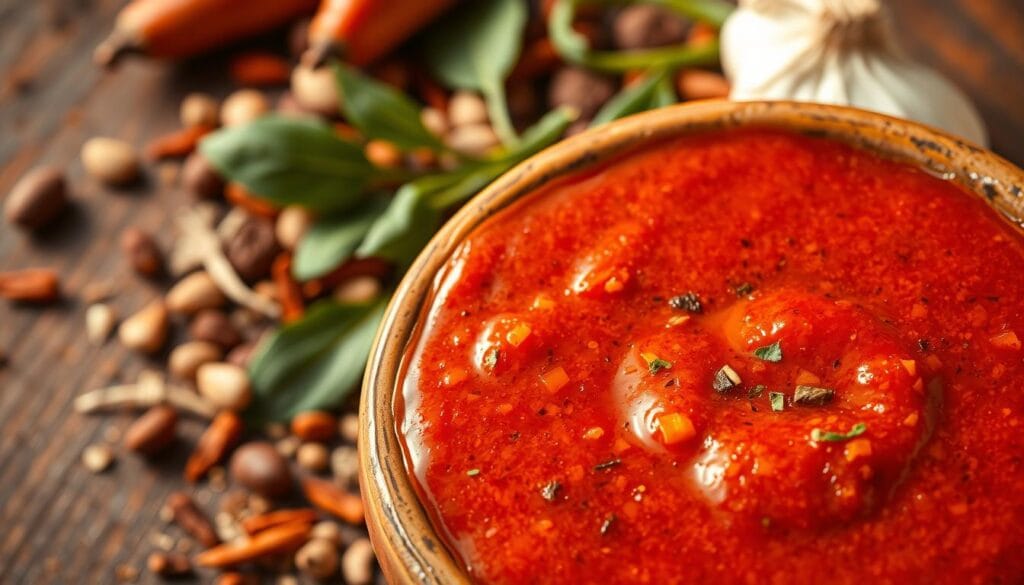
Condiments can make a meal unforgettable. Harissa is that special ingredient for me. It’s a spicy paste that brings people together and warms hearts. This moroccan harissa recipe connects us to North African traditions.
It combines the heat of guajillo chiles with the smoothness of olive oil. It’s more than a sauce; it’s a cultural bridge.
I’ve perfected this authentic harissa sauce over years. I toast chiles, grind spices, and taste until it’s just right. Now, I’m sharing it with you.
It’s a taste of Morocco’s warmth. Use it on meats, in soups, or on bread. It will become a favorite in your kitchen.
Are you ready to add a touch of North Africa to your cooking? This recipe is a journey through generations of cooks. With Trader Joe’s harissa available, but homemade is where the magic is. Let’s start.
Condiments can make a meal unforgettable. Harissa is that special ingredient for me. It’s a spicy paste that brings people together and warms hearts. This moroccan harissa recipe connects us to North African traditions.
It combines the heat of guajillo chiles with the smoothness of olive oil. It’s more than a sauce; it’s a cultural bridge.
I’ve perfected this authentic harissa sauce over years. I toast chiles, grind spices, and taste until it’s just right. Now, I’m sharing it with you.
It’s a taste of Morocco’s warmth. Use it on meats, in soups, or on bread. It will become a favorite in your kitchen.
Are you ready to add a touch of North Africa to your cooking? This recipe is a journey through generations of cooks. With Trader Joe’s harissa available, but homemade is where the magic is. Let’s start.
What is Harissa?
Harissa is a traditional north african condiment with a rich history. It’s a vibrant paste filled with heat and aroma. This paste is at the heart of North African meals.
When I first tried harissa, I was amazed by its blend of history and taste. Now, it’s loved all over the world. But its roots are still in Tunisia and nearby countries.
A Brief History of Harissa
Harissa started in Tunisia, from ancient chili pastes. It then spread to the Maghreb, changing with local tastes. The name “harissa” means “pounded,” showing its ancient preparation method.
It began as a way to keep peppers fresh. Now, it’s a sign of strength, passed down through families.
Key Ingredients of Harissa Sauce
Harissa’s ingredients tell a story:
- Roasted red peppers or dried chilies like Baklouti and de Árbol add fiery depth.
- Garlic and spices like cumin, coriander, and caraway create its aromatic backbone.
- Olive oil binds the mix, ensuring a smooth, spreadable texture.
- Some recipes embrace preserved lemons or rose petals for floral brightness.
Harissa is great on bread or in stews. It’s a traditional north african condiment that encourages creativity. My experience with harissa has shown its versatility, always honoring its roots.
The Health Benefits of Harissa
When I first tried harissa, I was amazed by its spicy pepper paste goodness. It’s not just hot—it’s packed with nutrients and healing spices. It’s great for your body and soul.
Let’s dive into how this ancient condiment boosts your health. Enjoy every flavorful bite.
Nutritional Value
A single serving of homemade harissa is surprisingly nutritious. Here’s what you get:
| Calories | 109 |
|---|---|
| Carbohydrates | 15g |
| Fiber | 6g |
| Vitamin A | 5012 IU |
| Iron | 2mg |
These numbers show a balance of calories and nutrients. You get vitamins for immunity and fiber for digestion. Plus, olive oil is good for your heart, and red chilies have antioxidants.
Spices and Their Benefits
- Cumin: It’s warming and helps with digestion.
- Coriander: Its citrusy taste may balance your energy and soothe your gut.
- Caraway: It’s aromatic and helps with bloating, feeling like a hug for your digestion.
Rumi Spice’s harissa is special. It uses handpicked Afghan spices without salt or preservatives. It’s pure and supports women’s empowerment. Every jar is a gift to your body and the world.
Choosing harissa is more than adding heat. It’s embracing a tradition of healing with bold flavors. Your body and taste buds will love it.
Essential Ingredients for Moroccan Harissa
Every spoonful of moroccan chili paste starts with simple, carefully chosen ingredients. These elements come together to make a vibrant condiment that’s both comforting and bold. Let’s dive into what makes this blend unforgettable.
Dried Chilies
I begin by picking chilies that offer a good balance of heat and depth. I mix guajillo for a mild tang, New Mexican for earthy sweetness, and árbol for a fiery warmth. I aim for 7-8 dried pods to create a flavorful base without being too much. To awaken their oils, I toast them gently in a pan for 4-6 minutes.
Garlic
Fresh garlic is crucial. I use 3-4 plump cloves, minced or crushed. Their sharpness blends well with the chilies over time. I avoid jarred garlic as it lacks the punch of fresh cloves.
Olive Oil
A good olive oil makes every bite better. I choose extra virgin varieties like cold-pressed oils for their fruity undertones. A quarter cup of this oil blends the mixture into a velvety paste. It stays fresh for up to a month in the fridge.
Spices
Whole seeds are the heart of the blend. I toast caraway, cumin, and coriander seeds lightly—just 1-2 minutes—to release their essence. Here’s the magic ratio:
| Spice | Amount | Flavor |
|---|---|---|
| Caraway | 1 tsp | Anise-like warmth |
| Cumin | 1.5 tsp | Earthy depth |
| Coriander | 1.5 tsp | Citrusy brightness |
Optional additions like rose petals or mint add floral notes, perfect for balancing bold chilies. Grind seeds finely to ensure they meld seamlessly.
Step-by-Step Guide to Making Harissa
Making harissa from scratch is magical. Whole spices turn into a smooth paste that feels like home. Let’s explore how to do it, blending tradition with ease.
Preparing the Ingredients
Begin by wearing disposable gloves to handle the dried chilies. Carefully split each chili and remove seeds to control the heat. Soak them in boiling water for 15–20 minutes until soft.
While the chilies soak, mince the garlic and measure out ⅓ cup of olive oil. Keep a small bowl ready for seasoning tweaks.
Cooking the Spices
In a dry skillet, toast cumin, coriander, and caraway seeds over medium-low heat. Stir constantly until they smell fragrant, about a minute. The kitchen should fill with a warm, earthy scent.
Let the seeds cool before grinding them finely in a mortar or spice grinder. Toasting whole spices makes them smell even better!
Blending the Mixture
Drain the chilies and add them to a food processor with the toasted spices, garlic, 1 tbsp tomato paste, and 1 tbsp lemon juice. Pulse until coarsely chopped, then blend in olive oil until smooth. Taste and adjust with salt or lemon juice as needed. For a thinner paste, add 1–2 tbsp of chili-soaking liquid.
Here’s a quick reference for your batch:
| Yield: | 1½ cups (6 servings) |
|---|---|
| Prep Time: | Less than 10 minutes |
| Storage: | Refrigerate up to 2 weeks |
Trust your instincts—this recipe is as flexible as it is flavorful. Enjoy experimenting with ratios, but never skip toasting the spices! Every step builds that signature depth.
Variations of Moroccan Harissa
Homemade harissa paste is more than one recipe—it’s a blank canvas for creativity. Let’s dive into two variations that bring new flavors to this North African favorite. These changes add excitement to meals while staying true to tradition.
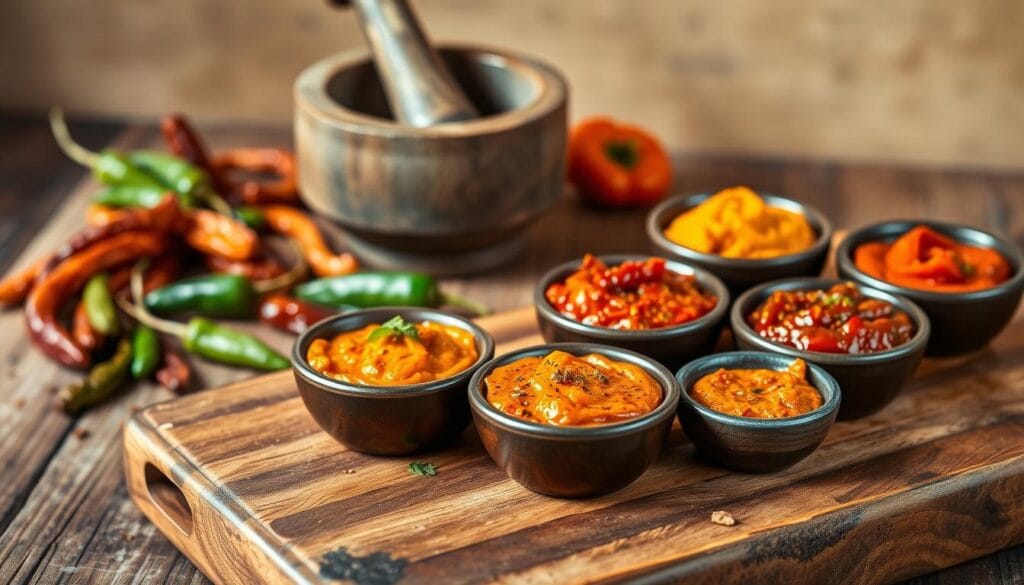
Roasting bell peppers turned my skeptics into harissa fans. It’s like offering a warm hug before the heat hits.
Tomato-based Harissa
Adding 2 tablespoons of tomato paste makes the base rich in umami. I found this trick after enjoying Cava’s Mediterranean-inspired dishes. The tomato adds depth and softens the chili’s heat. Use it in lentil soups or as a glaze for roasted veggies.
Roasted Bell Pepper Harissa
Char the peppers until they blister, then blend them with soaked chilies and roasted garlic. This version is sweet and savory, great for beginners. It’s wonderful in yogurt dips or on grilled chicken.
- Tomato variation: Add paste during blending for depth
- Bell pepper version: Roast until skins blister, then blend smooth
- Adjust heat by swapping mild chilies like Guajillo for hotter Arbol
Both variations get better with 24 hours of rest. The flavors mix like old friends. Keep jars of both ready for quick meals. Your pantry will be grateful.
How to Store Harissa Properly
Keeping your homemade authentic harissa sauce fresh starts with smart storage. Here’s how to keep it tasting vibrant for weeks or even months. You won’t lose that fiery essence.
First, move your harissa to a clean glass jar with a tight lid. A simple trick is to drizzle olive oil on top before sealing. This oil acts as a shield against air and mold, making it last longer. Store it in the fridge and mark the date. It will stay fresh for up to two months.
Refrigeration Tips
- Always use a clean spoon to avoid contamination.
- Replenish the olive oil layer after each use to keep it fresh.
- Throw it away if you see mold, bad smells, or changes in texture.
Freezing for Long-Term Use
Freezing is great for large batches. I freeze mine in ice cube trays, then move them to a freezer bag. Each cube is about a tablespoon, perfect for quick meals!
- Use freezer-safe containers for up to six months.
- Thaw only what you need; cubes melt fast in warm dishes.
“The beauty of homemade harissa is its adaptability—even after months in the freezer, its flavors wake up fresh when heated.”
By following these steps, your authentic harissa sauce will always be ready. A little care now means more flavorful meals later!
How to Use Moroccan Harissa in Cooking
The moroccan harissa recipe can change your kitchen in amazing ways. It brings flavor to simple meals and special occasions. Here are some easy ways to use it:
As a Marinade
My family loves mixing harissa with yogurt to make meat tender. For a quick moroccan harissa recipe trick, blend 1 tbsp harissa with ½ cup yogurt, olive oil, and lemon juice. Marinate chicken or veggies for 2 hours or overnight. It makes grilled meats incredible. Try my Harissa Butter Chicken recipe:
| Ingredient | Amount |
|---|---|
| Unsalted butter | 4 tbsp |
| Chicken thighs | 2 lbs |
| Harissa paste | 2–3 tbsp |
| Lemon juice | 1 tbsp |
| Olive oil | 2 tbsp |
In Soups and Stews
Adding a spoonful of harissa to soups makes them lively. Mix 1–2 tbsp into lentil soup or tagine while it cooks. It adds depth as it simmers. My favorite is a chickpea stew with cumin and turmeric. The heat blends well with the broth.
As a Dip
Make dips like harissa-yogurt or hummus to delight your guests. Mixing it with store-bought hummus adds a spicy touch. Serve with pita or veggies for a tasty snack.
Don’t just stop there. Try it in Thon Ohror sandwiches or on roasted veggies. Every bite is a new adventure. Experiment and enjoy the surprises!
Pairing Harissa with Foods
Harissa seasoning recipe is more than just a sauce. It’s about how it pairs with other foods. Let’s see how to match its bold flavor with foods that bring out its warmth and depth.
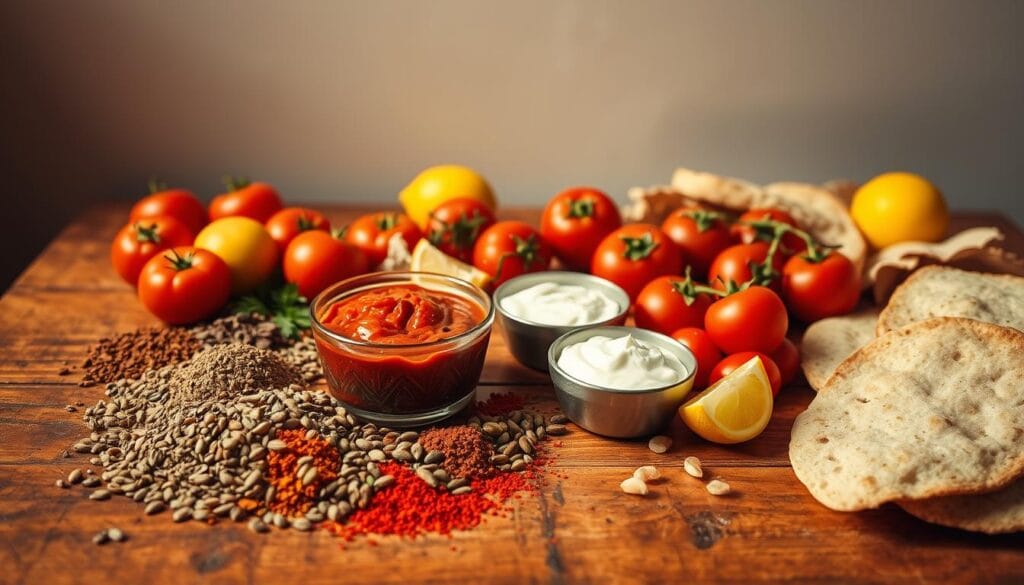
Perfect Pairings for Harissa
Begin with these everyday pairings:
- Eggs: Add it to scrambled eggs or deviled eggs for a spicy kick.
- Rosted veggies: Mix carrots, sweet potatoes, or bell peppers with harissa and olive oil. Bake at 425°F (220°C) for 25-30 minutes.
- Potatoes: Coat wedges in harissa, olive oil, and salt. Roast until crispy and top with yogurt.
- Couscous: Add a teaspoon to cooked couscous for a zesty base with grilled meats or salads.
Creating a Flavorful Meal
For a complete meal, try this oven-baked chicken with harissa:
| Ingredients | Quantity |
|---|---|
| Whole chicken | 4 pounds |
| Harissa paste | 2 teaspoons |
| Olive oil | 2 tbsp |
| Lemon slices | 1 lemon, thinly sliced |
| Red onion | 1, sliced into half-moons |
Brush harissa paste over the chicken. Roast for 45-50 minutes. Serve with couscous and a side salad. Each serving has 569 kcal, 42g protein, and 40g total fat. It’s a hearty option for a cozy dinner.
We love balancing harissa’s heat with cooling elements like yogurt, fresh herbs, or citrus. Experiment and let this harissa seasoning recipe become your kitchen’s new conversation starter.
Tips for Adjusting Spiciness
Creating the perfect spicy pepper paste starts with knowing your ingredients. I’ll show you how to adjust the heat while keeping the flavor.
Choosing the Right Chili Peppers
Start by picking chilies that fit your taste. For a milder paste, use ancho or guajillo peppers. They bring deep, smoky flavors without too much heat.
If you prefer a stronger kick, add some chiles de arbol or cascabel. They add warmth that stays without being too much.
- Mild options: Ancho, guajillo (fruity & smoky)
- Medium blend: 4 parts mild chilies to 1 part hotter varieties
- Heat boost: Add 1-2 dried habaneros for a tropical heat twist
Balancing Flavors
If your paste is too spicy, you can make it better. Here are some tips to find the right balance:
- Add sweetness: Blend in ½ cup roasted red bell pepper or a spoonful of tomato paste
- Brighten with acid: A squeeze of lemon juice or splash of vinegar sharpens flavors without masking heat
- Embrace balance: A pinch of sugar or honey tones down harshness while enhancing depth
Remember, trying new things is part of the fun. Taste as you go and adjust as needed. Your perfect spicy pepper paste is just around the corner.
Common Mistakes to Avoid
Mastering the best harissa recipe means knowing what to avoid. Let’s explore common mistakes and how to avoid them.
“The difference between good and great harissa is often found in the details you don’t overlook.”— Chef Aicha Benjelloun
Here’s what to watch for:
- Overcooking spices: Toasting cumin or coriander too long makes flavors bitter. Stop when you smell the aroma.
- Skipping the mortar: A mortar and pestle brings out deeper flavors. If using a blender, pulse briefly to avoid overheating.
- No resting time: Letting the paste sit for 24 hours helps flavors blend. Don’t rush this step.
| Mistake | Fix |
|---|---|
| Boiling chili rehydration water | Use warm—not boiling—water to retain vibrancy. |
| Rushing oil blending | Drizzle oil slowly while blending for silky texture. |
| Ignoring spice ratios | Balance heat with garlic and lemon for complexity. |
Every step is crucial. Small mistakes like skipping the 24-hour rest or rushing oil blending can ruin the paste. Focus on the process, and your harissa will be amazing.
Conclusion: Embrace the Flavor of Harissa
Harissa is more than a recipe; it’s a link to North Africa’s rich history. It combines smoky chilies, garlic, and caraway, loved for generations in Morocco. This paste is versatile, enhancing everything from soups to street snacks.
When you make harissa, you carry on a tradition. It’s a blend of Berber, Arab, and Mediterranean flavors. It’s a way to connect with the past through food.
Harissa can elevate your meals. Mustapha’s Harissa, made with Capsicum Frutescens peppers, adds a genuine kick. It’s $12.50 for 18.34 oz and great for adding flavor to proteins or even desserts.
Harissa is an invitation to explore new tastes. Begin with a little on eggs or in hummus. As you use it, you’ll discover tagines and couscous dishes. It’s a journey through North African flavors, where spices like cumin and coriander balance bold tastes.
FAQ
What is harissa?
Harissa is a spicy pepper paste from North Africa, mainly used in Moroccan dishes. It’s made from dried chilies, garlic, and spices, mixed with olive oil.
How do I make harissa from scratch?
Start by soaking dried red chilies. Then, blend them with garlic, toasted spices like cumin and coriander, and olive oil until smooth.
What types of peppers should I use for harissa?
Use a mix of dried chilies for the best flavor. Guajillo for sweetness, New Mexico for earthiness, and arbol for heat.
Can I make a milder version of harissa?
Yes! For a milder version, use less spicy peppers like guajillo. You can also add roasted red bell peppers to reduce the heat.
How can I use harissa in my cooking?
Harissa is very versatile. Use it as a marinade, add it to soups and stews, or mix it into dips for flavor.
What are the health benefits of harissa?
Harissa is full of vitamins A and C from the chilies. The spices also help with digestion and overall health.
How do I store homemade harissa?
Keep harissa in a clean glass jar in the fridge. Cover the top with olive oil to preserve its flavors.
Can I freeze harissa?
Yes, freezing harissa is a good idea. Pour it into ice cube trays, then transfer the cubes to a freezer-safe bag once they’re solid.
What common mistakes should I avoid when making harissa?
Don’t overcook the spices, as it can make them bitter. Also, toast the whole spices before grinding for better flavor.
What dishes pair well with harissa?
Harissa goes great with eggs, roasted veggies, and grains like couscous or rice. It also makes simple dishes like hummus or labneh better.
How long does homemade harissa last?
Homemade harissa lasts up to two months in the fridge. It can last even longer when frozen.
We are interested in your feedback
Catchy recipe
Sounds delicious
Original idea
Yummy
Healty and nutritious
Well done
Interesting
Just good