

Steam rising from a teapot is magical. It carries the scent of fresh mint and green tea. This is the essence of authentic Moroccan mint tea—a drink that feels like a warm hug.
I remember my first sip in Marrakech’s bustling market. The sweetness of the brew and the clinking of glasses made me feel at home. This recipe is more than ingredients; it’s a bridge to a centuries-old tradition.
Your kitchen will fill with the aroma of green tea and mint. It’s sweetened with a tablespoon of sugar. Moroccans have gathered around this drink for generations.
They pour tea from high above, creating a frothy top. Each cup has 26 calories and a touch of sweetness. The real joy is in the ritual—steeping for 2–3 minutes, serving with harcha pastries, and sharing stories.
Today, I’ll show you how to make this beloved tradition. From choosing fresh mint to mastering the perfect pour, this moroccan mint tea recipe celebrates simplicity and connection. Let’s make your kitchen a place where every sip of authentic moroccan mint tea feels like a slice of North African hospitality, no matter where you are.
FAQ
Is Moroccan Mint Tea Caffeinated?
Yes, Moroccan mint tea has caffeine because it’s made with green tea. It has less caffeine than black tea but more than herbal teas. You can make a caffeine-free version by using only mint leaves in hot water with sugar.
Can I Use Dried Mint Instead of Fresh?
Absolutely! Dried mint works well as a substitute for fresh mint. You’ll need less dried mint, about one-third of what you would use of fresh. So, for 1 cup of fresh mint, use 1/3 cup of dried.
How Long Does Homemade Mint Tea Last?
Homemade Moroccan mint tea is best enjoyed fresh. It can last up to a week in the fridge. For the best taste, drink it within 3-4 days. If it’s cloudy or smells off, it’s time for a new batch.
How Do I Adjust the Sweetness Level?
Traditional Moroccan mint tea is sweet, but you can adjust it to your liking. Start with less sugar than the recipe suggests. You can always add more, but you can’t take it away once it’s dissolved. Making it at home lets you tailor it to your taste while keeping the traditional method.
What is the Best Type of Green Tea for Moroccan Mint Tea?
For authentic Moroccan mint tea, use Chinese gunpowder green tea, also known as “Temple of Heaven.” These tightly rolled pearls unfurl beautifully, releasing a smoky flavor that’s perfect for your tea.
What Can I Do with Leftover Mint Tea?
Strain leftover Moroccan mint tea to remove leaves and tea particles. Store it in a clean glass container in the fridge for up to a week. Enjoy it chilled over ice or use it as a base for iced tea, fruit punches, or freeze it into ice cubes for added flavor.
Can I Experiment with Other Flavors?
Yes! While the classic version is great, you can try adding herbs and spices for new flavors. Geranium leaves, lemon verbena, or sage can add interesting dimensions. Just adjust sweetness, mint quantity, or steeping time to your liking.
What is Moroccan Mint Tea?
Moroccan mint tea is more than a drink; it’s a tradition that tells a story. Imagine a steaming glass of green tea, scented with fresh mint and a hint of sugar. This blend started centuries ago when tea came to Morocco through trade.
Over time, Moroccans made it their own by adding mint for its unique flavor.
The story of Moroccan mint tea began in the 18th century. British and Dutch traders brought tea leaves to North Africa. Moroccans mixed green tea with mint and sugar, creating a favorite drink.
Today, 95% of Moroccans enjoy this ritual every day.
“The first glass is as gentle as life, the second as strong as love, the third as bitter as death.”
History of Moroccan Mint Tea
At first, Moroccans used Chinese gunpowder green tea for its smoky taste. By the 19th century, spearmint became the main ingredient. It balanced the tea’s bitterness perfectly.
The way tea is poured also holds meaning. Servers pour from high up to create a frothy top. This shows respect and skill.
Cultural Significance in Morocco
In Morocco, serving tea is a sign of warmth and connection. Families and businesses serve it in small cups with pastries. The three pours symbolize life’s phases.
Here’s what each pour means:
| Pour | Meaning |
|---|---|
| First | Symbolizes life’s gentler moments |
| Second | Represents love’s strength |
| Third | Embody resilience in life’s challenges |
Traditional Serving Methods
- Use a teapot with 8 cups capacity, filled with gunpowder tea, fresh mint, and sugar.
- Pour from 12-18 inches high to aerate the tea, creating foam.
- Serve 3/4 full in small glasses—empty glasses signal the guest is ready to leave.
This ritual is about sharing moments, not just drinking. Every pour and gesture tells a story of connection. That’s the essence of traditional Moroccan mint tea.
Ingredients You’ll Need
At the heart of moroccan tea with mint leaves lies simplicity—just four main ingredients. Yet each choice matters deeply. Let’s break down what you’ll need to recreate this cultural gem at home.
Key Ingredients for Authentic Flavor
- Green Tea: Opt for Chinese Gunpowder (Temple of Heaven) for that signature smoky base.
- Spearmint: Fresh Nana mint is ideal, but regular spearmint works too—just add an extra handful.
- Sugar: Use granulated white sugar; traditional recipes often call for 4 tbsp per liter of water.
- Water: Pure and filtered water ensures no off-flavors compete with the tea.
Optional Ingredients for Variation
While purists stick to the classic combo, playful tweaks can delight. Try adding:
- Rose petals for floral notes
- Orange slices for citrus brightness
- Lemon wedges for a tangy twist
But remember—the magic starts with the core moroccan mint tea ingredients.
Recommended Tools and Utensils
A traditional brass or silver teapot with a long spout lets you pour from high for that iconic frothy top. Pair it with small glasses—no handles!—to sip like Moroccans do. A strainer helps, but the best pots have built-in filters.
Prep takes just 5 minutes, and total time is 10 minutes. Each serving holds 50 kcal with 12g sugar—adjust to taste. Whether you’re brewing for one or a gathering, these tools and ingredients make every cup a moment of connection.
Step-by-Step Preparation Guide
Let’s explore how to make Moroccan mint tea easily. My kitchen shines when I follow these steps. No need for fancy gadgets. Start by getting your tools: a teapot, infuser, and your ingredients. This guide makes it simple for beginners to get it right.
Boiling Water and Measuring Tea
First, heat water to 75-80°C—don’t let it boil. Put 2 tablespoons of gunpowder green tea in an infuser. I learned that too-hot water spoils the taste. Pour hot water over the tea, wait 30 seconds, then throw it out.
This step removes bitterness and gets the leaves ready.
Infusing the Mint Leaves
Next, add 10 fresh mint leaves to your teapot. Crush them gently to release their scent. Pour the tea you rinsed earlier into the pot with the mint. Let it steep for 5-7 minutes—don’t overdo it.
Swirling the pot gently adds depth to the tea.
Sweetening to Taste
Now, sprinkle 2-3 tablespoons of sugar over the leaves. Fill the pot with hot water and stir well. A trick is to pour the tea between glasses to mix sugar and aerate it. This makes the tea frothy.
Adjust the sweetness to your liking. Try adding lemon or honey for a different flavor. For more tips, check out this guide. Enjoy the process and let the tea’s warmth soothe you.
Brewing Techniques to Master
Learning to make Moroccan mint tea is like unlocking a secret recipe. It’s a tradition passed down through generations. Let’s explore the techniques that make ordinary ingredients extraordinary.
Common Mistakes to Avoid
Even tea lovers can make mistakes that dull the tea’s flavor. Here are some things to avoid:
- Boiling water that’s too hot—this releases bitter notes from the green tea leaves.
- Steeping mint leaves too long—over-infusion turns freshness into bitterness.
- Skipping the first pour ritual—the initial “awakening” steep is crucial for balancing flavors.
Tips for the Perfect Brew
Follow these steps to make your Moroccan mint tea better:
- Use a thermometer or let boiled water rest 2-3 minutes to reach 167-176°F.
- Twist fresh mint leaves gently to release oils without bruising them.
- Pour from 12 inches high to create that signature frothy top—this la nâqua technique is key to authenticity.
- Experiment with regional twists: Add a pinch of saffron in Taliouine style or adjust sugar levels for personal taste.
Alternative Methods of Preparation
Adapt the tradition to your kitchen with these approaches:
| Method | Key Steps |
|---|---|
| Traditional | Use a silver pot, three pours, and fresh nana mint. |
| Modern Twist | French press for easy steeping, but skip the froth. |
| Quick Prep | Pre-measured tea balls for consistency. |
“The tea’s three pours symbolize life’s journey—first bitterness, then sweetness, finally harmony.”
Every pour tells a story. By respecting these techniques, you honor centuries of tradition while making this beloved drink your own.
The Perfect Tea Serving Suggestions
Enjoying traditional Moroccan mint tea is best with good company and the right setup. Each pour is a story of care. Let’s make every moment special.
Serving with Care and Tradition
Begin by setting up your teapot, small glasses, and a tray of treats. Fill the glasses three-quarters full. This is a sign of welcome.
Pouring from high up creates a frothy top. This is as inviting as the tea itself.
“The first glass is as gentle as life, the second as strong as love, the third as bitter as death.”
Pairing for Every Palate
Enjoy your tea with sweet treats like honey pastries or almond cookies. For halal options, check out Gustative Recipes’ halal meals. Try these pairings:
- Fruit-stuffed dates or rosewater macarons
- Spiced almonds or orange blossom candies
- Lightly salted nuts for contrast
Create a Welcoming Atmosphere
Hosting a tea at home? Set up cushions and a low table. Play soft music while you prepare the tea. Offer three rounds, each poured high to honor tradition. Here’s how to set up:
| Setup Element | Details |
|---|---|
| Teapot Capacity | Small pot (6 glasses) or large (12 glasses) |
| Mint Sprig Placement | One fresh sprig per glass |
| Sweetness Options | Two pots—one sweeter, one less so—let |
The goal is to share warmth. Adjust sweetness to taste. Always pour gently. This keeps tradition alive, one pour at a time.
Health Benefits of Mint Tea
When I first tried authentic moroccan mint tea, I loved its soothing taste. It’s not just a cultural treasure; it’s also a natural remedy. It helps your body in many ways.
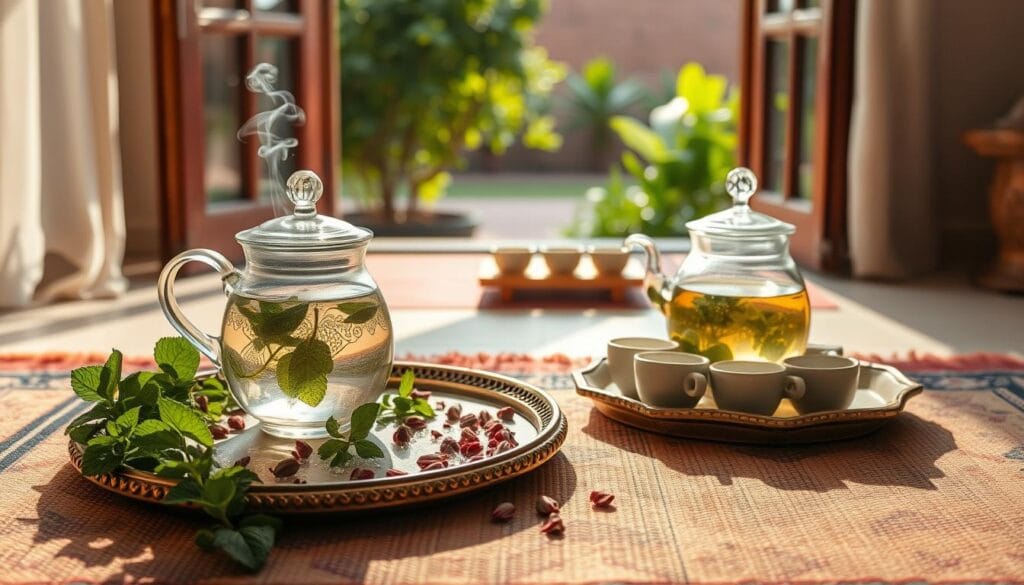
Discovering Digestive Harmony
The peppermint in authentic moroccan mint tea is like a gentle massage for your stomach. It eases muscle tension and helps with bloating and cramps. Drinking a cup after dinner can calm your digestion right away.
But, if you have GERD, enjoy it carefully. Mint can sometimes make heartburn worse.
Hydration with a Refreshing Twist
- Its cooling mint flavor makes drinking water a pleasure.
- It’s full of electrolytes from green tea, better than sugary drinks.
- In Morocco’s heat, this tea keeps people energized for ages.
Antioxidants at Every Sip
Green tea’s antioxidants are a big deal in authentic moroccan mint tea. These antioxidants fight aging. A 2023 study found this tea has more antioxidants than matcha!
The L-theanine in green tea also calms your mind. It’s perfect for busy days without making you sleepy.
“2 to 3 cups daily of authentic moroccan mint tea may boost longevity, per Japanese research on green tea drinkers.”
While it’s great for your body, don’t overdo it. Pregnant women should talk to their doctor. It might affect them differently. Also, people with blood pressure or diabetes should watch their intake.
Enjoy authentic moroccan mint tea in small amounts. Your body and taste buds will appreciate it.
Exploring Variations of Moroccan Mint Tea
There are endless ways to make your easy moroccan mint tea recipe your own. Let’s explore a few tweaks to try. You can add herbs or cool it down for summer. The key is to add your personal touch.
“A sprinkle of lemon verbena takes it to new heights—it’s like a citrus-kissed breeze in every sip.”
Begin with herbs. Here are some options:
- Fresh lemon verbena for a zesty twist
- A sprig of sage for earthy depth
- Wormwood for a slightly bitter contrast
For summer, make it iced tea. Brew it, chill it, and serve over ice with a lemon wedge. This easy moroccan mint tea recipe is great for hot days—perfect for sipping on the porch.
Every region in Morocco has its own twist. Coastal areas use less sugar, balancing the saltiness of seafood. In the Sahara, they add a pinch of salt to fight desert heat. Northern versions are sweeter, while southern blends might include desert herbs like za’atar.
Don’t be afraid to adjust the sweetness. Cut sugar in half if you like it less sweet, or try honey for a natural sweetness. The beauty is in its adaptability—just steep, stir, and make it your own.
How to Store Leftover Tea
Enjoying moroccan tea with mint leaves is a treat, but what happens when there’s a little left? Let me share how to keep it fresh and flavorful. First, strain the tea through a fine sieve to remove loose leaves and particles—this prevents bitterness. Then, transfer the strained liquid to a glass jar with a tight lid.

Best Practices for Storage
- Always store in a sealed glass container—metal pots can alter the taste.
- Keep refrigerated for up to 7 days, though best enjoyed within 3-4 days for peak freshness.
- Never leave it at room temperature longer than 2 hours to avoid spoilage.
Reheating Tips for Best Flavor
Warm leftover tea gently. Avoid microwaves—instead, pour it into a saucepan and heat on low. Stir occasionally until warm but never boiling. Boiling water can turn the brew bitter.
Alternatives to Making a New Batch
Transform leftovers into something new! Blend with lemonade and ice for a cooling iced version. Or freeze in ice cubes for future use—perfect in mocktails or smoothies. For something sweet, use the tea as a base to poach pears or peaches. Every drop deserves a second life, right?
Frequently Asked Questions
Still wondering about details to perfect your atay? Let’s address the questions I often hear to help you feel confident with every sip.
Is Moroccan Mint Tea Caffeinated?
Yes—it gets its caffeine from green tea leaves, offering 25–35mg per 8oz serving. For a caffeine-free version, simply omit the green tea and steep mint alone with sugar. My family enjoys both versions, depending on the time of day.
Can I Use Dried Mint Instead of Fresh?
Absolutely! Dried mint works well when fresh isn’t available. Use ⅓ the amount (like 1 tsp dried for 1 tbsp fresh) since it’s more concentrated. But for peak aroma, fresh spearmint (na’na) remains the gold standard.
How Long Does Homemade Mint Tea Last?
Store leftover tea in the fridge for up to 3 days. Check for cloudiness or off smells before sipping. For iced variations, lemon juice and extra sugar boost shelf life slightly but freshness is key—like the first pour of tea from a host’s silver pot.
Every time I share this atay tradition, I’m reminded how small details matter: the height of the pour, the sweetness ratio, and the stories shared over each cup. Whether you’re adapting this moroccan mint tea recipe or mastering the pour, remember this is your journey. Keep experimenting with how to make moroccan mint tea your own—whether as a post-dinner digestif or a summer cooler. And if you’ve got more questions, I’m always here to steep through the answers with you.
We are interested in your feedback
Catchy recipe
Sounds delicious
Original idea
Yummy
Healty and nutritious
Well done
Interesting
Just good