
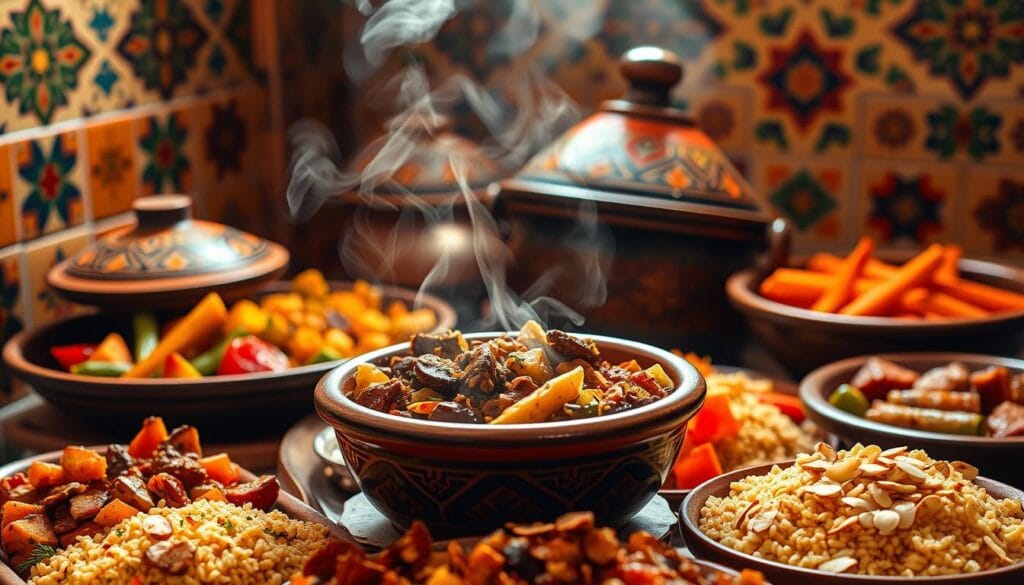
The slow dance of spices in a tagine pot feels like a warm hug from North Africa. When I first tasted a slice of traditional moroccan dessert sweet tagine, I knew it was special. The mix of cinnamon, saffron, tender lamb, and apricots and honey tells a story of Marrakech’s souks and culinary traditions.
Creating this authentic moroccan sweet tagine recipe has taught me it’s not just about ingredients. It’s about the 8-hour simmer that makes carrots and dried fruits tender. Each spice carries centuries of tradition, turning a pot into a window to Morocco’s heart. It’s more than a recipe; it’s a way to connect with Berber cooking traditions.
Whether you’re planning a dinner or just want to explore new flavors, this guide is for you. We’ll explore how to bring North African flavors into your kitchen, one delicious spoonful at a time. Let’s start this culinary journey together.
The slow dance of spices in a tagine pot feels like a warm hug from North Africa. When I first tasted a slice of traditional moroccan dessert sweet tagine, I knew it was special. The mix of cinnamon, saffron, tender lamb, and apricots and honey tells a story of Marrakech’s souks and culinary traditions.
Creating this authentic moroccan tagine dish has taught me it’s not just about ingredients. It’s about the 8-hour simmer that makes carrots and dried fruits tender. Each spice carries centuries of tradition, turning a pot into a window to Morocco’s heart. It’s more than a recipe; it’s a way to connect with Berber cooking traditions.
Whether you’re planning a dinner or just want to explore new flavors, this guide is for you. We’ll explore how to bring North African flavors into your kitchen, one delicious spoonful at a time. Let’s start this culinary journey together.
What is a Moroccan Sweet Tagine?
Ever wondered about the origins of this sweet treat? The authentic moroccan tagine dish is more than a dessert. It’s a centuries-old tradition. Its cone-shaped clay pot traps steam, making flavors burst in every bite.
When I first tried a traditional moroccan dessert, I was amazed. Honeyed fruits and spices blended beautifully after hours of slow cooking. This unique combination makes it a key part of Moroccan culture.
Origin and History of Tagine
Tagines come from Morocco’s desert heartlands. They started as survival tools for nomadic families. These pots helped them cook food gently over low fires, saving fuel.
Over time, these pots became an art form. The sweet version, filled with apricots and almonds, became famous for special occasions. Its design is genius, returning condensation to the dish, wasting nothing.
Today, that slow-cooking magic still exists. The pot’s warmth infuses every ingredient, from honey-glazed fruits to toasted almonds. It’s not just a recipe; it’s a story of resilience and sharing. A story I deeply respect.
The Art of Cooking in a Tagine
Every time I lift the cone-shaped lid of my tagine pot, I’m reminded of the slow, patient magic that happens inside. Cooking with this ancient vessel isn’t just about heat. It’s a dance of steam, time, and tradition that transforms ingredients into something extraordinary. To master moroccan tagine cooking tips, start by honoring the pot’s design.
The clay conducts heat gently, and the iconic cone lid traps steam. This lets every ingredient simmer into perfection. And for those eager to recreate this magic at home, a few simple rules make all the difference.
“The tagine’s shape isn’t just decorative—it’s a culinary genius move.” — Chef Oliver Nuttinck
Benefits of Cooking with a Tagine
| Benefit | Why It Matters |
|---|---|
| Even Heat Distribution | Prevents burning, ensuring tender results |
| Steam Retention | Locks in natural juices without extra liquid |
| Slow Flavor Infusion | Deepens taste as spices meld over time |
Tips for Proper Tagine Cooking
Here’s what I’ve learned:
- Always use a heat diffuser on stovetops to mimic gentle embers
- Layer firmer ingredients like carrots at the bottom—letting softer fruits rise
- Add honey or dates in the last 10 minutes to avoid caramelizing
Remember, patience is your best tool. A sweet apricot or date tagine might take 45 minutes. But rushing it risks losing that velvety texture. Trust the cone-shaped lid to do its job—it’s been perfecting this since Berber times. Now let’s dive into what goes into this pot next.
Essential Ingredients for Moroccan Sweet Tagine
Every cinnamon and honey tagine recipe needs a mix of flavors that blend well. The right mix turns a simple dish into the best moroccan tagine with honey. It’s like getting a warm hug in a pot. Let’s explore what makes this dessert so special.
Spices that Make a Difference
| Spice | Amount | Role |
|---|---|---|
| Cinnamon | 1 tsp | Warm, earthy foundation |
| Cardamom | ½ tsp | Floral complexity |
| Ground ginger | 1 tbsp, grated | Gentle heat that lifts the sweetness |
Toasting whole spices before grinding brings out their scent. Honey, 1 tbsp of raw honey, balances the sweetness with the spices.
Fruits and Nuts to Consider
- Dried apricots or prunes: They soak up the spice blend well.
- Honey: Adds depth, not just sweetness—use local varieties for a twist.
- Almonds or pistachios: Crunchy accents that contrast with soft fruits.
My secret? Mix dried and fresh fruits like apples for a surprise. A sprinkle of toasted nuts makes every bite special.
Step-by-Step Moroccan Sweet Tagine Recipe
Ready to bring North Africa’s warmth into your kitchen? This moroccan sweet tagine recipe is a comforting ritual you can master with ease. Follow these simple steps to create a dish that’s as nourishing as it is delicious.
Preparation of Ingredients
Start by rehydrating dried apricots, prunes, and raisins in warm orange juice for 30 minutes. Thinly slice onions and mince garlic. Grind whole spices like cinnamon and ginger briefly in a mortar—this unlocks their fragrance. I keep a small bowl ready with toasted almonds and rose water for the finale.
- Soak fruits to soften their texture
- Toast spices to enhance their flavor
- Prep nuts for garnish
Cooking Process
In a tagine pot or Dutch oven, melt butter over medium heat. Sauté onions until translucent—this takes about 5 minutes. Add spices and let them bloom for 1 minute. Pour in rehydrated fruits, honey, and ¼ cup water. Lower heat to low, cover, and simmer for 1.5–2 hours. Add almonds and floral waters in the last 10 minutes. This easy moroccan tagine recipe rewards patience—no rushing here!
Serving Suggestions
Serve directly from the pot, garnished with powdered sugar or fresh mint. A scoop of vanilla ice cream contrasts beautifully with the spiced sweetness. Pair with crusty bread or couscous to soak up every drop. Nutritionally, each portion offers 386 calories, 31g protein, and 5g fiber—proof that comfort food can nourish.
“The best tagines are those that cook while life happens—let it simmer while you enjoy the moment.”
Popular Variations of Sweet Tagine
Sweet tagine is all about endless possibilities. Each version brings a piece of Morocco’s spirit to the table. Let me share two of my favorite sweet tagine recipes with you. If you’ve tried the savory Moroccan Chicken Tagine, you’ll love these sweet ones just as much.
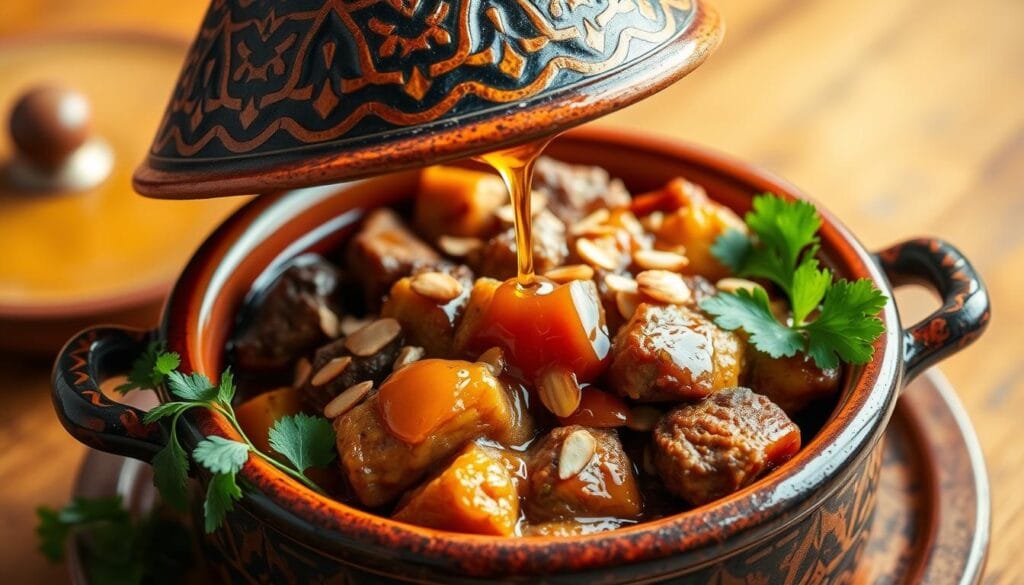
This traditional moroccan dessert is a perfect mix of tart and sweet. It combines dried apricots with honeyed spices like cinnamon and a touch of orange zest. Toasted almonds add a nice crunch. I enjoy it warm, topped with fresh mint, making it a cozy end to any meal.
This best moroccan tagine with honey is perfect for special occasions. It features dried figs, rich honey, and a pinch of saffron. Cooking it slowly brings out the flavors, and a drizzle of rose water adds a floral note. Serve it with cardamom-spiced yogurt for a refreshing contrast.
Changing ingredients, like using pears instead of apricots, makes the dish your own. The secret is finding the right balance of fruit, spice, and sweetness. This way, you honor tradition while adding your own twist.
Pairing Moroccan Sweet Tagine with Drinks
There’s more to a Moroccan meal than just the dish itself—the right drink makes it unforgettable. Pairing the traditional Moroccan dessert with the perfect beverage enhances its flavors. Let’s find out how to match your authentic Moroccan tagine dish with drinks that honor its taste.
Traditional Moroccan Mint Tea
Mint tea is more than a drink—it’s a tradition. The ritual of pouring tea from a height creates a frothy top, symbolizing generosity. To make it at home, steep gunpowder tea with fresh mint and honey.
This blend’s crispness pairs perfectly with the tagine’s sweetness. The honey’s depth mirrors the dish’s caramelized fruits, while the mint’s coolness refreshes the palate between bites.
Drink Suggestions for Tagine
For a non-alcoholic option, try sparkling water with a hint of orange blossom water. This light, floral touch echoes the dessert’s essence. The contrast of a cool drink with the warm tagine creates a comforting sensory dance.
Nutritional Benefits of Moroccan Sweet Tagine
Enjoying the best Moroccan tagine with honey is more than just a treat. It’s a mix of tradition and health, making it a dessert that’s good for you. The cinnamon and honey tagine recipe is a perfect blend of taste and wellness.
Health Benefits of Key Ingredients
Let’s talk about the ingredients that make this dish special:
- Cinnamon – It’s not just for flavor. It also helps with inflammation and blood sugar.
- Honey – It’s sweet but packed with antioxidants, better than regular sugar.
- Sweet potatoes – They’re full of vitamin A for your eyes and fiber for energy.
- Chickpeas – They add protein and fiber, keeping you full and happy.
Caloric Content and Portion Control
| Nutrient | Per Serving |
|---|---|
| Calories | 250 kcal |
| Protein | 8g |
| Carbs | 45g |
| Fiber | 10g |
| Potassium | 700mg |
| Vitamin A | 5000 IU |
Having a ½-cup serving is a great way to enjoy it without overdoing it. Try it with fresh mint tea for a complete experience.
Storing and Reheating Leftovers
Keeping your homemade moroccan tagine cooking tips warm starts with how you store them. Leftovers can still be delicious if you store them correctly. Here’s how to keep your tagine’s flavors fresh:
Best Practices for Storing Tagine
- Let cool completely uncovered for 30 minutes before transferring to a shallow glass container.
- Seal tightly—use airtight containers or freezer-safe bags with 1-inch headspace for expansion.
- Refrigerate within 2 hours (3-4 days max) or freeze (up to 3 months).
How to Reheat Safely
Reheat your tagine carefully to preserve its flavors and textures:
- Stovetop: Simmer over low heat with 2 tbsp broth or water, stirring occasionally.
- Microwave: Use 50% power in 30-second bursts, covered with a damp paper towel.
- Oven: Heat at 275°F for 15-20 minutes in a baking dish with a splash of orange juice.
| Storage Method | Timeframe | Pro Tip |
|---|---|---|
| Refrigerator | 3-4 days | Layer with parchment paper to prevent sticking |
| Freezer | 3 months | Label with date and recipe variations |
Reheating your how to make sweet tagine at home brings back its magic. Even reheated, leftovers can be a cozy breakfast with yogurt. It shows that every bite can still hold the warmth of North Africa.
Cultural Significance of Tagine in Morocco
My first taste of an authentic moroccan tagine dish in a family home during Eid was unforgettable. It’s more than food; it’s a link between past and present. The traditional moroccan dessert versions, like sweet apricot or fig tagines, bring happiness to weddings and holidays.
Role of Tagine in Moroccan Celebrations
In Moroccan celebrations, tagine takes center stage. Picture a traditional moroccan dessert like lazza—dates stuffed with almonds, slow-cooked with honey—served at Eid feasts. These dishes are not just food; they’re family stories passed down through generations.
The Berber tradition, present in 40% of Morocco, adds depth to the dish. Each spice, like cinnamon and saffron, tells a story. The communal pot invites everyone to come together.
Tagine as a Symbol of Hospitality
Sharing a tagine is like sharing a part of oneself. Moroccan homes serve it with mint tea, a sign of welcome. The cone-shaped pot’s steam is not just cooking; it’s a way to start conversations.
Families cherish their oldest tagine pots, each crack telling a story of past feasts. This dish is more than food; it’s a sign of belonging.
Frequently Asked Questions (FAQs) About Tagine
Let’s tackle common questions to boost your confidence in making this dish. Whether you’re new to Moroccan cooking or already a fan, these answers aim to make your journey easier.
Can I make tagine without a tagine pot?
Yes! A heavy Dutch oven or a deep skillet with a tight lid is perfect. You might need to add more liquid like broth or water to keep it moist. Simmer slowly and check often—the cooking time could be 15-20% longer. With patience and gentle heat, your kitchen tools can help you follow moroccan tagine cooking tips.
What can I substitute for hard-to-find spices?
Here’s a guide to keep your dish on track:
| Missing Spice | Substitute |
|---|---|
| Ras el hanout | Cumin + coriander + cinnamon + a pinch of allspice |
| Orange blossom water | Orange zest + 1/4 tsp vanilla extract |
| Saffron | 1/2 tsp turmeric (for color) + a dash of paprika |
| Honey | Maple syrup or date syrup for a vegan option |
“Flexibility is part of the joy—your adaptations will still taste like Morocco.”
Remember, how to make sweet tagine at home is about balancing flavors and patience. Adjust ingredients slowly and trust your taste. Try using seasonal fruits like plums or apricots to make it your own. Every bite should feel like a warm hug from North Africa.
Exploring More North African Desserts
Want to try more traditional moroccan dessert options? Let’s go beyond the easy moroccan tagine recipe we’ve shared. North Africa’s sweets are full of bold, comforting flavors.

Discover New Flavors to Love
Let’s start with these regional treasures:
- Chebakia – honey-soaked flower-shaped cookies with sesame seeds
- Zlabia – crispy fried dough coated in orange blossom syrup
- Makroud – semolina cookies stuffed with date filling
Bring the Magic Home
You don’t need rare ingredients to begin. Start with small changes. Add cinnamon or cardamom to oatmeal. Use orange blossom water in cakes instead of vanilla.
Try sprinkling toasted almonds on yogurt for a nutty crunch. For bigger changes, try:
- Mix ras el hanout into pancake batter
- Drizzle rose water over fresh fruit salads
- Use preserved lemons in savory-sweet pairings
These small steps can make a big difference. The secret is finding the right balance of sweet, savory, and aromatic. My grandmother taught me this.
“A little cumin here, a dash of saffron there – and suddenly any dish feels like a Moroccan embrace.”
Exploring is all about enjoying the journey. Share your dishes with friends. North African cooking is best shared, like warm mint tea on a cold night.
Conclusion: Your Next Culinary Adventure Awaits
As we end our journey through Moroccan sweet tagine traditions, imagine the warmth of spices in your kitchen. It echoes centuries of North African craftsmanship. The easy moroccan tagine recipe is more than a dish—it’s a chance to enjoy the slow, sensory art of cooking.
Whether you’re making the moroccan sweet tagine recipe for a weekend brunch or a holiday feast, it turns your home into a place where history meets comfort.
Let Your Kitchen Become a Canvas of Flavor
Why not start small? Gather your ingredients—dates, almonds, cinnamon—and let the easy moroccan tagine recipe guide you. Even beginners can master this dish with patience. Every spoonful of slow-cooked sweetness shows the care in every step.
The tagine pot, that conical treasure, turns simple ingredients into something amazing. You’ll see how caramelized fruits and spices tell a story of tradition without needing perfection.
Cooking this moroccan sweet tagine recipe is just the beginning. Take a photo of your dish, share it with friends, or tell your first attempt in the comments. Let’s make kitchens around the world places of shared discovery.
Every change you make, like swapping apricots for peaches or trying new spice blends, keeps this ancient dish alive. In Moroccan culture, sharing food is a sign of love. Serve it with mint tea or couscous, and let it remind you that cooking connects us all.
FAQ
Can I make an authentic tagine without a tagine pot?
Yes, you can still make delicious tagines without a traditional pot. Use a heavy Dutch oven or a deep skillet with a tight lid. Make sure it’s moist and cooks with gentle heat.
What can I substitute for hard-to-find spices?
For ras el hanout, mix cumin, coriander, cinnamon, ginger, and allspice. Orange blossom water can be replaced with orange zest and vanilla extract. Vanilla can also substitute for rose water. Turmeric can be used for saffron’s color, though the taste will be different.
Is there a way to adjust sweetness for my sweet tagine?
Yes! Instead of honey, try maple syrup, date syrup, or coconut sugar. This lets you adjust the sweetness to your liking.
How do I know when my sweet tagine is finished cooking?
Sweet tagines cook for 45-60 minutes. They’re done when fruits are soft and flavors blend well. Taste it as it cooks to check seasoning.
Can I use fresh fruits instead of dried fruits in my sweet tagine?
Yes, fresh fruits like apples, pears, or quinces are great. They add texture and flavor when in season. Just remember, they cook faster than dried fruits.
What’s the best way to store leftover sweet tagine?
Cool the tagine to room temperature. Then, put it in shallow glass containers for faster cooling. It stays good for 3-4 days in the fridge.
How can I reheat my leftover sweet tagine safely?
Reheat it gently on the stovetop with a splash of water or juice. If using a microwave, cover with a damp paper towel to keep it moist.
What drinks pair well with sweet tagine?
Moroccan mint tea is a perfect match for sweet tagine. For wine, try dessert wines like late-harvest Gewürztraminer or golden Sauternes.
We are interested in your feedback
Catchy recipe
Sounds delicious
Original idea
Yummy
Healty and nutritious
Well done
Interesting
Just good