
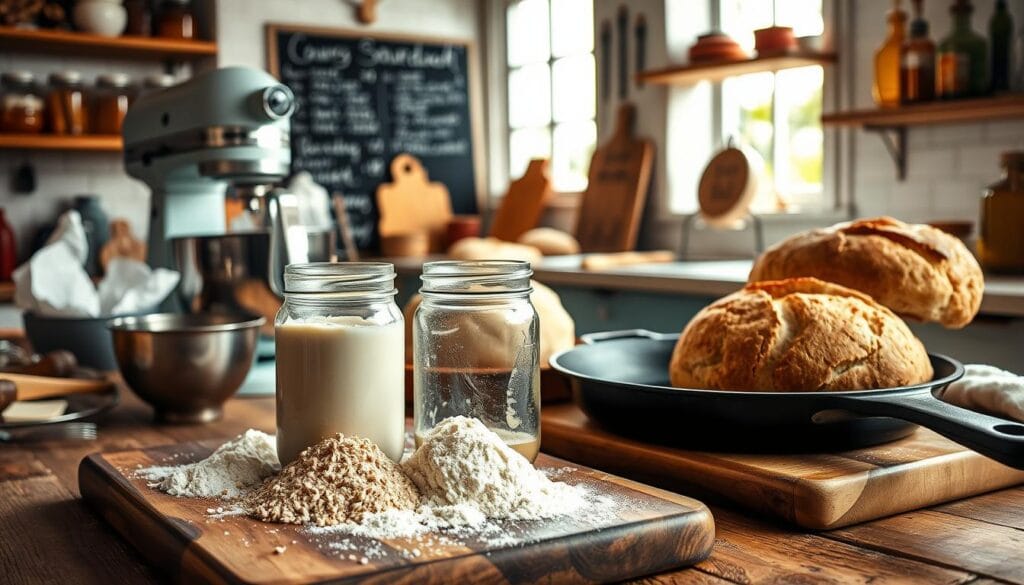
There’s something comforting about caring for a sourdough starter. I remember the first time it bubbled to life, ready to make warm bread. But what about the leftover discard? For years, I’d throw it away, until I learned to make something special from it.
Now, my kitchen is full of creativity. I make fluffy pancakes and hearty muffins from that tangy discard. It’s amazing how much you can do with it.
Every time you feed your starter, you’re preparing for many recipes. Think of it as gathering ingredients for 23 dishes. You can make pancakes in 40 minutes or crumbly biscuits with chimichurri.
Even a small amount, like a tablespoon, can make a big difference. This guide will show you how to make the most of your starter. You’ll create meals that nourish your body and soul.
Let’s see discard as a gift. These recipes are a celebration of creativity. By the weekend, you can make sourdough waffles, savory mushroom stuffing, or gluten-free cookies.
Together, we’ll reduce waste and fill your home with baking aromas. Are you ready to see what your starter can do?
FAQ
How long can I keep my sourdough starter?
Your sourdough starter can last forever with the right care. There are starters over a century old still alive. Just remember to feed it regularly, and it will keep growing.
Why is my sourdough starter not bubbling?
Check your water first—it might be too chlorinated. The flour you use also matters. Keep it warm, between 70-85°F. Sometimes, it just takes time, about 7-14 days for it to start bubbling.
Can I use my sourdough starter right away?
It depends on what you’re baking. For bread, use it when it’s most active, 4-8 hours after feeding. For pancakes, you can use it straight from the fridge or right after feeding.
How do I maintain my sourdough starter?
Keep it consistent! Feed it twice a day when it’s out, using equal parts starter, flour, and water. Keep an active starter for baking and a backup in the fridge.
What should I do if my starter has an unusual smell or excessive liquid on top?
These signs mean your starter needs some love. An odd smell might mean it’s too fermented. Too much liquid means it’s hungry. Feed it regularly at room temperature to fix it.
Can I make gluten-free sourdough bread?
Yes, you can make a gluten-free starter. Use flours like brown rice, sorghum, or buckwheat. Mixing different gluten-free flours works best, and fermentation makes the bread better.
What creative additions can I use in my sourdough baking?
You can add so many things! Try fresh herbs, spices, cheese, olives, or nuts. Just watch the moisture to keep the dough right.
How do I know when my sourdough starter is ready to use?
It’s ready when it’s doubled in size, bubbly, and smells sour after feeding. This usually takes 4-8 hours after feeding.
What can I do with sourdough discard?
Sourdough discard is super versatile! Use it for pancakes, waffles, cookies, or savory fritters. It’s a great way to use up waste and add flavor to your food.
How do I improve the flavor of my sourdough bread?
Try different flours and add seeds or nuts. Longer fermentation times can also enhance flavor. Experiment with hydration levels and add herbs or cheese for unique tastes.
Introduction to Sourdough Starters
Starting your sourdough journey is exciting. It’s about flour, water, and wild microbes. Think of your starter as a living friend—gentle and strong. It needs care to thrive. Before you start sourdough recipes or baking with sourdough starter, learn how to care for it.
What is a Sourdough Starter?
A starter is a mix of flour and water with wild yeast and bacteria. It’s alive and changes over time. With regular feeding, it becomes a lively base for bread and more.
Benefits of Using a Sourdough Starter
A sourdough starter can last indefinitely with proper maintenance.
- It makes gluten easier to digest during fermentation
- It adds a unique tang to food
- It’s great for reducing food waste by making new treats from “discard”
How to Create Your Own Starter
Here’s how to keep your starter alive:
- Day 1: Mix 50g whole wheat flour + 50g all-purpose flour with 125g filtered water.
- Days 2-4: Feed it every 24 hours, using 1:5:5 (starter:flour:water) ratios. Adjust as needed.
- Watch it grow—when it doubles in 4–6 hours, it’s ready to bake!
| Day | Ingredients | Notes |
|---|---|---|
| Day 1 | 100g flour (50/50 split) | Use filtered water at 80°F (26°C) |
| Day 2 | 75g starter + 100g flour | Reduce water to 115g for consistency |
| Day 4+ | 30g starter + 100g flour | Optimal hydration at 100% for stability |
Patience is key. Your starter’s journey is like your own—unique and worth the wait. If unsure, trust the process. We’re here to guide you every step of the way.
Classic Sourdough Bread Recipes
There’s nothing better than taking a golden loaf out of the oven. Its crust crackles with excitement. These sourdough bread recipes are perfect for showing off your starter’s skills. Each bite is a tale of patience and tradition.
Traditional Sourdough Bread
Start with 60g starter, 500g bread flour, 340g water, and 10g salt. Here’s how to do it:
- Mix the ingredients into a sticky dough—no kneading needed.
- Let it rise for 10-12 hours at 76-78°F, folding gently every 2 hours.
- Shape it into a boule, proof for 1-2 hours, then bake at 500°F for 20 minutes. Then, at 450°F for 20 more. A 205°F internal temp is key.
Whole Wheat Sourdough Bread
Replace 50g of bread flour with whole wheat for a richer taste. Add 1-2 tablespoons of water if the dough is too dry. My first loaf taught me to love its rustic texture—it’s worth the effort.
Adding Seeds and Nuts
Make loaves special with toppings like sesame or sunflower and poppy seeds. Press walnuts or pumpkin seeds into the dough before baking. A blockquote from my kitchen: “Seeds aren’t just for looks—they add crunch and nutrition.”
These recipes with sourdough starter are more than just steps. They’re invitations to enjoy the slow art of baking. Remember, every fold and rise adds character. Now, let’s see how to turn this into creative dishes next.
Creative Uses for Sourdough Starter
There’s more to sourdough than just bread! When my starter overflows, I turn the “discard” into everyday magic. From fluffy pancakes to crispy pizza, these sourdough discard recipes make leftovers special. Let me show you how to add a tangy twist to your kitchen.
“The first bite of those waffles? My kids declared them ‘the best pancakes ever’—and they’ve never had pancakes like this before.”
Sourdough Pancakes: A Breakfast Delight
Start with a mix the night before. Combine discard with flour, milk, and vanilla. Let it rest overnight. By morning, it’s bubbly and ready.
The slow rise makes pancakes crunchy on the edges and fluffy inside. Top with fresh berries or maple butter for a weekend treat.
Sourdough Pizza Crust: Easy and Delicious
Sourdough pizza recipes are surprisingly simple. Mix discard, flour, and salt for dough that rises well. Bake it thin or thick for a chewy texture.
Top with homemade marinara and melted mozzarella. My family loves garlic-kale crust with balsamic. It’s better than takeout, and easy to clean up.
Sourdough Waffles: Fluffy and Flavorful
Overnight fermentation makes waffles tangy and crispy. Freeze extras for quick meals. They toast perfectly.
Add cinnamon and sugar for dessert waffles, or savory herbs for brunch. Every bite is a new discovery.
Sourdough Starter in Baking
There’s magic in watching a sourdough starter turn simple ingredients into something amazing. Easy sourdough recipes like cinnamon rolls, biscuits, and banana bread gain a special tang. Each bite shares a tale of patience and care, starting with your starter.
Sourdough Cinnamon Rolls
Imagine starting your day with the scent of warm cinnamon and a hint of sourdough. These rolls are more than just fluffy—they’re a cozy morning treat. The starter’s slow rise adds layers of flavor that pair well with a butter-pecan filling.
Let the dough rest in the fridge overnight for a deeper taste. There’s no rush, just a reward waiting for you.
Sourdough Biscuits: Flaky and Buttery
Sourdough can make a classic biscuit even better. Cold butter and gentle handling keep the layers crisp. The starter adds a subtle tang.
These biscuits are great for breakfast or with hearty soups or gravy. A secret? Fold the dough gently to avoid overworking the gluten.
Sourdough Banana Bread: A Twist on a Classic
Overripe bananas and sourdough starter come together in this recipe. The starter makes the banana’s sweetness even more intense. It turns “ugly” fruit into something divine.
Try adding grated zucchini or nuts for different flavors. Baking with sourdough starter turns leftovers into treasures. Drizzle with caramel glaze or enjoy it plain—it’s all delicious.
Savory Dishes with Sourdough Starter
Sweet sourdough recipes are great, but savory dishes are just as exciting. Think flaky flatbreads, golden fritters, or hearty soups with a tangy twist. All thanks to that amazing starter. Let’s dive into how sourdough discard recipes can elevate your meals.
Sourdough Flatbreads: Quick & Easy
For a quick weeknight meal, try sourdough flatbread. Mix discard with flour and water for a dough ready in 10 minutes. Add herbs, cheese, or veggies for a flavorful dish.
For a tasty appetizer, make cheesy onion flatbread. It’s ready in 20 minutes, serves four, and has 531 calories per slice. It’s perfect for any gathering!
| Dish | Prep Time | Servings | Calories/Serving |
|---|---|---|---|
| Cheesy Onion Flatbread | 20 mins | 4 | 531 |
Savory Sourdough Fritters
Got leftover veggies? Make crispy fritters! Mix zucchini, cheddar, and starter batter. Pan-fry until golden for a great lunch or party snack. The discard adds a mild tang that complements rich flavors.
Using Starter in Soups and Stews
Don’t throw away discard—use it in soups! A few tablespoons in the cooking process thickens the broth without flour. My favorite is potato soup, which gets a velvety texture and a hint of acidity. It’s like having a secret ingredient!
These ideas show how starter can turn simple meals into something special. Try new recipes, share your successes, and enjoy the fun of sourdough recipes. Your kitchen and family will love it.
Unique Sourdough Desserts
Who says sourdough starter is only for bread? Let’s explore sourdough dessert recipes that turn your discard into showstopping treats. My kitchen experiments proved that a little tang elevates desserts in ways sugar alone can’t. Here’s how to bake with love—and leftover starter.
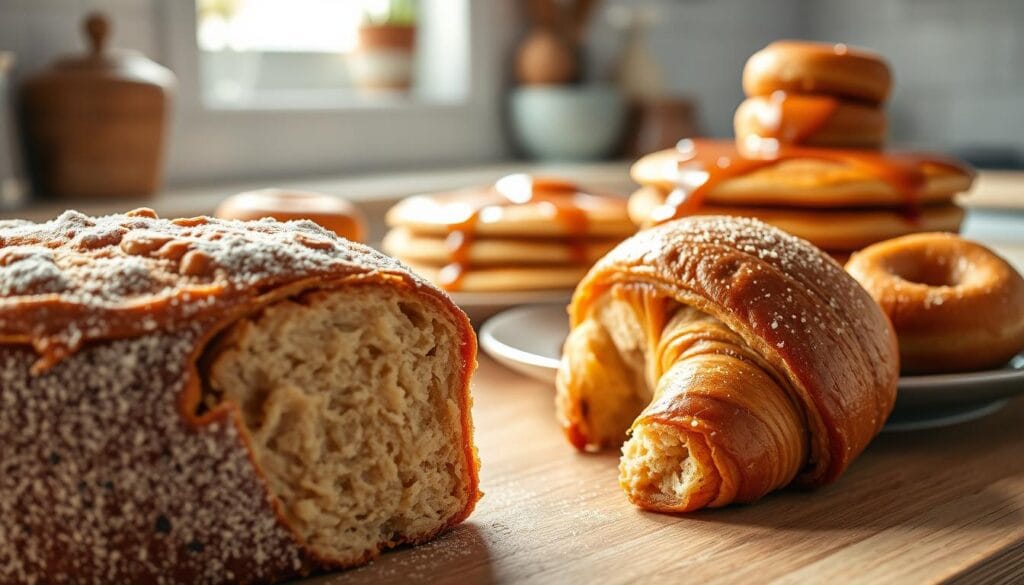
Start with the crowd-pleaser: sourdough starter recipes like chocolate chip cookies rated 4.64/5 by 559 bakers. The starter’s lactic acid softens edges, creating cookies that stay chewy for days. My top tip? Fold in chunks of dark chocolate for that melt-in your mouth magic.
- Sourdough Brownies (4.62/5): 325 votes) – Rich fudgy centers with a crackled top
- Cinnamon Maple Sourdough Apple Pie (4.58/5: 140 votes) – Flaky crust with a caramelized spice filling
- Blueberry Sourdough Muffins – Use up overripe berries while the starter’s acidity brightens their flavor
What makes these recipes special? The starter’s natural acidity balances sweetness—think of it as nature’s flavor enhancer. My test kitchen discovered that even quick breads like banana sourdough keep moisture 3x longer than yeast-based versions. And don’t forget the time savings: discard-based sugar cookies bake in 12 minutes flat.
Ready to try? My favorite shortcut: mix sourdough discard with frozen berries and oats for 15-minute pancakes. Or layer starter into cheesecakes for a tangy contrast. Every bite feels like a hug from your kitchen’s microbial friends.
Fermented Foods with Sourdough Starter
When I first found sourdough, I didn’t think it could do more than make bread. Now, I’m excited to share how it turns simple ingredients into tasty, healthy dishes. These dishes are great for making your meals more nourishing.
“The moment I combined my starter with crunchy cabbage and spicy seasonings, I knew fermentation was my new playground.”
I started with sourdough kimchi. I mixed 2 tablespoons of starter with napa cabbage, garlic, and gochugaru. This mix made the flavors grow stronger every day.
This trick also cuts down the fermentation time by 24 hours. The result is a side dish that’s crunchy, full of good bacteria, and ready in just 3 days.
Seyond Bread: Quick Tips for Fermenting
- Use 1-2 tablespoons of starter to kickstart kimchi or salsa batches
- Store jars in a cool spot for 2–5 days for optimal tang
- Add 1 teaspoon of salt per cup of veggies to balance flavors
For a game-day hit, try my sourdough salsa. Mix chopped tomatoes, onion, and jalapeños with a spoonful of starter. Let it sit uncovered for 24–48 hours.
Its natural acidity makes the salsa taste sweeter. Serve it with warm tortilla chips or alongside hearty stews.
These recipes with sourdough starter are not just delicious. They’re a way to honor tradition while trying new flavors. My kitchen is now a place of endless possibilities. I’m excited to share this journey with you. What fermented creations will you try next?
Tips for Storing Your Sourdough Starter
Caring for your sourdough starter is like having a living friend. You need to be gentle and consistent. I store my starter discard in a Weck jar. This way, I can make delicious pancakes or waffles on weekends.
To keep your starter alive, start with regular feedings. Feed active starters at room temperature every 12 hours. For starters in the fridge, feed them once a week before putting them back.
A Sourdough Home appliance can help. It keeps the temperature right and cuts down on feedings to once a day.
How to Keep Your Starter Active
- Feed your starter with equal parts flour and water (100% hydration) at the same time every day.
- Use a container that’s three times the size of your starter. This lets it grow during fermentation.
- Before putting it in the fridge, adjust the hydration to 80% (100g flour + 80g water). This slows it down.
Signs Your Starter Needs Reviving
Look out for these signs: hooch (clear liquid on top), a smell like acetone, or no bubbles after feeding. To revive it, throw away 75% of the starter. Then, feed it twice a day at 78–82°F for 24–48 hours.
Best Practices for Storage
- Keep dried starters in airtight containers. They can last up to 8 months in the right conditions.
- To revive a dried starter, mix 100g flour with 90g water until it’s back to life.
- Freeze any extra discard for later. It stays good for 3 weeks in the fridge.
Your starter is incredibly resilient. Follow these tips, and you’ll have a reliable friend for all your baking. Treat it gently, and it will reward you with delicious creations for years.
Frequently Asked Questions about Sourdough Starters
I’ve answered many questions about sourdough starters over the years. Here are answers to common concerns to help you feel confident in your baking journey.
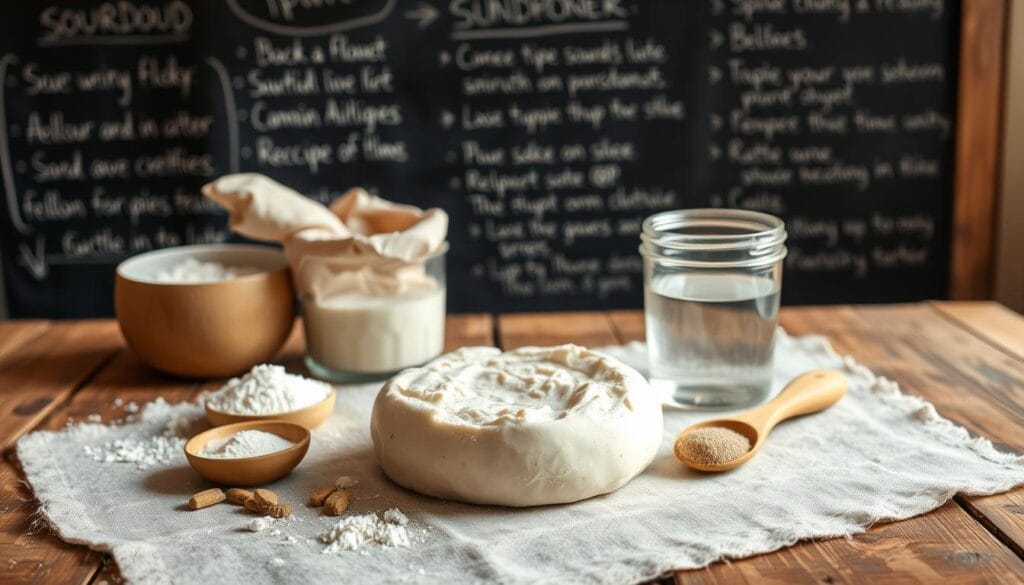
How Long Can I Keep My Starter?
Your starter can live forever with the right care. In the fridge, it stays active for weeks. Just refresh it with flour and water before baking. And don’t forget, leftover starter is great for easy sourdough recipes like pancakes or crackers!
Why Is My Sourdough Starter Not Bubbling?
- Chlorine in tap water—let water sit out overnight to dissipate.
- Cold environments—keep it in a 70–85°F space.
- Old flour—use fresh unbleached flour for feeding.
- Patience—new starters take 5–8 days to mature.
Can I Use My Starter Right Away?
Yes! For sourdough starter recipes like pancakes or muffins, use it right away. But for bread, wait until it’s active—when it doubles in size within 4–6 hours. Don’t waste unused starter—try my easy sourdough recipes like discard crackers!
| Storage Period | Temperature | Feeding Ratio |
|---|---|---|
| 1–2 days | Room Temp | 1:5:5 |
| 3–5 days | Refrigerated | 1:4:4 |
| Long-term | 38–45°F | 1:8:8 |
Every starter is unique—trust your instincts and enjoy experimenting. Your kitchen should be a space for growth, not stress. Happy baking!
Sourdough Starter for Gluten-Free Baking
When my friend got diagnosed with celiac, we set out to make gluten-free sourdough. It had to taste like home. Today, I’ll show you how to make sourdough bread recipes that are just as good. Start with this foundational guide before diving into these adaptations.
Making a gluten-free starter takes patience, just like traditional methods. But, there are some key changes. Here’s how to unlock its full potential:
Gluten-Free Sourdough Bread Alternatives
Start with a mix of brown rice flour and sorghum or buckwheat. For the best results, mix 2 tbsp each of buckwheat and sweet rice flour with 1/4 cup filtered water. After 5-7 days of daily feedings, your starter will start to bubble.
| Stage | Flour | Water | Notes |
|---|---|---|---|
| Initial Mix | Buckwheat + Brown Rice | 1/4 cup | Use filtered water |
| Feeding | 3 tbsp each of buckwheat & sweet rice | 1/4 cup | Feed every 8-12 hours |
Tips for Successful Gluten-Free Sourdough
- Combine 4-5 gluten-free flours for texture: try quinoa, teff, and potato starch
- Use psyllium husk at 1-2% of flour weight to mimic gluten structure
- Bake in a preheated Dutch oven—this creates steam for better rise
- Allow 3-4 hours bulk fermentation vs. 2 hours for wheat dough
Remember, patience is key. My favorite sourdough recipes now include fluffy pancakes and dense loaves. They’re just as good as wheat breads. With practice, your kitchen will be filled with tangy muffins and savory flatbreads. Let the starter’s tanginess turn your pantry staples into something amazing.
Creative Flavor Additions for Sourdough
Mastering sourdough basics is just the start. Think of your starter as a blank canvas. It’s ready for herbs, spices, and ingredients that make every slice unforgettable. Let’s explore how to turn simple dough into something extraordinary.
Herbs and Spices to Enhance Your Sourdough
I’ve tested many sourdough bread recipes to find the best. Dried herbs like thyme and oregano work well in the dough. But fresh rosemary or garlic are best added later.
Cinnamon and cardamom add warmth, but they slow down fermentation. For a kick, try pickled jalapeños over fresh. Mix in a pinch of fennel seeds for an Italian twist or cumin for a Mexican-inspired loaf.
- Warmth seekers: cinnamon, nutmeg, smoked paprika
- Herb blends: rosemary and garlic, basil and lemon zest
- Spicy options: pickled jalapeños, Calabrian chili and honey swirls
Incorporating Cheese and Other Ingredients
Cheese makes sourdough a crowd-pleaser. Cube cheddar during folds for sharp flavors. Grated Parmesan mixes seamlessly in the dough.
Keep additions to 15-20% of flour weight to keep structure intact. Lamination works magic for hearty inclusions like bacon or dried fruits. Try:
- Cheese combos: sharp cheddar with scallions, Gruyere with thyme
- Crispy toppings: sesame or pumpkin seeds sprinkled on the crust
- Seasonal twists: cranberries and orange zest for fall, sun-dried tomatoes with feta for summer
Experiment with roasted garlic, caramelized onions, or even dark chocolate chips. Always remember: less is more. Let your starter shine while letting ingredients like walnuts or dried cherries take center stage. These recipes with sourdough starter become personal—your kitchen’s signature. Share your creations and keep the tradition alive!
Conclusion: the Endless Possibilities of Sourdough Starter
Every spoonful of your sourdough starter is like magic. It can turn morning pancakes into midnight treats. Even the “discard” is useful, making cookies or cakes.
Let your curiosity lead you. You’ll see how flour and water can change simple meals into special moments.
Let Your Kitchen Become a Playground
Don’t just stick to what you know. That leftover starter is waiting to be used. Try adding it to muffins, pancakes, or sourdough dessert recipes for a surprise.
Looking for ideas? Search for “sourdough discard recipes” online. You’ll find treats like cinnamon rolls or crackers. Every change, like adding herbs or trying new flours, makes baking fun.
Join the Sourdough Story
Share your baking adventures! Post a photo of your creations with #sourdoughlove. The baking community loves to share tips and celebrate successes.
Even a misshapen loaf has a story to tell. We keep this tradition alive by sharing our experiences.
Take good care of your starter. Feed it regularly, store it properly, and let it breathe. With time, you’ll find your groove. And remember, science is your friend—like the 50/50 feed ratio or the 6-8 hour rise time.
Every crumb is a tale of patience and creativity. Keep exploring, and let your starter’s journey inspire you.
We are interested in your feedback
Catchy recipe
Sounds delicious
Original idea
Yummy
Healty and nutritious
Well done
Interesting
Just good